


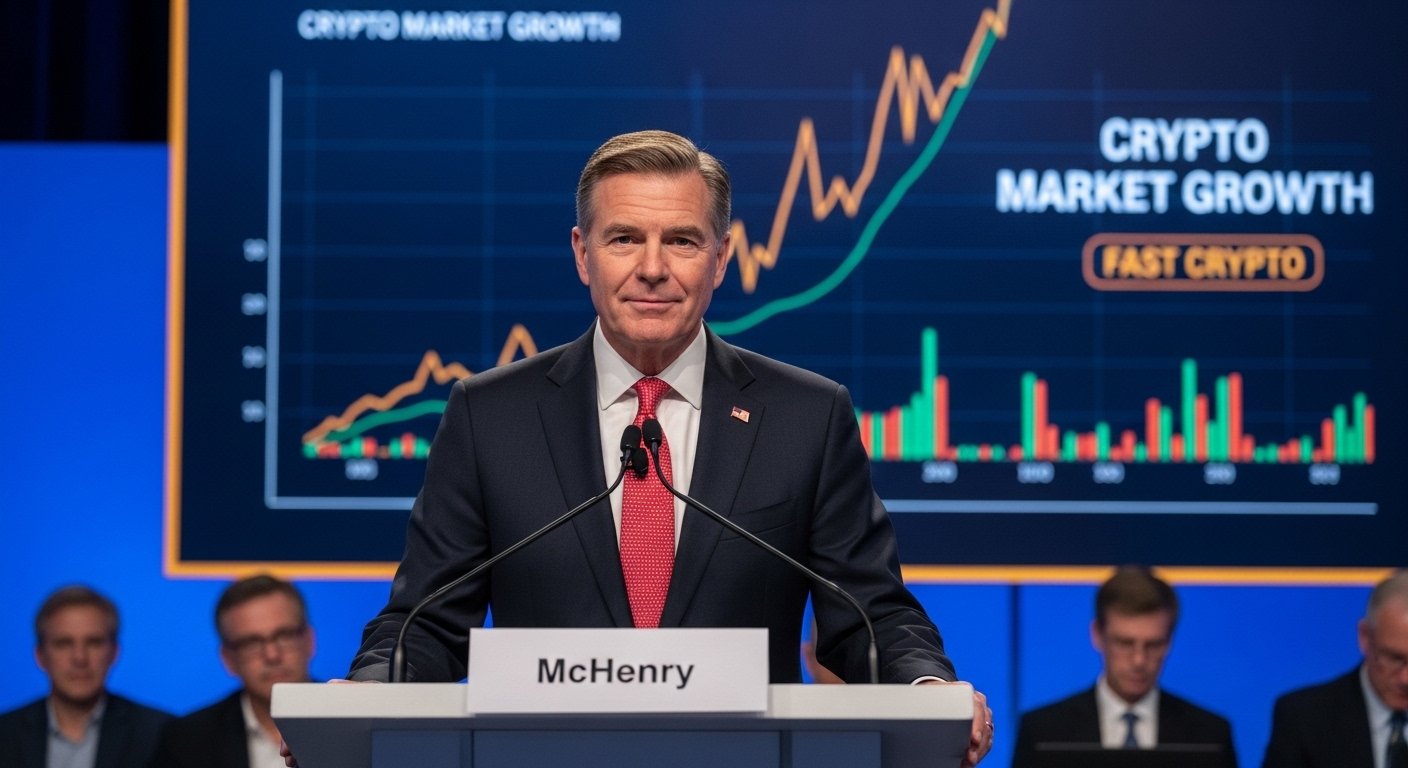
U.S. crypto regulatory landscape may be approaching a turning point as McHenry predicts a fast crypto deal as Witt brokers talks between lawmakers, regulators, and the executive branch. After years of stalled negotiations, enforcement-led oversight, and regulatory uncertainty, Washington appears closer than ever to delivering a comprehensive framework for digital assets. The renewed optimism comes amid growing bipartisan pressure to resolve lingering disputes over crypto market structure, stablecoins, and agency jurisdiction.
For investors, exchanges, developers, and everyday users, the idea that McHenry predicts a fast crypto deal as Witt brokers talks is more than political theater. It signals a shift from ideological debates to pragmatic negotiations focused on timelines, compliance clarity, and economic competitiveness. Crypto is no longer viewed as a fringe experiment—it has become a core financial and technological issue that policymakers can no longer afford to postpone.
This article explores why momentum is building, what a fast crypto deal could realistically include, how Witt’s role as a broker has changed negotiations, and what the outcome could mean for markets, innovation, and consumer protection. By unpacking each layer of the conversation, readers can better understand why this moment may shape U.S. crypto policy for years to come.
Why McHenry predicts fast crypto deal as Witt brokers talks
When McHenry predicts a fast crypto deal as Witt brokers talks, it reflects a rare convergence of political incentives. Lawmakers across party lines increasingly agree that regulatory ambiguity has become a liability rather than a safeguard. The absence of clear rules has driven innovation offshore, complicated enforcement, and left consumers exposed to inconsistent protections.
McHenry’s confidence suggests that the remaining disagreements are no longer existential but technical. Instead of arguing whether crypto should exist within the financial system, negotiators are focused on how it should be supervised. Witt’s role as a broker has helped translate priorities between Congress and the executive branch, narrowing gaps that once seemed insurmountable.

Timing also plays a crucial role. Election cycles, market maturity, and international competition have compressed the legislative window. If crypto regulation is going to happen through Congress rather than fragmented agency action, many policymakers believe it must happen soon.
The significance of market structure in crypto regulation
At the heart of discussions where McHenry predicts fast crypto deal as Witt brokers talks is the issue of crypto market structure. Market structure determines how assets are classified, who regulates them, and what obligations apply to participants across the ecosystem.
Unlike traditional finance, crypto markets blend features of securities, commodities, payments systems, and software networks. This hybrid nature has created confusion over jurisdiction and compliance expectations. A comprehensive market structure framework aims to resolve these ambiguities by defining categories clearly and assigning regulatory authority accordingly.
Without market structure reform, enforcement remains reactive, and compliance remains guesswork. That uncertainty discourages institutional participation and makes it harder for legitimate projects to operate confidently in the U.S.
Clarifying what counts as a digital asset
One of the most anticipated outcomes if McHenry predicts fast crypto deal as Witt brokers talks becomes reality is a clearer definition of what constitutes a digital asset. Current interpretations often rely on decades-old legal tests that were never designed for decentralized networks or tokenized protocols.
A modern framework would distinguish between early-stage tokens used for fundraising, mature decentralized networks, and assets designed primarily for payments or settlement. Clear definitions reduce litigation risk and allow builders to design products with compliance in mind from day one.
Assigning regulatory authority with precision
Another core market structure issue involves delineating authority between financial regulators. Overlapping mandates have created confusion and, at times, contradictory guidance. If McHenry predicts a fast crypto deal as Witt brokers talks, one likely outcome is a cleaner division of oversight responsibilities based on asset function rather than technology alone. This clarity would not eliminate enforcement but would make it more predictable and transparent. Markets function best when participants understand the rules before—not after—transactions occur.
The role of Witt in brokering crypto negotiations
Witt’s involvement has become central to why McHenry predicts fast crypto deal as Witt brokers talks. Acting as a bridge between policymakers and regulators, Witt has helped align priorities that previously operated in silos. His role is less about dictating policy and more about facilitating compromise.
Effective brokerage in Washington often means translating technical language into political terms and vice versa. Crypto policy is deeply technical, and misunderstandings have historically slowed progress. By narrowing those gaps, Witt’s mediation has helped negotiators focus on solutions rather than process disputes. This behind-the-scenes coordination has also helped accelerate timelines. When stakeholders believe their concerns are being heard, they are more willing to move quickly toward agreement.
Stablecoins and the push for regulatory clarity
Stablecoins remain a critical component of discussions where McHenry predicts fast crypto deal as Witt brokers talks. As digital representations of fiat currency, stablecoins serve as the backbone of crypto trading, decentralized finance, and cross-border payments. Their growth has made regulatory clarity unavoidable.
Policymakers are particularly focused on reserve transparency, redemption rights, and operational resilience. Stablecoins that function like money must inspire confidence similar to traditional payment instruments. At the same time, overly restrictive rules could limit innovation and reduce competitiveness.
Yield-bearing stablecoins and regulatory concerns
One of the most contentious topics involves yield-bearing stablecoins. When stablecoins offer returns, they begin to resemble investment products rather than pure payment tools. This raises questions about consumer expectations, risk disclosure, and systemic exposure.
If McHenry predicts a fast crypto deal as Witt brokers talks, negotiators may be close to agreeing on how to treat these hybrid instruments. A likely compromise could involve differentiated requirements based on whether yield is generated passively from reserves or actively through lending and investment strategies.
Balancing innovation and financial stability
Stablecoin regulation must strike a balance between encouraging innovation and safeguarding the financial system. Clear rules can help responsible issuers thrive while discouraging opaque practices that could trigger market stress. This balance is essential for maintaining public trust in digital payment systems.
Why speed matters in crypto legislation
The emphasis on speed when McHenry predicts fast crypto deal as Witt brokers talks reflects both opportunity and risk. Legislative momentum is fragile, and delays can derail even well-supported initiatives. Political calendars, shifting priorities, and external crises can quickly consume attention.
Speed also matters because crypto markets evolve rapidly. Rules that take years to finalize may already be outdated upon implementation. A timely framework allows regulators to adapt oversight as technology changes rather than perpetually playing catch-up. However, speed must not come at the expense of clarity. A rushed bill with vague language could create new uncertainties, shifting disputes from Congress to the courts.
Implications for crypto exchanges and platforms
If McHenry predicts fast crypto deal as Witt brokers talks leads to enacted legislation, crypto exchanges and platforms will likely experience the most immediate impact. Clear registration pathways, standardized disclosures, and defined compliance obligations could reshape how these businesses operate.
Exchanges that already prioritize transparency and risk management may benefit from reduced regulatory friction. Those relying on regulatory ambiguity may face tougher adjustments. Ultimately, a consistent framework could level the playing field and reward responsible operators.
Custody and asset segregation standards
One area of focus is custody. Clear requirements around asset segregation, insolvency protections, and audit standards could significantly reduce counterparty risk for users. Improved custody norms enhance market confidence and protect consumers from operational failures.
Effects on developers and token issuers
For developers and token issuers, clarity is a double-edged sword. While clear rules reduce uncertainty, they also impose accountability. If McHenry predicts fast crypto deal as Witt brokers talks materializes, projects will need to consider regulatory implications earlier in their lifecycle. Transparent token economics, realistic disclosures, and responsible governance will become increasingly important. Projects that embrace these principles may find it easier to attract long-term capital and institutional interest.
What everyday crypto users should expect

For everyday users, the benefits of a fast crypto deal could be subtle but meaningful. Standardized disclosures, safer custody practices, and clearer product labeling can reduce confusion and risk. When McHenry predicts fast crypto deal as Witt brokers talks, it suggests a future where users are less likely to encounter sudden service changes driven by regulatory uncertainty. While some speculative products may disappear, the overall ecosystem could become more stable and trustworthy.
Greater confidence in regulated platforms
Users may increasingly gravitate toward platforms operating within the new framework. Regulatory clarity can foster trust, encouraging broader participation and mainstream adoption.
Market reaction and investor sentiment
Markets often respond not only to legislation itself but to credible signals that change is coming. The narrative that McHenry predicts fast crypto deal as Witt brokers talks has already influenced sentiment by reducing perceived regulatory risk. Institutional investors, in particular, value predictability. A clear framework allows them to model compliance costs, assess legal exposure, and allocate capital with greater confidence.
Tokenization and on-chain finance opportunities
Clear market structure rules could accelerate innovation in areas like tokenized assets and on-chain settlement. By aligning crypto infrastructure with traditional financial standards, the U.S. could unlock efficiencies while maintaining oversight.
Risks and unresolved challenges
Even with optimism, risks remain. A fast crypto deal could leave unresolved ambiguities that require further clarification. Overly rigid rules could stifle experimentation, while overly permissive ones could invite abuse.
Implementation will also matter. Agencies must translate legislation into practical rules, and inconsistent enforcement could undermine the benefits of clarity. Ongoing dialogue between regulators and industry will remain essential.
A realistic outlook for U.S. crypto policy
The reason McHenry predicts fast crypto deal as Witt brokers talks resonates is that it reflects pragmatism. Rather than aiming for perfection, negotiators appear focused on achievable progress. A well-designed framework can evolve over time, adapting to new use cases and technologies.
This moment represents an opportunity to replace years of uncertainty with a foundation that supports innovation, protects consumers, and preserves financial stability. Whether the final deal meets all expectations remains to be seen, but the momentum itself marks a significant shift.
Conclusion
The growing consensus that McHenry predicts fast crypto deal as Witt brokers talks signals a pivotal moment for U.S. digital asset policy. After years of regulatory ambiguity, lawmakers appear closer to delivering a comprehensive market structure framework that defines oversight, clarifies responsibilities, and supports responsible innovation. While challenges remain, the push for speed reflects recognition that uncertainty carries its own risks. If successful, this deal could reshape how crypto operates in the U.S., providing clarity for businesses, protection for consumers, and confidence for markets.
FAQs
Q: What does “McHenry predicts fast crypto deal as Witt brokers talks” mean?
It refers to growing optimism among policymakers that negotiations over U.S. crypto regulation are nearing completion, with key figures facilitating compromise.
Q: Why is crypto market structure so important?
Market structure defines how digital assets are classified and regulated, providing clarity for businesses, regulators, and investors.
Q: How could this deal affect stablecoins?
It could introduce clearer rules on reserves, redemption rights, and disclosure, improving trust while balancing innovation.
Q: Will new crypto laws hurt innovation?
Clear rules can actually support innovation by reducing uncertainty, though poorly designed regulations could limit experimentation.
Q: When could changes take effect?
If negotiations move quickly, legislation could pass within a short timeframe, followed by phased implementation through regulatory agencies.
See More: Bitcoin Slashed in Half Inside Crypto Existential Crisis
