



The cryptocurrency market kicked off the new trading week on shaky ground, with Bitcoin (BTC) slipping below the $81,000 mark as geopolitical uncertainty once again muscled its way to the forefront of investor consciousness. After a remarkably strong prior week — during which BTC surged over 4.5% to post its highest weekly close since February — the world’s largest cryptocurrency by market capitalization found itself under renewed selling pressure on Monday, May 11, 2026. The catalyst? A rapidly deteriorating diplomatic situation between the United States and Iran that quickly erased the optimism that had been building in global risk markets.
President Donald Trump’s rejection of Iran’s latest peace proposal, which he publicly labeled “totally unacceptable,” sent shockwaves through equities, commodities, and digital asset markets alike. Oil prices spiked sharply, the US dollar index (DXY) climbed above the 98 level, and risk sentiment across the board turned decidedly cautious. For Bitcoin traders and long-term holders alike, the developments raise pressing questions: Is this a temporary pullback within a broader recovery, or the beginning of a more significant correction? This Bitcoin price forecast takes a deep dive into the geopolitical backdrop, on-chain data, technical analysis, and the broader macroeconomic picture to help answer those questions.
How Trump’s Rejection of the Iran Peace Plan Hit Bitcoin Hard
The diplomatic backdrop to this week’s BTC price action is both dramatic and consequential. Earlier in the month, optimism had swelled across financial markets after Iran sent a revised peace proposal through Pakistani mediators, raising hopes that a deal to reopen the Strait of Hormuz — a critical global oil chokepoint — could be within reach. Bitcoin responded positively at the time, climbing toward $78,700 before eventually reaching a 13-week high of $82,833, a level not seen since late January.
However, that optimism proved fragile. Iran’s response to the US peace framework — which included demands for Tehran to dismantle its nuclear facilities and suspend uranium enrichment for 20 years — was a flat rejection. Senior Iranian official Mohsen Rezaei stated publicly that Tehran would not accept the proposal, partly because it failed to include reparations for war damage. Trump wasted no time responding, calling the Iranian counteroffer “totally unacceptable” and warning of escalated military action if the situation did not resolve in America’s favor.
The geopolitical risk reignited by this exchange was immediate and tangible. Oil prices surged by roughly 4.6% to approximately $98.7 per barrel, a move that historically signals tighter global economic conditions. Risky assets, including Bitcoin and broader crypto markets, reversed course. BTC dropped to an intraday low near $79,500 during the most intense period of market stress before finding some support and hovering just below the $81,000 mark. The total cryptocurrency market capitalization fell from a peak near $2.830 trillion back toward $2.780 trillion, reflecting the broad-based nature of the sell-off.
Bitcoin’s Recent Bull Run: What Was Driving the Rally?
To understand the current pullback in context, it is worth examining what had been powering Bitcoin’s price recovery in the weeks leading up to this latest geopolitical shock. The digital asset had climbed an extraordinary 35% from the $60,000 zone over the course of roughly one month, powered by a confluence of bullish catalysts that had restored confidence among both retail and institutional participants.
Spot ETF Inflows Signaled Strong Institutional Demand
One of the most significant tailwinds behind BTC’s impressive recovery was the relentless demand from US-listed spot Bitcoin ETFs. The week ending May 10 marked the sixth consecutive week of net inflows into these investment vehicles, with approximately $623 million flowing into BTC-backed ETFs during that period alone. Over the full month prior, these products attracted more than $5 billion in cumulative inflows, a figure that underscores just how deeply institutional capital has been committing to Bitcoin as a legitimate portfolio asset.
This consistent buying from institutional investors helped absorb selling pressure and provided a structural bid beneath the market. Analysts have pointed to ETF demand as a key reason why Bitcoin managed to hold above the psychologically significant $80,000 level even in the face of periodic macro headwinds. The flow data suggests that large-scale money managers view current price levels as attractive entry points rather than overbought territory.
Macro Optimism and Easing Geopolitical Tensions — Before the Reversal
Prior to Trump’s rejection of the Iranian peace proposal, market sentiment had been improving steadily. The Crypto Fear & Greed Index, a widely watched barometer of investor psychology in the digital asset space, had climbed to a reading of 46 — firmly in “Fear” territory but a dramatic improvement from the reading of 13 recorded just one month earlier during the depths of the market’s anxiety phase. This gradual recovery in sentiment mirrored broader financial markets, which had also been buoyed by strong economic data including solid ADP employment figures and record highs in the S&P 500 and Nasdaq.
The earlier signals from Iran — specifically the delivery of a revised peace proposal through Pakistani mediators — had temporarily eased concerns about oil supply disruptions through the Strait of Hormuz. This helped suppress oil prices and boosted the broader risk-on environment that cryptocurrencies tend to thrive in. Unfortunately, as the subsequent rejection made clear, the de-escalation narrative was built on shaky diplomatic foundations.
Technical Analysis: Key Levels to Watch for BTC
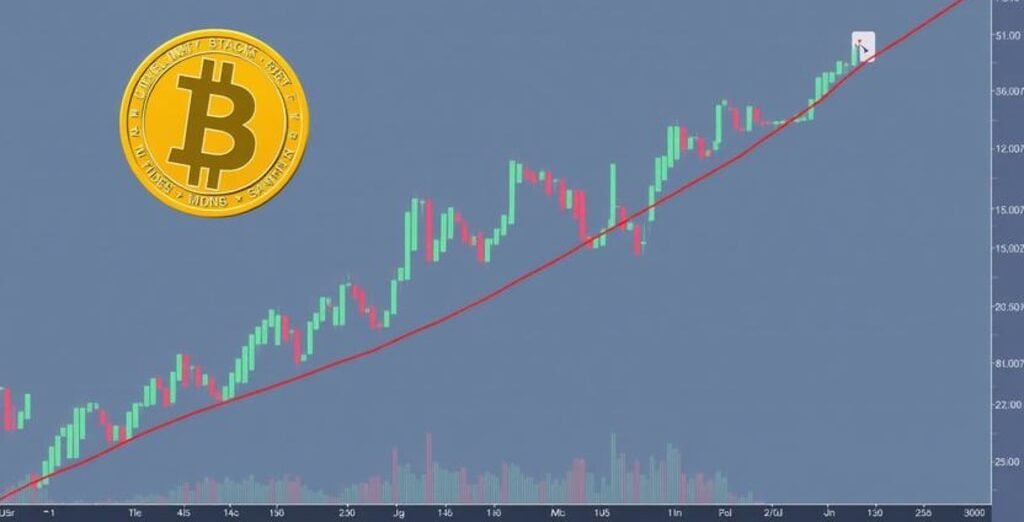
From a technical analysis standpoint, Bitcoin’s chart at this juncture presents a mixed but navigable picture. Traders are closely monitoring a cluster of important levels that will likely determine whether the current pullback deepens or resolves to the upside.
Resistance at the 100-Week EMA Remains a Challenge
One of the most significant technical obstacles Bitcoin faces is the 100-week Exponential Moving Average (EMA), currently sitting at approximately $82,467. BTC tested this level during last week’s rally but ultimately failed to close convincingly above it, leaving the indicator as a powerful overhead resistance zone. Historically, the 100-week EMA has acted as a major battleground between bulls and bears during market recoveries, and a decisive close above it would be an encouraging signal for the continuation of the broader uptrend.
Until that happens, bears retain a technical argument for further downside. The first meaningful support level below current prices sits at the $80,000 psychological support, a round number that has repeatedly attracted buyers during prior pullbacks. A sustained breach of this level could open the door to a test of the 61.8% Fibonacci retracement level at $78,490, drawn from the October all-time high of $126,199. Analysts have flagged this Fibonacci level as a critical line in the sand for the medium-term bull case.
Upside Targets If Sentiment Recovers
On the bullish side of the ledger, technical analysts have identified $83,400 as the next significant upside target, based on Fibonacci projection levels. A successful reclaim of the 100-week EMA and a close above $83,400 could set the stage for a move toward the $84,000–$85,000 range, a zone that 21Shares chief market strategist Adrian Fritz has described as potentially triggering “early signs of a broader reversal.” Beyond that, the $90,000 level represents a major technical milestone that would likely generate significant media attention and retail investor interest.
On-Chain Signals and Derivatives Data Add Nuance
Beyond price charts, several on-chain data points and derivatives metrics offer additional texture to the current Bitcoin market setup. A dormant BTC wallet containing 500 Bitcoin — worth approximately $40.71 million — was activated over the weekend after sitting idle for 12.5 years, according to Whale Alert. Movements from long-dormant wallets are closely watched by market observers, as they can sometimes precede increased selling pressure if the coins are moved to exchanges.
On the derivatives side, the market has been defined by extreme volatility and rapid position liquidations. Earlier in the week, more than $550 million in leveraged positions were liquidated over a 24-hour period, with roughly $400 million of that figure coming from short sellers caught on the wrong side of Bitcoin’s initial rally. The subsequent reversal then triggered fresh long-side liquidations, creating the classic whipsaw pattern that geopolitical headline-driven markets are notorious for generating. Roughly $64 million in short positions were liquidated in a four-hour window alone following one of the Trump-Iran headline sequences.
Separately, USDT exchange balance data from Santiment has shown some notable outflow spikes. Analysts note that similar patterns in February preceded a mild Bitcoin pullback before the market established a strong buying opportunity.
The Broader Market Context: US-China Summit and CPI Data in Focus
While the Trump-Iran diplomatic standoff is dominating near-term sentiment, Bitcoin traders are also keeping a close eye on several other macro catalysts that could meaningfully shift the market’s direction in the days ahead.
Relations between Washington and Beijing have a direct bearing on global trade flows, technology sector sentiment, and broader risk appetite in financial markets. A constructive outcome from the Trump-Xi Jinping meeting could provide a meaningful boost to risk assets, while any signs of deterioration in the relationship would likely add to existing headwinds.
CPI inflation data is also due for release this week, and the figures carry heightened significance given the Federal Reserve’s ongoing battle to bring price pressures under control. Hotter-than-expected inflation would dampen hopes for near-term interest rate cuts, which would be a headwind for risk assets including Bitcoin. Conversely, a softer inflation print could revive rate-cut expectations and provide fresh fuel for a BTC rally. 10x Research CEO Markus Thielen has also pointed out that two favorable decisions in the US Senate this week could provide additional support for Bitcoin above the $80,000 level, though the details of those potential catalysts remain closely watched by the trading community.
Bitcoin as a Risk Asset vs. Store of Value: The Ongoing Debate
One of the more intellectually interesting dimensions of Bitcoin’s recent price behavior is what it reveals about the asset’s evolving identity in the eyes of the market. Traditional Bitcoin advocates have long argued that BTC functions primarily as a digital store of value — a form of “digital gold” that should appreciate during periods of geopolitical stress and currency debasement. The current episode tells a more nuanced story.
While gold surged to $4,750 during the height of the Iran tensions, outperforming both equities and crypto, Bitcoin declined — a behavior more consistent with a high-beta risk asset than a geopolitical hedge. Bitcoin’s 1.56% decline in one session was steeper than the corresponding equity market drop, reinforcing the view that in the short term, BTC tends to trade more like technology stocks than like precious metals during geopolitical crises. This dynamic is important for investors to understand, as it has direct implications for portfolio construction and risk management strategies during volatile macro environments.
Conclusion
Bitcoin’s current pullback below $81,000 is a direct reflection of the geopolitical uncertainty introduced by the breakdown of US-Iran peace negotiations, but it does not necessarily invalidate the broader recovery thesis that has been building over the past month. The structural backdrop — including relentless institutional ETF inflows, improving sentiment indicators, and Bitcoin’s remarkable 35% monthly recovery — remains constructive.
For long-term Bitcoin investors, the message from this week’s volatility is a familiar one: geopolitical events can and do move crypto markets in the short term, but their impact tends to be temporary when the underlying demand picture remains strong. For traders, the key levels to watch are $80,000 on the downside and $83,400 on the upside, with a decisive move in either direction likely setting the tone for the remainder of May.
Also More: Bitcoin Price Forecast: BTC Holds $75K Amid ETF Surge
