


The world’s energy markets and digital asset ecosystem are colliding in an unprecedented way in April 2026. As geopolitical tensions between the United States and Iran reach a boiling point over the Strait of Hormuz, the crypto market outlook has become inextricably tied to the fate of one of the world’s most critical maritime chokepoints. President Donald Trump’s announcement that the U.S. Navy would begin blockading all Iranian ports — effective April 13, 2026 — sent shockwaves across global financial markets, pushing oil prices above $100 per barrel and triggering sharp volatility in Bitcoin and other digital assets.
The Strait of Hormuz is not merely a geographic bottleneck. It is the artery through which approximately 20% of the world’s oil and liquefied natural gas flows every single day. When Iran began charging ships up to $2 million per vessel to transit the strait — accepting payment in Bitcoin, Chinese yuan, and USDT stablecoins — it fundamentally changed the conversation around cryptocurrency’s role in global geopolitics. Suddenly, digital assets were no longer just a speculative investment class. They became a live instrument of state-level sanctions evasion and sovereign revenue generation.
How the Strait of Hormuz Became a Crypto Toll Booth
The sequence of events that led to this moment began in late February 2026, when U.S. and Israeli airstrikes targeted Iranian military and nuclear infrastructure. Iran responded by restricting traffic through the Strait of Hormuz — a waterway bordered by Iran, Oman, and the UAE through which an estimated 21 million barrels of oil pass daily. With the Strait effectively under Iranian military control, global energy markets went into shock.PPLIran’s parliamGZ ent formalized this arrangement on March 30–31 through the so-called “Strait of Hormuz Management Plan,” which codified a fee system already operating informally since mid-March.
Officials calculate the toll — typically $1 per barrel — and ship crews are given only seconds to transfer the exact amount in cryptocurrency to an Iranian-controlled digital wallet. Once payment is confirmed on the blockchain, the vessel receives a one-time passcode and an Islamic Revolutionary Guard Corps (IRGC) escort through the strait. Empty tankers are permitted to pass without charge.
Why Iran Chose Cryptocurrency for Toll Collection
In this environment, USD-pegged stablecoins offer Iran something extraordinary: access to dollar-equivalent purchasing power without touching any U.S.-controlled financial infrastructure.As Andrew Fierman, head of national security intelligence at Chainalysis, noted, it is entirely unsurprising that crypto-denominated trade would emerge at the Hormuz choke point, given Iran’s existing on-chain infrastructure. The IRGC had already routed approximately $1 billion through offshore, exchange-branded stablecoin infrastructure before the war began, exploiting the same properties that attract legitimate users: low transaction costs, high settlement speed, deep liquidity, and operation entirely outside the U.S. correspondent banking system.
The U.S. Blockade Threat and Its Impact on Crypto Markets
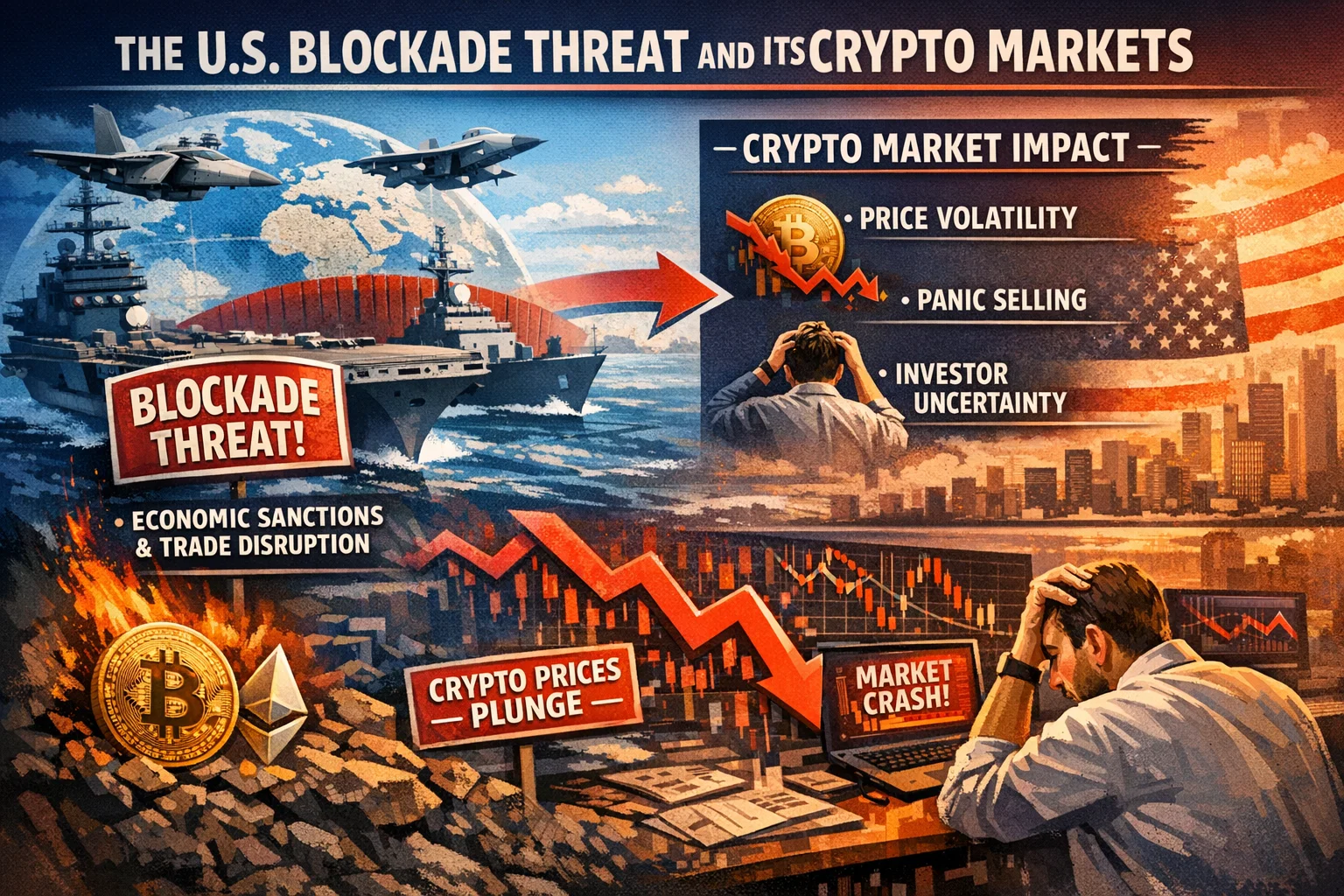
President Trump’s announcement on Sunday, April 12, 2026, that the U.S. Navy would begin blockading Iranian ports sent immediate ripple effects across every major market. Oil prices surged nearly 8% in a matter of hours, with both WTI crude and Brent contracts breaching $100 per barrel for the first time since the crisis began. The crypto market outlook tightened considerably as traders weighed the competing forces of institutional fear and crypto’s emerging utility as a sanctioned-state payment rail.
Bitcoin, which had been trading near $72,000 following a surge triggered by the initial Hormuz toll announcement, experienced renewed volatility. The digital asset had already demonstrated its sensitivity to this particular geopolitical storyline: when the Financial Times first reported Iran’s $1-per-barrel Bitcoin toll requirement in early April, BTC jumped 5% within minutes, briefly touching $72,700. That single data point illustrated something that analysts had theorized but rarely seen in practice — real-world sovereign demand for Bitcoin moving the spot price in real time.
Geopolitical Risk Premium and Digital Asset Volatility
The concept of a geopolitical risk premium in crypto markets is not new, but the Hormuz crisis has given it unprecedented depth. Historically, Bitcoin has exhibited a complicated relationship with geopolitical stress — sometimes acting as a safe haven asset and sometimes selling off alongside risk assets. The current situation introduces an entirely new variable: Iran’s active, institutionalized use of Bitcoin as a state payment mechanism creates a structural demand floor even as political uncertainty pushes speculative investors toward risk-off behavior.
This creates a bifurcated crypto market outlook that analysts are struggling to reconcile. On one hand, the prospect of $21 million in daily Bitcoin inflows from Hormuz toll payments — representing $7.6 billion annually at full capacity — represents the kind of real-world utility that Bitcoin advocates have long argued would be transformative for the asset’s price floor. On the other hand, the U.S. government’s escalating response, including sanctions on crypto exchanges facilitating Iranian transactions and a potential full naval blockade, introduces enforcement risk that could freeze or intercept those very payment flows.
Sanctions Compliance and the Compliance Risk for the Shipping Industry
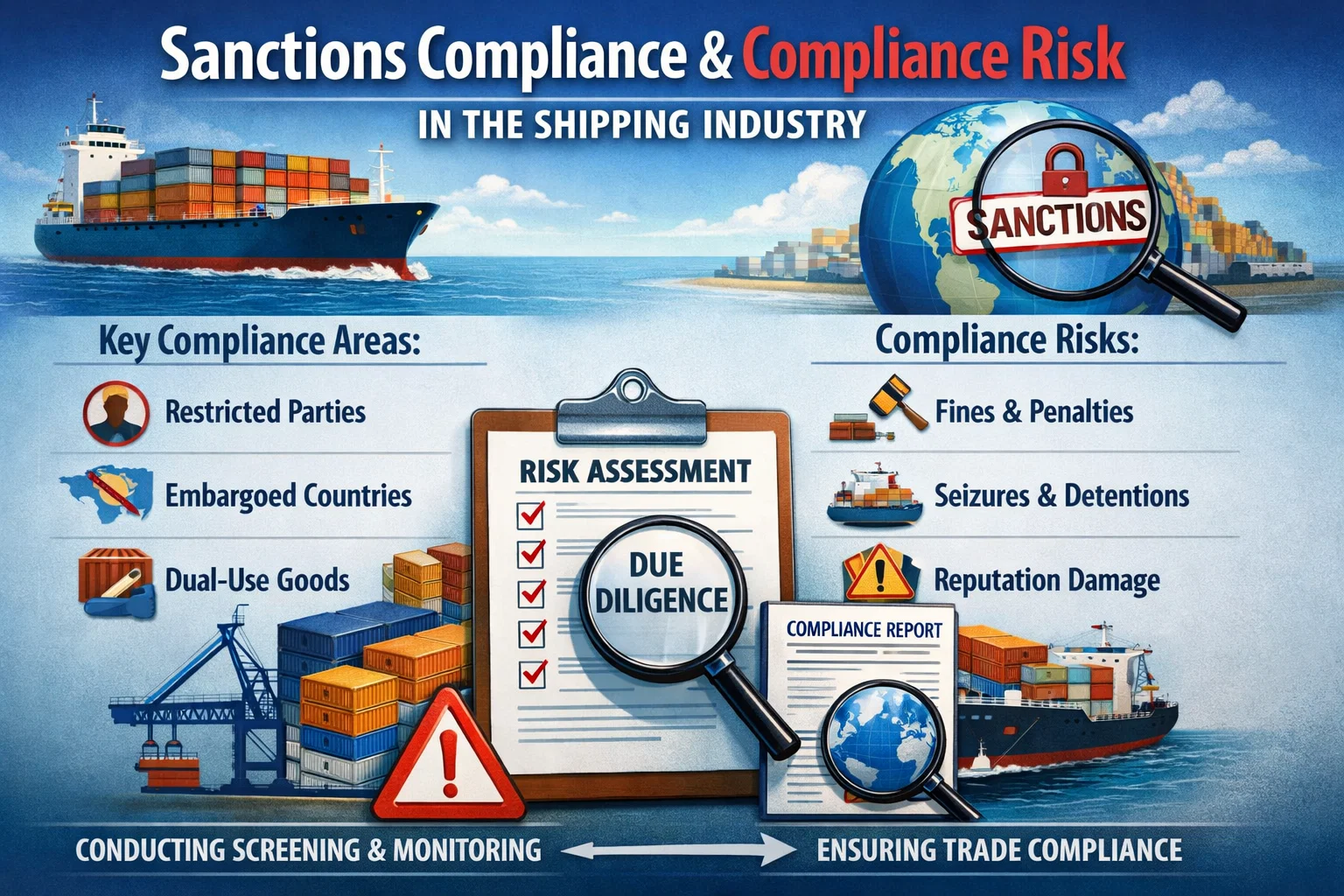
For the global shipping industry, Iran’s crypto toll has introduced a compliance nightmare of historic proportions. Making cryptocurrency payments to an Iranian state-linked entity without express authorization from the U.S. Treasury Department’s Office of Foreign Assets Control (OFAC) almost certainly constitutes a sanctions violation. Companies that pay the IRGC-administered toll — even in Bitcoin — expose themselves to the risk of significant enforcement actions, substantial fines, and severe reputational damage.
The U.S. Treasury has already demonstrated its willingness to act aggressively in this space. In January 2026, OFAC sanctioned the crypto exchanges Zedcex and Zedxion for facilitating digital asset transactions on behalf of the Iranian military. The Justice Department is also reportedly investigating Iran’s use of Binance to sidestep U.S. sanctions, according to reporting from the Wall Street Journal. These enforcement actions signal that the U.S. government views cryptocurrency-based sanctions evasion as a top-tier national security priority.
Stablecoins vs. Bitcoin: Iran’s Likely Preferred Vehicle
While public reporting has emphasized Bitcoin as Iran’s preferred toll currency, blockchain analysts believe USDT stablecoins are likely to be Iran’s primary vehicle for the Hormuz toll system over time. The IRGC’s historical on-chain activity has overwhelmingly favored stablecoins over Bitcoin for commerce-oriented transactions, precisely because stablecoins avoid the price volatility that makes Bitcoin unpredictable for large-value settlements. A $2 million toll payment denominated in Bitcoin could lose significant value in the time between payment initiation and wallet confirmation if the market moves sharply.
Stablecoins, by contrast, offer Iranian authorities the dollar-equivalent value they need for procurement and international trade, without the volatility risk. Some analysts have even suggested that Iran could demand payment in USD1, a stablecoin launched by the Trump family-affiliated World Liberty Financial — a move that would create a politically explosive conflict of interest for the current U.S. administration. That scenario, while speculative, illustrates just how deeply digital asset geopolitics has become entangled with the highest levels of U.S. political power.
Bitcoin’s Transition from Store of Value to Settlement Rail
For years, the dominant narrative around Bitcoin has centered on its role as a digital store of value — a scarce asset analogous to gold that investors hold as a hedge against monetary debasement. The Hormuz toll system represents a meaningful stress test of a different thesis: Bitcoin as a real-time, censorship-resistant international settlement rail. The fact that a sovereign state — however controversial — has institutionalized Bitcoin payments at a major maritime chokepoint is a watershed moment for the asset class.
Regardless of whether the Iranian toll system survives U.S. military and sanctions pressure, the proof of concept has been demonstrated. State actors under financial isolation now have a functional playbook for using decentralized digital assets to generate sovereign revenue and conduct international trade. This precedent will not disappear even if the Hormuz crisis is resolved, and it will almost certainly be studied and potentially replicated by other sanctioned regimes.
Institutional Investor Uncertainty and Market Positioning
For institutional investors, the crypto market outlook in the context of the Hormuz crisis is deeply ambiguous. Major asset managers who have recently gained exposure to Bitcoin through spot ETFs are navigating a situation in which their investment is simultaneously benefiting from Iranian sovereign demand and being scrutinized by the U.S. national security apparatus. Morgan Stanley’s Bitcoin ETF, which began trading earlier this year, represents the kind of mainstream institutional exposure that makes the political optics of Bitcoin’s Iranian utility particularly sensitive.
The broader macro environment compounds this uncertainty. Oil prices above $100 per barrel historically precede tightening financial conditions, reduced risk appetite, and potential equity market downturns — all of which tend to pressure speculative assets, including crypto. At the same time, inflation hedging demand for Bitcoin could increase if energy price surges feed through into broader consumer price inflation, recreating the macro conditions that drove Bitcoin’s earlier bull runs.
The China Factor and Competing Power Dynamics
No analysis of the crypto market outlook in this context would be complete without examining China’s role. China imports approximately 90% of Iran’s oil exports, and Beijing has been vocal in its opposition to the U.S. blockade announcement. Iran’s toll system also accepts payment in Chinese yuan routed through Kunlun Bank via CIPS — the Chinese interbank payment system that operates outside SWIFT — meaning the Hormuz transit fee mechanism is as much a Chinese-backed financial architecture as it is a crypto story.
This dynamic introduces a great power dimension to the crypto market outlook. If the U.S. blockade escalates and China responds by increasing its financial and diplomatic support for Iran, the resulting bifurcation of global financial infrastructure — with one lane running through dollar-based systems and another running through yuan and crypto — could have profound long-term implications for Bitcoin’s role as a neutral international settlement asset outside the control of any single superpower.
Conclusion
The crypto market outlook in the shadow of the U.S.-Iran Hormuz crisis is perhaps the most complex and consequential the digital asset space has ever faced. Iran’s decision to charge Bitcoin and stablecoin tolls at one of the world’s most critical maritime chokepoints has simultaneously validated cryptocurrency’s utility as a censorship-resistant payment mechanism and drawn the full force of U.S. sanctions enforcement into the digital asset ecosystem.
For investors and market participants, the immediate picture is one of sharp volatility driven by competing forces — real sovereign demand for Bitcoin pushing prices higher, while geopolitical risk and enforcement uncertainty create powerful headwinds. The longer-term picture depends heavily on whether the U.S. blockade succeeds in cutting off Iranian port access, whether a diplomatic resolution emerges, and whether the precedent set by Iran’s crypto toll system inspires or deters similar moves by other sanctioned states.
Also, More: Crypto News Today Bitcoin Below $93K, DeFi Slumps
