



Every so often, the cryptocurrency market enters a phase where multiple powerful forces converge at the same moment — and right now, Bitcoin appears to be standing at the edge of one such pivotal juncture. The world’s largest digital asset by market capitalization is pressing against the psychologically and technically significant $80,000 resistance level, a price zone that traders and institutional analysts have been watching with intense focus. But beneath the surface of the price action, something arguably more significant is unfolding: a Bitcoin supply shock that has quietly started to take shape, driven by a confluence of post-halving dynamics, surging institutional accumulation, and a dramatic reduction in exchange-held BTC.
Understanding what this moment means requires looking beyond the candlestick charts. It requires examining the on-chain fundamentals, the behavioral patterns of long-term holders, and the macroeconomic backdrop that is making Bitcoin increasingly attractive as a store of value in a world still wrestling with inflationary pressures and geopolitical uncertainty. This article breaks down everything you need to know about where Bitcoin stands today, why the supply shock is real, and what it could mean for prices in the months ahead.
The $80,000 Wall: What Makes This Level So Significant
Price resistance levels in financial markets are not arbitrary lines drawn on a chart. They represent concentrations of historical selling interest, psychological anchors for market participants, and often, the battlegrounds where bull markets either prove their strength or retreat. For Bitcoin, the $80,000 price zone carries all three of these characteristics with particular intensity.
From a purely technical standpoint, $80K represents a level where previous buyers who accumulated during a rally locked in positions and, as the asset dipped below this price in subsequent corrections, created what analysts call an “overhead supply” — a cluster of investors eager to break even or take profit once the price returns. This dynamic is well-documented in Bitcoin’s market structure and explains why each approach to this level has historically been met with elevated selling pressure and increased volatility.
Historical precedent and price memory
Bitcoin’s price history is rich with examples of how psychological round numbers act as magnets and then walls. The asset spent weeks consolidating around $20,000, $30,000, and $60,000 before each eventual breakout. The $80,000 resistance is no different — it represents not just a number but a memory embedded in the market’s collective psychology. When Bitcoin approaches this zone, it triggers automated stop orders, profit-taking from leveraged traders, and cautious repositioning from even the most bullish institutional desks.
What makes the current approach distinctive, however, is the context in which it is occurring. Unlike previous tests of this zone, today’s market is underpinned by structurally different demand dynamics — particularly the ongoing absorption of Bitcoin by spot exchange-traded funds and corporate treasury buyers who are not trading in and out but are effectively removing coins from the liquid supply permanently.
On-chain resistance clusters and realized price data
On-chain analytics platforms tracking the UTXO Realized Price Distribution (URPD) show a dense cluster of coins last moved in the $75,000–$82,000 range. This means a meaningful portion of the circulating supply has a cost basis in this zone, making it a high-conviction area of potential profit-taking. Yet the same data also reveals that the majority of the Bitcoin supply — roughly 94% by some estimates — has not moved in over a year. This is the statistical fingerprint of long-term holders who have no intention of selling at $80,000 or even at multiples of that price.
“When 94% of a finite asset’s supply sits immobile in the hands of long-term believers while demand from institutional buyers accelerates, the math of supply and demand becomes difficult to argue with.”
Anatomy of a Bitcoin Supply Shock

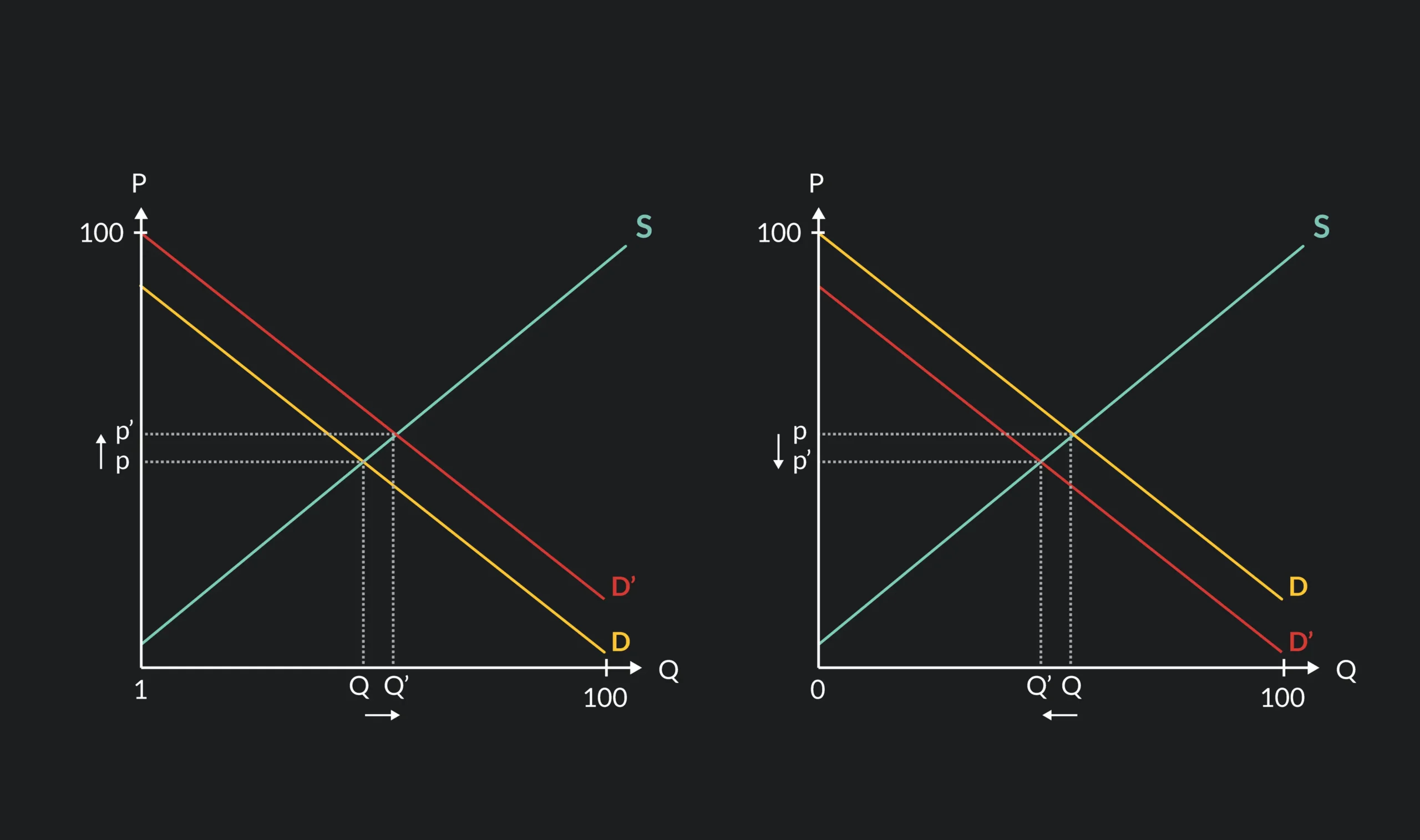
The term “supply shock” refers to a sudden or sustained reduction in available supply that, when met with stable or increasing demand, drives prices significantly higher. In traditional commodities markets, supply shocks are often caused by production disruptions — oil embargoes, mining strikes, crop failures. In Bitcoin, supply shocks are structural and, in many ways, by design. They emerge from the intersection of the protocol’s fixed issuance schedule and the behavioral patterns of its holders.
The most recent Bitcoin halving — which cut the block reward from 6.25 BTC to 3.125 BTC per block — reduced the daily issuance of new coins by 50%. This alone is a supply-side event of enormous significance. But what is happening right now goes beyond the halving. A multi-layered supply compression is forming simultaneously across several dimensions of the Bitcoin ecosystem, and understanding each layer is essential to grasping the full magnitude of what analysts are calling a historic supply shock.
Exchange balances at multi-year lows
One of the most reliable leading indicators of a Bitcoin supply shock is the volume of BTC held on centralized exchanges. When Bitcoin flows out of exchange wallets and into cold storage or self-custody, it is effectively removed from the immediately sellable supply. Over the past several months, Bitcoin exchange balances have fallen to their lowest levels in years, a trend accelerating sharply since the launch and adoption of spot Bitcoin ETFs in major markets.
The logic is straightforward: when institutional investors purchase Bitcoin through ETFs, the fund custodians must acquire actual BTC in the spot market. This demand does not generate selling — it absorbs it. Each share of a Bitcoin ETF backed by physical BTC represents coins that have been pulled from the liquid market and placed in custody, reducing the float available for trading. With spot ETF AUM surpassing $450 billion and still growing, this mechanism alone represents a structural drain on exchange supply that is unprecedented in Bitcoin’s history.
Long-term holder accumulation and HODLing behavior
Beyond the ETF absorption, Bitcoin’s native holder base is exhibiting behavior that historically precedes major price appreciation. Long-term holders (LTHs) — defined as addresses that have held BTC for more than 155 days — are in a period of net accumulation. This is notable because LTHs are typically the most sophisticated and patient segment of the Bitcoin market, with high conviction and low price sensitivity. When this cohort increases its holdings, it signals confidence in future price appreciation and further tightens the liquid supply of Bitcoin.
The metric known as the Liveliness indicator — which measures the ratio of active coin-days to total coin-days — has been declining, confirming that coins are aging in cold storage rather than being rotated through exchanges. This behavioral pattern is a textbook precursor to a supply shock: supply is being sequestered precisely at the moment when institutional demand is intensifying.
Miner behavior post-halving
Bitcoin miners play a unique role in the supply dynamics of the network. As the direct recipients of newly issued coins, their selling behavior has an outsized impact on market supply. Following the most recent halving, miner revenue in BTC terms was cut in half overnight, creating immediate pressure on mining operations to optimize costs or increase efficiency. The miners who survived the post-halving stress period — primarily large-scale industrial operations with access to cheap renewable energy — have largely shifted to a strategy of accumulation rather than aggressive selling.
Data from miner wallet tracking tools shows a notable decline in miner-to-exchange flows, indicating that miners are holding a larger share of their block rewards rather than selling them immediately into the market. This behavioral shift compounds the supply compression already underway from ETF inflows and LTH accumulation, adding yet another layer to the developing supply shock narrative.
Institutional Demand: The Structural Shift That Changes Everything
Perhaps the most consequential development in the current Bitcoin cycle is the maturation and scale of institutional Bitcoin adoption. Unlike the retail-driven rallies of 2017 or even the corporate treasury narrative of 2020–2021, the current wave of institutional demand is broader, more persistent, and structurally embedded in regulated financial products that are unlikely to reverse quickly.
Major asset managers, pension funds, sovereign wealth funds, and family offices have now gained regulatory-approved access to Bitcoin through spot ETF vehicles across multiple jurisdictions. The implications for Bitcoin’s supply-demand equilibrium are profound. These buyers are not day traders. They are allocating a percentage of multi-billion-dollar portfolios to Bitcoin as a strategic asset — a hedge against monetary debasement, currency devaluation, and geopolitical risk. Their time horizon is years, not days, which means the coins they accumulate are unlikely to return to exchanges any time soon.
Corporate treasury adoption accelerating
The trend of corporations adding Bitcoin to their treasury reserves — pioneered by MicroStrategy and subsequently adopted by dozens of companies across multiple industries — has accelerated meaningfully. Publicly traded companies now collectively hold hundreds of thousands of BTC on their balance sheets, with more announcing purchases regularly. This corporate Bitcoin accumulation strategy, combined with ETF demand, has created a sustained and growing bid under the market that previous cycles simply did not have.
What makes corporate treasury buying particularly impactful from a supply perspective is its near-permanence. Unlike a retail speculator who might sell during a drawdown, a corporation that has made Bitcoin part of its treasury strategy faces significant barriers to liquidation — board approvals, accounting implications, shareholder optics, and strategic signaling concerns. In effect, corporate Bitcoin holdings behave like permanently locked supply, further tightening the float available to the market.
Macro Tailwinds Amplifying the Supply Shock Thesis
No analysis of Bitcoin’s price dynamics is complete without acknowledging the macro environment in which it operates. Bitcoin does not exist in a vacuum — it is increasingly correlated with, and in some cases a direct response to, macro financial conditions. The current environment features several tailwinds that amplify the impact of the supply shock forming in the Bitcoin market.
Persistent inflationary pressures in major economies, ongoing expansion of central bank balance sheets, and growing concerns about sovereign debt sustainability in developed markets have increased the appeal of hard assets with fixed supply. Bitcoin’s protocol-enforced supply cap of 21 million coins makes it, in the eyes of an expanding cohort of macro investors, the hardest money ever created — superior even to gold in terms of its verifiable scarcity and resistance to dilution.
Dollar weakness and Bitcoin’s inverse relationship
Bitcoin has historically exhibited an inverse relationship with the strength of the US dollar. During periods of dollar weakness or declining real yields, capital tends to rotate toward risk assets and alternative stores of value — Bitcoin prominent among them. The current macro environment, characterized by elevated uncertainty around Federal Reserve policy and growing questions about the dollar’s long-term reserve currency status, is generating exactly the kind of dollar headwinds that have historically acted as powerful tailwinds for Bitcoin pricing.
When you overlay dollar weakness with a tightening Bitcoin supply and accelerating institutional demand, the resulting price pressure is multiplicative rather than merely additive. Each factor reinforces the others, creating a compounding dynamic that analysts often describe as a “perfect storm” for Bitcoin appreciation.
What History Tells Us About Supply Shocks and Bitcoin Price Cycles
Studying Bitcoin’s previous halving cycles offers compelling evidence for what a supply shock can do to price. The 2020 halving, for instance, preceded a rally that took Bitcoin from roughly $9,000 to an all-time high near $69,000 within 18 months.
Critically, the pattern is not coincidental. It is mechanistic. As new coin issuance falls, the rate at which the market must absorb sell pressure from miners declines. If demand holds steady or increases, the price must rise to equilibrate supply and demand. Add to this the behavioral changes in long-term holders — who tend to accumulate aggressively in the early stages of a post-halving cycle — and the supply compression becomes self-reinforcing.
What is different this cycle, and potentially much more powerful, is that the ETF demand layer did not exist in previous cycles. The daily absorption of BTC by ETF custodians represents a structural demand floor that is entirely new to the market. Combined with the post-halving supply reduction, this creates a demand-supply dynamic that is, by historical standards, extraordinarily bullish for Bitcoin price discovery above the $80,000 level.
Risks and Challenges to the Supply Shock Narrative
No honest analysis of the Bitcoin market can ignore the risks that could disrupt the supply shock thesis. While the structural case is compelling, markets are complex, and several factors could delay or dilute the anticipated price impact. The most significant of these is the potential for a broad risk-off event in global financial markets — a sharp equity selloff, a credit crisis, or a sudden escalation in geopolitical tensions — that could trigger forced liquidations across all asset classes, including Bitcoin.
Additionally, regulatory uncertainty remains a background risk. While the regulatory environment for Bitcoin has improved significantly with the approval of spot ETFs in major markets, unexpected policy shifts could dampen institutional appetite. Market manipulation in derivatives markets, particularly around key psychological levels like $80,000, is another risk that has historically created volatility precisely when the supply shock thesis appeared most convincing to the market.
Finally, there is the risk of premature market exuberance. If retail investors rush into Bitcoin in anticipation of a supply-shock-driven rally, the resulting leverage buildup could create conditions for a violent correction — even in the context of a structurally bullish setup. Managing this risk requires patience and a focus on on-chain fundamentals rather than short-term price action.
Conclusion
Bitcoin’s approach to the $80,000 resistance level is not happening in isolation. It is the visible expression of a market undergoing a profound structural transformation — one in which supply is tightening across multiple dimensions simultaneously while demand from institutional participants reaches historic new levels. The Bitcoin supply shock forming today, driven by the post-halving reduction in miner issuance, the relentless withdrawal of coins from exchanges into ETF custody and cold storage, and the accumulation behavior of long-term holders, represents a market setup that is, by historical standards, unusually constructive for price appreciation.
While short-term volatility and macro risks are real, the underlying supply-demand dynamics suggest that $80,000 may ultimately prove to be not a ceiling but a launchpad — provided the demand infrastructure continues to hold and institutional confidence in Bitcoin as a long-term store of value deepens. Investors watching this space would do well to focus less on the daily price noise and more on the structural signals forming quietly beneath the surface.
Also More: Crypto News Today Bitcoin Below $93K, DeFi Slumps
