


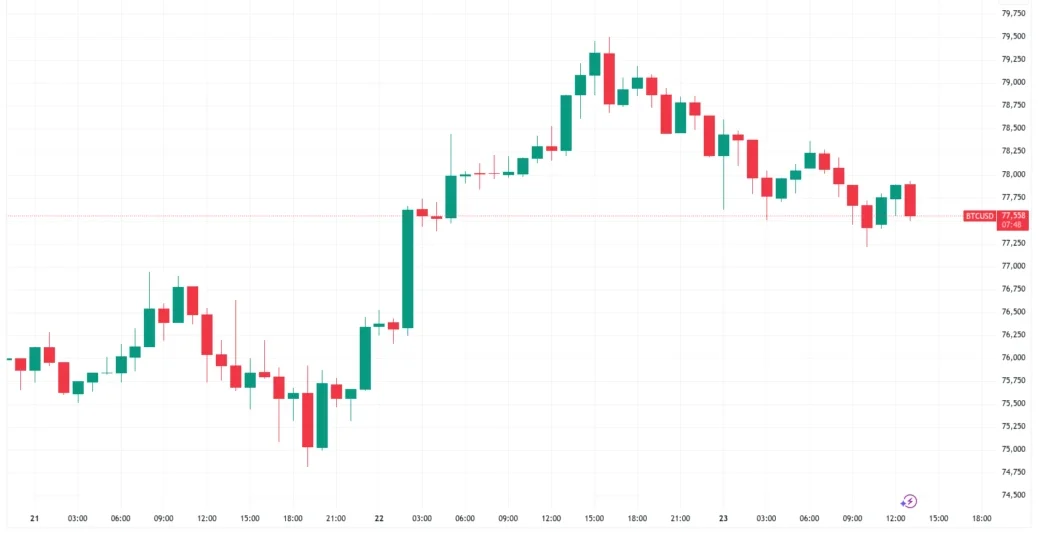
The world of Bitcoin price analysis never rests, and this week is no exception. After a period of cautious optimism that briefly pushed BTC price toward the psychologically significant $80,000 resistance zone, the market has pulled back, leaving traders and investors in a state of heightened anticipation as the weekly close comes into focus. Whether Bitcoin can mount a credible recovery or slide further into a deeper correction is a question dominating every major cryptocurrency trading forum, social media feed, and institutional desk right now.
Unlike daily or four-hour candle closes, the weekly close carries enormous weight because it reflects sustained sentiment, institutional positioning, and macro-level momentum. When Bitcoin fails to hold — or reclaim — a key price level heading into the weekly close, it often signals that the BTC market structure remains under pressure, and this week has laid that tension bare in unmistakable terms.
Why the Bitcoin Weekly Close Matters More Than Ever
A weekly candle that closes above a key resistance zone often confirms bullish continuation, while a close below critical support levels tends to invite selling pressure and can trigger cascading liquidations across leveraged positions.
This week, Bitcoin came tantalizingly close to revisiting the $80,000 price level — a threshold that has emerged as one of the most contested zones in recent memory. The $80K mark is not merely a round number; it sits at the confluence of several technical indicators, including the 200-day moving average, a major horizontal resistance cluster, and a volume shelf that has attracted both buyers and sellers in recent sessions. Failing to close a weekly candle above this level sends a discouraging message to Bitcoin bulls, suggesting that the market lacks the sustained conviction necessary to push higher.
The Role of Institutional Demand in Bitcoin’s Price Action
Institutional investors have become a defining force in Bitcoin’s price trajectory since the approval and launch of spot Bitcoin ETFs. In recent weeks, however, ETF inflow data has shown signs of cooling, with net flows turning mixed as larger players adopt a wait-and-see posture. This pullback in institutional demand has contributed directly to Bitcoin’s inability to reclaim the $80,000 resistance, as the retail buying pressure alone is insufficient to push the market through such a heavily defended level.
Analysts at several major research desks have noted that until ETF inflows return to a consistent positive trend, the BTC price outlook is likely to remain subdued. The interplay between spot ETF demand, over-the-counter desk activity, and futures positioning will be critical in determining whether Bitcoin can build the momentum needed to break convincingly above $80K in the sessions ahead.
Technical Analysis: Key Levels to Watch After the Weekly Close
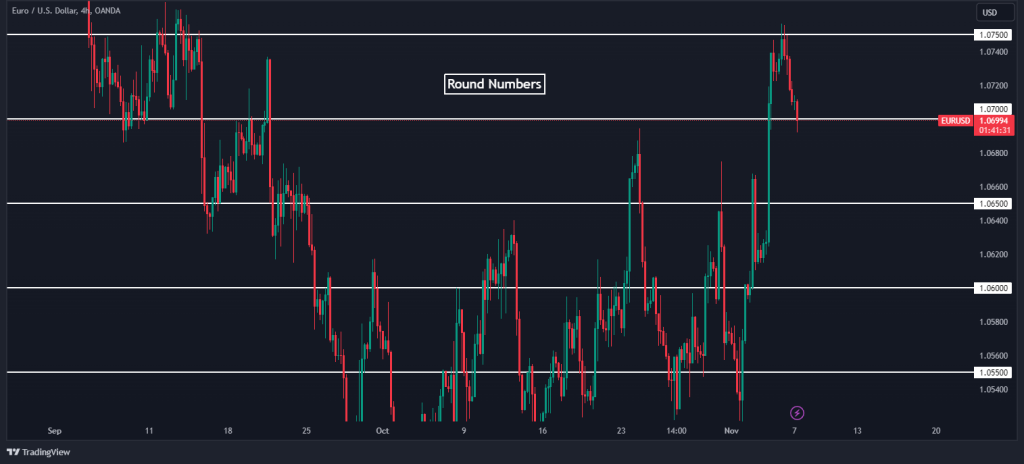
From a pure technical analysis standpoint, Bitcoin’s chart at the weekly timeframe is presenting a nuanced but cautionary picture. The BTC/USD pair has been trading within a defined range, with the upper boundary sitting near $80,000 and meaningful support clustering in the $72,000 to $74,000 zone. Traders following the Relative Strength Index (RSI) will note that the weekly RSI has failed to reclaim the midline with authority, a reading that historically aligns with periods of price consolidation or mild downside continuation rather than explosive upside breakouts.
The Moving Average Convergence Divergence (MACD) indicator on the weekly chart is also showing a bearish lean, with the MACD line sitting below the signal line. While this is not an outright sell signal in isolation, when combined with the rejection at $80K and the muted RSI momentum, it paints a picture of a market that needs a significant catalyst — either on-chain or macro in nature — to shift gears decisively to the upside.
Support Zones: Where Bitcoin Could Find Its Footing
Should the weekly close confirm continued weakness, the next major area of Bitcoin support lies in the $72,000 to $74,000 range. This zone has previously served as a launching pad for upward moves and is reinforced by the realized price of short-term holders — a key on-chain metric that represents the average cost basis of coins moved within the last 155 days. When Bitcoin trades near or below the short-term holder realized price, it historically signals that capitulation may be approaching, which often precedes meaningful reversals.
Below that, the $68,000 to $70,000 region represents another structural support area, characterized by high historical transaction volume and the presence of the long-term holder cost basis for cohorts who accumulated during the mid-cycle period. A pullback to this zone, while painful for recent buyers, would not necessarily represent a trend reversal — it could simply be a healthy Bitcoin market correction within a broader uptrend, depending on how macro conditions evolve.
Resistance Levels That Bitcoin Must Overcome
On the upside, the path to recovery is clear but not easy. The $80,000 level remains the first and most critical hurdle. A decisive weekly close above $80K — ideally accompanied by elevated volume and positive ETF inflows — would likely trigger a wave of FOMO-driven buying, potentially propelling BTC toward the $85,000 to $88,000 range where the next significant resistance cluster sits. Beyond that, the all-time high territory becomes the primary target for the most optimistic Bitcoin price predictions.
On-Chain Data: What the Blockchain Is Saying
On-chain analysis provides a layer of insight that pure price charts cannot offer, and the current data paints a mixed but not hopeless picture for Bitcoin. The Net Unrealized Profit/Loss (NUPL) indicator, which measures the overall profitability of all Bitcoin holders relative to the current price, is sitting in a zone consistent with “optimism” rather than “euphoria” — suggesting that while sentiment is cautious, the market has not yet entered the kind of extreme greed that precedes major tops.
Exchange net flows are also worth monitoring closely. In recent days, on-chain data has shown a moderate increase in Bitcoin exchange inflows, meaning more coins are being moved onto trading platforms. When inflows rise, it can be a signal that holders are preparing to sell, adding potential downside pressure. However, the magnitude of these inflows has been measured rather than alarming, suggesting that large-scale selling is not yet underway.
Miner Behavior and Its Impact on BTC Supply
Bitcoin miners are another crucial variable in the on-chain ecosystem. Following the most recent Bitcoin halving, miner revenue has been squeezed, and this has led some smaller operations to sell a portion of their holdings to cover operational costs. Miner outflows — the volume of BTC sent from miner wallets to exchanges — have ticked upward slightly in recent weeks, though they remain well below the levels seen during previous periods of miner capitulation.If Bitcoin hash rate continues to grow despite the revenue compression, it signals that the mining sector remains healthy and committed to long-term operations.
Macro Environment: The Hidden Hand Shaping BTC Price
No analysis of the Bitcoin weekly close would be complete without examining the broader macroeconomic backdrop. Bitcoin has evolved considerably in recent years — it is no longer an isolated, niche asset but is now deeply intertwined with global risk sentiment, interest rate expectations, and the performance of traditional financial markets.
Central banks in major economies are navigating a complex balancing act between controlling inflation and avoiding a sharp economic slowdown. When interest rate expectations shift hawkishly — suggesting that rates may remain higher for longer — it tends to suppress demand for risk assets, including Bitcoin. Conversely, any indication that central banks are pivoting toward easier monetary policy tends to act as a tailwind for BTC price appreciation.
Geopolitical Factors and Crypto Market Volatility
Beyond interest rates and the dollar, geopolitical developments are playing an increasing role in shaping crypto market volatility. Uncertainty around trade policies, regulatory developments in major economies, and global financial stability concerns can all drive sudden shifts in Bitcoin trading volume and price direction. Savvy traders are watching these macro threads carefully, understanding that a single significant geopolitical development can either trigger a sharp BTC sell-off or spark a flight-to-safety rally in digital assets.
Market Sentiment and Trader Psychology at the $80K Threshold
Perhaps the most underappreciated aspect of Bitcoin’s current struggle at the $80,000 resistance is the psychological dimension. Markets are, at their core, a reflection of collective human behavior, and the $80K level has become a deeply embedded psychological anchor for retail traders, institutional allocators, and media commentators alike.
That said, it would be a mistake to view current sentiment as uniformly bearish. Long-term Bitcoin holders — the so-called HODLers who form the bedrock of BTC’s demand base — remain largely unfazed by short-term price volatility. Blockchain data consistently shows that the volume of Bitcoin held in wallets that have been inactive for more than one year continues to rise, indicating that conviction among long-term investors has not wavered despite the recent price struggles.
What Analysts Are Saying About BTC’s Next Move
The analyst community is divided on the immediate outlook for Bitcoin, which is itself informative. When top voices in the cryptocurrency research space disagree sharply, it usually means that the market is at a genuine inflection point — one where the next significant catalyst could drive a decisive move in either direction.
What virtually all serious analysts agree on is that the Bitcoin weekly close this weekend is a critical data point. Whether BTC closes above or below key technical levels will set the tone for the weeks ahead and will influence how both retail and institutional players position themselves going into the next major market phase.
Conclusion
Bitcoin’s failure to revisit the $80,000 level heading into the weekly close is a significant development that deserves careful attention from anyone involved in or following the cryptocurrency market. The confluence of technical rejection, mixed on-chain signals, cautious institutional sentiment, and macro headwinds creates a complex but navigable environment for informed investors. While the short-term picture calls for patience and disciplined risk management, the long-term fundamentals of Bitcoin remain intact — bolstered by a growing adoption curve, finite supply, and deepening integration into global financial infrastructure.
The weekly close will not tell the full story, but it will provide an important chapter. Traders and investors would do well to watch the key levels outlined in this analysis closely, manage their risk accordingly, and avoid making decisions based purely on short-term price anxiety. Bitcoin has weathered far more dramatic consolidations in its history, and its ability to ultimately trend higher has consistently rewarded those with the conviction to hold through the noise.
Also More: Crypto News Today Bitcoin Below $93K, DeFi Slumps
