


When Donald Trump’s sons launched American Bitcoin Corp. (ABTC) in early 2025, the announcement sent shockwaves through the cryptocurrency industry. A venture backed by one of the most recognizable political dynasties in the world, promising to make the United States the “crypto capital of the planet” — it sounded like a guaranteed winner in an era where Bitcoin mining was booming and institutional interest in digital assets was hitting all-time highs. The company debuted on Nasdaq in September 2025 through a high-profile reverse merger, and for a brief shining moment, the narrative was irresistible.
But the cryptocurrency market has never been kind to narratives alone. Just months after its public listing, American Bitcoin began revealing a far more complicated financial picture than its brand suggested. Quarterly losses mounted. The stock price cratered. Retail investors who had rushed in on the strength of the Trump name found themselves holding sharply depreciated shares. And now, with Bitcoin trading above $80,000, the company that promised to mine BTC at a discount to market price has posted back-to-back quarterly losses totaling over $140 million — a staggering figure that demands a thorough explanation.
This article breaks down exactly what went wrong at Trump’s Bitcoin mining company, why the losses happened despite a seemingly favorable BTC price environment, and what the broader implications are for the crypto mining industry in the post-halving era.
What Is American Bitcoin Corp. and Who Backs It?
American Bitcoin Corp. (ticker: ABTC) is a Bitcoin mining and treasury company launched on March 31, 2025, through a partnership between Miami-based crypto infrastructure firm Hut 8 Corp. and investors that include Eric Trump and Donald Trump Jr. The deal gave Hut 8 an 80% controlling stake in the venture, while the Trump brothers together hold approximately 20% of the company. The business model was straightforward from the start: mine Bitcoin at a low cost per coin, hold it as a treasury asset rather than selling it, and accumulate a growing BTC reserve that would appreciate over time.
The strategy attracted significant investor attention. When the company made its Nasdaq debut in September 2025, ABTC shares surged aggressively, briefly pushing Eric Trump’s paper stake into billionaire territory. The political association — combined with the Trump administration’s publicly stated support for the domestic crypto mining sector — created an almost euphoric sentiment around the stock. ABTC’s valuation surged roughly 40% in Q4 2025 on the back of that political brand association alone, according to Galaxy Digital analyst Alex Thorn’s March 2026 report.
The core infrastructure relied on Hut 8’s existing mining facilities across locations including Niagara Falls and a newer Drumheller site in Alberta, Canada, which came online in late March 2026. By the end of Q1 2026, American Bitcoin operated 89,242 ASIC mining machines with a combined hashrate capacity of 28.1 EH/s (exahashes per second) — a significant scale by any standard in the global mining industry.
The Quarterly Losses: Breaking Down the Numbers
The financial results for American Bitcoin have been a study in contradiction. On the operational side, the picture is genuinely impressive. The company’s cost to mine one Bitcoin fell to approximately $36,200 in Q1 2026, a 23% drop from $46,900 in Q4 2025. Gross margins from mining operations remained above 50%, meaning the company was, by its own measure, acquiring Bitcoin at a steep discount to spot prices. In Q1 2026 alone, American Bitcoin mined a record 817 BTC — the highest single-quarter production in its short history — and purchased an additional 803 BTC for its treasury reserve, bringing total holdings to 7,021 BTC as of March 31, 2026, making it the 16th-largest publicly traded Bitcoin holder in the world.
Yet despite all of that operational momentum, the company posted a net loss of $81.8 million in Q1 2026, missing analyst estimates by a significant 17%. Revenue from mining declined to $62.1 million, down from $78.3 million in Q4 2025. The earnings per share (EPS) came in at a loss of $0.08, sharply missing consensus estimates of a $0.01 gain.
The story is similar for Q4 2025. For that quarter, American Bitcoin posted a net loss of $59.45 million, reversing a prior $3.48 million profit, even as quarterly revenue rose to $78.3 million. For the full year 2025, the company reported a total net loss of $153.2 million. Across both quarters, the losses paint a picture of a company caught between strong operational execution and brutal accounting realities driven by Bitcoin price volatility.
The Real Culprit: Mark-to-Market Accounting and Bitcoin’s Price Drop
If there is one factor that explains the bulk of American Bitcoin’s reported losses, it is the non-cash mark-to-market accounting charges tied to its Bitcoin holdings. Under current FASB (Financial Accounting Standards Board) fair-value accounting rules, companies that hold Bitcoin on their balance sheets must record unrealized gains and losses based on the prevailing market price at the end of each reporting period. When Bitcoin’s price drops, those paper losses flow directly through to the income statement — even if the company hasn’t sold a single coin.
In Q1 2026, Bitcoin’s price fell roughly 22% during the quarter, dragging the stated value of American Bitcoin’s growing BTC reserve sharply lower. The company booked a $117.2 million non-cash impairment charge on its digital-asset holdings — a figure that dwarfed the actual revenue generated from mining operations. CEO Mike Ho acknowledged this directly, stating that the company’s core mining business remained profitable when excluding these accounting adjustments tied to Bitcoin valuations. The company also confirmed it did not sell any Bitcoin during the period.
This is a critical distinction that investors and observers must understand. The reported losses are not cash losses in the traditional sense. American Bitcoin is not burning through money to keep the lights on at a loss. Rather, it is accumulating a growing reserve of a volatile asset, and when that asset’s price declines during a given quarter, accounting rules force the company to report it as a loss. When Bitcoin recovers — as it has done repeatedly throughout its history — those same rules would generate equally dramatic paper gains. The company’s CEO and co-founder Eric Trump has pointed to the “sats-per-share” metric, which rose approximately 20% to roughly 663 satoshis per share, as a more meaningful indicator of the company’s actual progress.
How the April 2024 Bitcoin Halving Is Still Reshaping Mining Economics
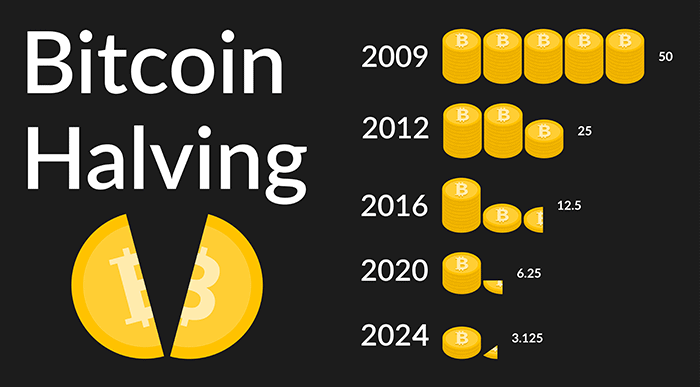
Beyond the accounting noise, there is a deeper structural challenge facing American Bitcoin and virtually every other publicly listed Bitcoin miner: the aftermath of the April 2024 Bitcoin halving event. The halving, which occurs approximately every four years, cuts the block reward paid to miners in half. Before the 2024 halving, miners received 6.25 BTC per block solved. After it, that reward dropped to 3.125 BTC. On its face, this halves the revenue a miner earns from the same amount of computational work.
Historically, halvings have been followed by significant Bitcoin price appreciation that more than compensates miners for the reduced block reward. The 2024 halving has followed that pattern to a degree, with Bitcoin reaching well above $100,000 in late 2024 before pulling back. But the margin compression is real. U.S. energy costs have risen roughly 35% since 2025, according to analyst assessments, meaning the cost side of the mining equation has moved against domestic operators even as block rewards have shrunk. The global network hashrate also continued climbing post-halving, driven in part by an influx of competitive mining operations, which compresses the profit margins of every miner regardless of brand recognition or political connections.
American Bitcoin’s energy rate of approximately $0.045 per kilowatt-hour sits at the upper ceiling of what domestic miners can sustainably operate at in the current environment, according to on-chain analytics firm Glassnode. That’s not catastrophic, but it leaves little room for error. When Bitcoin price dips and mining difficulty adjusts upward simultaneously, companies operating near the margin boundary feel the squeeze most acutely.
The Stock Price Collapse and Retail Investor Fallout

Perhaps the most painful chapter in the American Bitcoin story belongs to retail investors who entered the stock at or near its post-listing highs. Following its September 2025 Nasdaq debut, ABTC shares experienced extreme volatility, surging on the back of the Trump brand and crypto market enthusiasm before collapsing dramatically. A Forbes investigation published in April 2026 estimated that retail investors lost approximately $500 million in market capitalization as shares cratered from their post-listing peaks. As of early May 2026, ABTC shares trade near $1.22–$1.25, down more than 72.5% over the past six months and down over 90% from post-listing highs.
Following the Q1 2026 earnings release, shares fell an additional 2.3% in pre-market trading. The stock has consistently underperformed peers like Riot Platforms and Marathon Digital, both of which have navigated the post-halving environment by diversifying into AI and high-performance computing (HPC) infrastructure — a pivot that has attracted significant institutional capital. American Bitcoin, by contrast, has remained a pure-play Bitcoin mining and treasury company, betting entirely on Bitcoin price appreciation to validate its accumulation strategy.
The governance questions have also added to investor unease. A Senate inquiry in early 2026 examined potential token transfers involving sanctioned entities across the broader crypto sector, and while not focused solely on American Bitcoin, the political heat surrounding any Trump-linked digital asset venture added a layer of scrutiny that pure-play miners without a political affiliation would not face. Ongoing questions about dilution, insider stake dynamics, and the pace of share unlocks have further weighed on market sentiment.
How Does American Bitcoin Compare to Other Crypto Miners?
To properly contextualize American Bitcoin’s struggles, it is worth noting that the company is far from alone in its difficulties. The broader publicly listed Bitcoin mining sector faced significant headwinds in Q1 2026. CleanSpark reported a net loss of $378.7 million in early February and began unplugging mining hardware as costs exceeded $87,000 per coin. IREN posted a net loss of $155.4 million while actively shifting its focus from Bitcoin mining toward AI cloud infrastructure. Bitdeer Technologies sold its entire 943-BTC holdings to fund data center and HPC expansions. Cipher Mining rebranded to Cipher Digital, signaling a full pivot away from pure cryptocurrency mining.
What sets American Bitcoin apart from this broader wave of corporate difficulty is the speed and intensity of its rise and fall, the magnitude of the political brand association, and the fact that unlike many peers, it has explicitly chosen not to pivot toward AI infrastructure. Where competitors are hedging their exposure to Bitcoin price cycles by building revenue streams in high-demand compute infrastructure, American Bitcoin remains strategically committed to its original thesis: mine cheap, hold everything, and let Bitcoin’s long-term appreciation carry the company forward.
That strategy may yet prove visionary. But in the short term, it has left the company exposed to every downturn in BTC price with no offsetting revenue cushion, making its quarterly financial statements a direct proxy for Bitcoin’s near-term market movements.
Is There a Path Forward for American Bitcoin?
Despite the losses and the battered stock price, American Bitcoin’s management argues — not without reason — that the operational foundation remains strong. The company’s production cost per Bitcoin continues to decline quarter over quarter, a sign that scaling efficiencies are working. The addition of the Drumheller, Alberta facility expanded hashrate capacity meaningfully in Q1 2026. With 89,000 miners running at 28.1 EH/s, the company has genuine scale.
The Trump administration’s broader crypto-friendly policy environment also represents a potential tailwind. A March 2026 mining incentive bill targets $1 billion in domestic miner subsidies by Q3 2026, which could meaningfully reduce the energy cost burden for U.S.-based operators. If that legislation passes and Bitcoin stabilizes above $80,000 heading into Q2 2026, American Bitcoin’s accounting losses could reverse dramatically — the same fair-value accounting rules that punished the company when Bitcoin fell could generate large paper gains when Bitcoin rises.
Bitcoin’s price near $81,000 as of early May 2026 offers some breathing room. The company holds over 7,021 BTC worth hundreds of millions of dollars at current market prices — a substantial treasury that could be strategically deployed or used as collateral. The question is whether investor patience holds long enough for the strategy to bear fruit.
Conclusion
The story of American Bitcoin Corp. is, at its core, a story about the gap between political narrative and mathematical reality. No amount of brand association can alter the Bitcoin protocol’s difficulty adjustment. No amount of press coverage changes the economics of the post-halving mining environment. And no political backing protects a balance sheet from mark-to-market accounting losses when the asset it holds declines in value.
ABTC’s $81.8 million Q1 2026 loss — following a $59 million loss in Q4 2025 — is real, and it has real consequences for shareholders who paid top dollar for a narrative that has not yet delivered matching financial results. At the same time, the operational metrics tell a genuinely competitive story: industry-low production costs, record Bitcoin output, and a growing treasury that positions the company to benefit handsomely if Bitcoin continues its long-term upward trajectory.
Also, More: Crypto Market News Today, Whale Eye, DeepSnitch AI
