


Decentralized finance is entering a new phase of maturity, and the numbers are making that clear. Among all DeFi sectors, DeFi lending protocols are emerging as one of the most dominant forces in the ecosystem. With lending platforms now accounting for an impressive 21.3% share of total value locked (TVL), the market is signaling a decisive shift in how capital is deployed on-chain.
This surge is not driven by hype or short-term incentives. Instead, it reflects a growing preference for structured, utility-driven financial tools that resemble traditional credit markets—while retaining the transparency and accessibility that define decentralized finance. As traders, long-term holders, institutions, and DAOs increasingly rely on on-chain borrowing and lending, decentralized lending protocols are becoming core financial infrastructure rather than experimental products.
The rise in TVL share also tells a deeper story about confidence. TVL represents capital that users are willing to lock into smart contracts, often for extended periods. When nearly a quarter of all DeFi capital flows into lending markets, it suggests that users trust these protocols to manage risk, maintain solvency, and deliver consistent value even during volatile market conditions.
In this article, we’ll explore why DeFi lending protocols are surging, what a 21.3% TVL share really means, how decentralized lending works, the key drivers behind this growth, the risks involved, and what this trend signals for the future of the crypto market.
Understanding the Importance of TVL in DeFi Lending
Total value locked has become one of the most widely used metrics in decentralized finance. While it doesn’t tell the whole story, TVL provides a useful snapshot of where capital is being committed across the ecosystem. For DeFi lending protocols, TVL includes assets supplied by lenders as well as collateral locked by borrowers.
A rising TVL share indicates more than just inflows. It shows that lending protocols are outperforming other DeFi sectors such as decentralized exchanges, NFT platforms, and yield aggregators. Unlike transactional activity, which can fluctuate daily, lending TVL tends to be more stable. Assets locked in lending markets are often part of longer-term strategies involving yield generation, leverage, or liquidity management.
This stability makes lending protocols particularly attractive during uncertain market conditions. Even when trading volumes decline, demand for credit and yield often remains. That is why the growth of decentralized lending platforms is frequently viewed as a sign of market maturity rather than speculation.
Why DeFi Lending Protocols Are Capturing 21.3% of TVL
The rapid expansion of DeFi lending protocols is the result of several converging factors. Together, they explain why lending has become one of the most trusted and capital-intensive segments of decentralized finance.
Sustainable Yield Over Incentive-Driven Rewards
One of the most important drivers is the return to sustainable yield. In earlier DeFi cycles, many platforms relied heavily on token incentives to attract liquidity. While effective in the short term, those models often proved unsustainable.
In contrast, lending protocols generate yield primarily through borrower interest. This makes returns more predictable and less dependent on inflationary rewards. As users seek reliable income streams, especially from stablecoin lending, decentralized lending markets naturally become more attractive.
Increased Demand for On-Chain Liquidity
Borrowing is no longer just a speculative activity. Many users rely on DeFi lending protocols to access liquidity without selling their core crypto holdings. By using assets like ETH or BTC-backed tokens as collateral, borrowers can obtain stablecoins for trading, expenses, or yield strategies while maintaining long-term exposure.
This “borrow instead of sell” behavior has become a cornerstone of DeFi usage and continues to push lending TVL higher.
Improved Risk Management and Protocol Design
Modern decentralized lending platforms are significantly more sophisticated than their early predecessors. Features such as isolated lending pools, dynamic interest rates, improved oracle systems, and conservative collateral ratios have made these protocols more resilient.
As risk management improves, larger investors feel more comfortable deploying capital, further increasing TVL and reinforcing confidence in the system.
How DeFi Lending Protocols Work
At their core, DeFi lending protocols function as automated money markets governed by smart contracts. Users interact directly with code rather than intermediaries, allowing lending and borrowing to occur in a transparent and permissionless manner.
Lenders deposit assets into liquidity pools and earn interest based on demand. Borrowers deposit collateral and take out loans denominated in another asset, typically a stablecoin. To protect lenders, loans are usually overcollateralized, meaning the value of collateral exceeds the borrowed amount.
Interest rates adjust dynamically depending on supply and demand. When borrowing demand increases, interest rates rise to incentivize more deposits. When liquidity is abundant, rates fall, encouraging borrowing activity.
Liquidation mechanisms ensure system stability. If the value of collateral falls below a certain threshold, the protocol automatically liquidates part of the position to repay lenders. This automated risk control is one of the reasons DeFi lending protocols can operate continuously without centralized oversight.
The Role of Stablecoins in Lending Growth
Stablecoins play a central role in the expansion of decentralized lending. A large portion of borrowing activity involves stablecoins, as they provide price stability while enabling users to remain within the crypto ecosystem.
For lenders, stablecoin deposits offer relatively low volatility and consistent returns. For borrowers, stablecoins provide a predictable unit of account for expenses, trading, and yield strategies. This dual utility has made stablecoin lending one of the strongest contributors to TVL growth across DeFi lending protocols.
As stablecoin adoption continues to expand globally, lending markets are likely to benefit directly from increased demand for on-chain liquidity.
Why Lending Is Gaining Share Over Other DeFi Sectors
While decentralized exchanges remain essential, lending protocols are increasingly seen as foundational infrastructure. Trading activity can fluctuate with market sentiment, but credit demand tends to persist across different market cycles.
Lending also avoids some of the challenges faced by liquidity providers on DEXs, such as impermanent loss. As a result, many users view lending as a more straightforward way to deploy capital with a clearer risk-reward profile.
Additionally, DeFi lending protocols often serve as the backbone for other DeFi activities. Perpetual trading platforms, structured products, and yield strategies frequently rely on lending liquidity, further reinforcing the sector’s importance.
Risks Associated With DeFi Lending Protocols
Despite their growth, DeFi lending protocols are not without risk. Understanding these risks is essential for anyone participating in decentralized lending markets.
Smart contract vulnerabilities remain a concern, particularly for newer protocols. Oracle failures can lead to incorrect pricing, increasing the risk of bad debt. Market volatility can also cause rapid liquidations, potentially resulting in losses for borrowers.
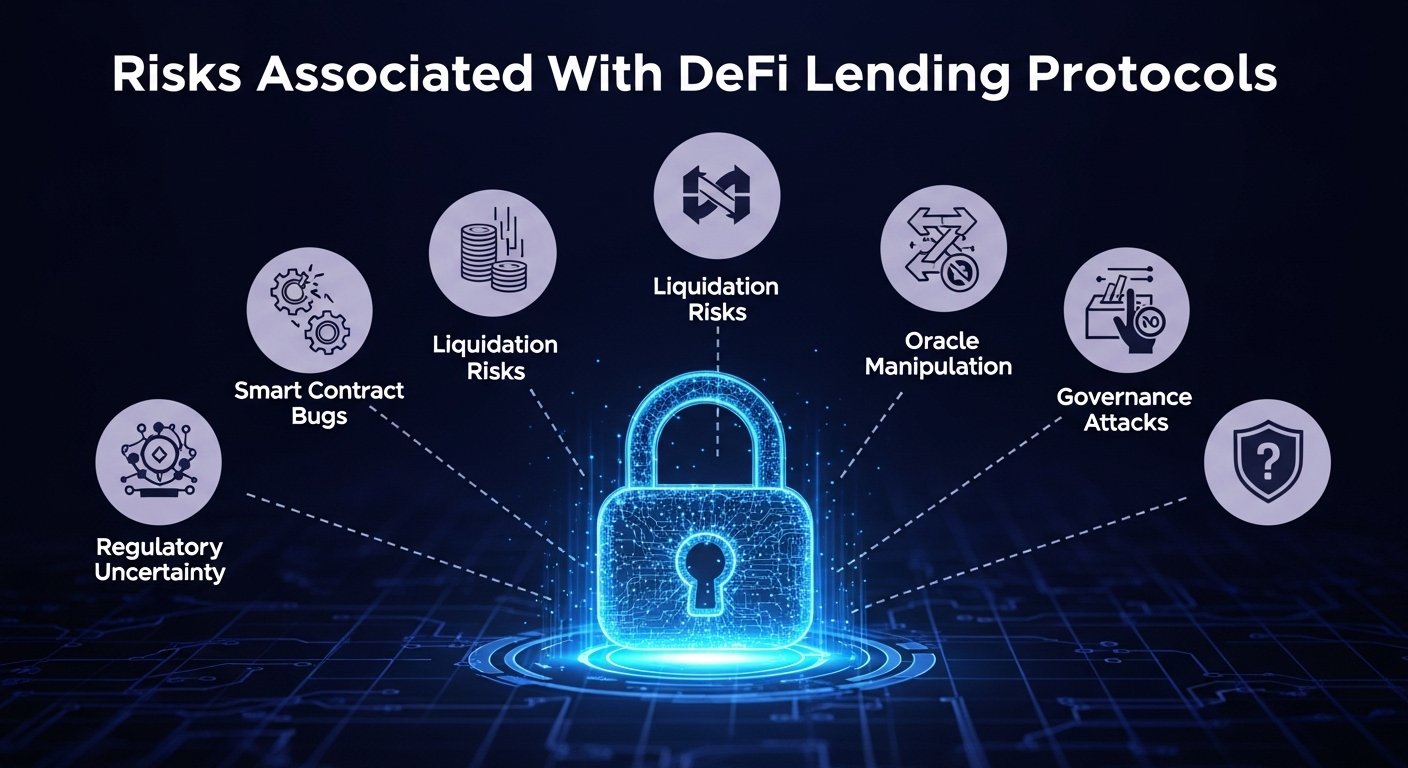
Stablecoin risk is another factor. A major depegging event can disrupt lending markets and create cascading liquidations. While protocol design continues to improve, users should approach decentralized lending with informed caution.
What the 21.3% TVL Share Means for the Future of DeFi
The growing dominance of DeFi lending protocols suggests that decentralized finance is evolving toward a more structured and utility-driven ecosystem. Credit markets are forming the backbone of on-chain finance, supporting everything from trading to treasury management.
This trend may also pave the way for broader adoption of tokenized real-world assets, as lending platforms explore new forms of collateral with lower volatility. As regulatory clarity improves in some regions, institutional participation could further accelerate lending growth.
Ultimately, the rise of lending TVL reflects a shift from experimentation to infrastructure. DeFi is no longer just about innovation—it’s about building systems that can support real economic activity at scale.
Conclusion
The surge in DeFi lending protocols, marked by a 21.3% share of total value locked, represents a significant milestone for decentralized finance. It signals growing trust in on-chain credit systems, a preference for sustainable yield, and a move toward financial primitives that mirror real-world markets.
While risks remain, the continued evolution of lending platforms suggests that decentralized lending is becoming one of the most resilient and essential components of the crypto ecosystem. As DeFi continues to mature, lending protocols are likely to remain at the center of capital allocation and innovation.
FAQs
Q: What does a 21.3% TVL share mean for DeFi lending protocols?
It means that over one-fifth of all DeFi capital is locked in lending platforms, indicating strong user trust and growing demand for on-chain credit.
Q: Why are DeFi lending protocols growing faster than other sectors?
They offer sustainable, interest-based yields and enable users to access liquidity without selling assets, making them attractive in various market conditions.
Q: Are DeFi lending protocols suitable for beginners?
Beginners can use them, but should start cautiously, understand liquidation risks, and focus on well-established platforms.
Q: How do interest rates work in DeFi lending?
Interest rates adjust automatically based on supply and demand. Higher borrowing demand leads to higher rates, attracting more lenders.
Q: What are the biggest risks in decentralized lending?
Key risks include smart contract bugs, oracle failures, market volatility, and stablecoin depegging events.
See More: Crypto Has Grown Stale What Comes Next
