



Ethereum’s future scope attracts developers, investors, and big financial firms at the same time. The network hosts most decentralized apps, stablecoins, and NFTs, and it keeps adding new features every year. Three themes drive the conversation today: Layer 2 scaling, real-world asset tokenization, and growing interest from Wall Street. This guide explains how each theme works, weighs the risks, and outlines bullish and bearish paths for ETH. Read on to see where Ethereum stands and what could shape its next chapter.
What Is Ethereum and Why Does Its Future Matter?
Ethereum launched in 2015 as a programmable blockchain, and developers use it to build apps that run without a central owner. Smart contracts power lending platforms, exchanges, games, and stablecoin systems. The network switched from proof of work to proof of stake in 2022, sharply cutting its energy use. Validators now lock up ETH to secure the chain and earn rewards. Ether (ETH) pays for transactions and also works as collateral across decentralized finance. Because so much value sits on Ethereum, its roadmap affects the whole crypto market. Visit the official Ethereum website to explore the project directly.
Ethereum Future Scope: Layer 2 Scaling
Ethereum’s future scope depends heavily on how well it scales. The base chain handles a limited number of transactions, so fees climb when demand spikes. Layer 2 networks like Arbitrum, Optimism, and Base solve this problem by processing transactions off the main chain and posting compressed proofs back to Ethereum. Users enjoy lower fees and faster confirmations, while the main chain keeps its security. The Dencun upgrade added blob transactions, and those blobs cut Layer 2 costs dramatically. Track every rollup’s activity and security on L2BEAT. This rollup-focused roadmap keeps Ethereum decentralized while it grows.
How Layer 2 Networks Change the ETH Experience
Layer 2 networks turn Ethereum into a multi-lane highway. Each rollup handles its own traffic, and all of them settle on the main chain. Users pay a few cents instead of several dollars for a swap or transfer. Developers launch apps on rollups to reach more people at lower cost. Critics point out that liquidity splits across many networks, which confuses newcomers. Wallets and bridges now hide much of that complexity. Better tools keep pushing everyday users toward Layer 2 networks and strengthen demand for ETH as the base asset.

Ethereum Future Scope in Tokenization
Tokenization turns real-world assets into tokens that live on a blockchain. Banks and asset managers now put money market funds, bonds, and private credit on Ethereum. Investors gain faster settlement, round-the-clock trading, and transparent ownership records. Ethereum leads this field because it offers deep liquidity, strong security, and a long track record. Stablecoins already prove the model, since most of them run largely on Ethereum and Layer 2 networks. Track the growth of tokenized assets on RWA.xyz. If this trend continues, Ethereum could become the settlement layer for a large share of global finance.
Wall Street Adoption of Ethereum
Wall Street no longer treats Ethereum as a fringe experiment. Spot Ether ETFs launched in the United States in 2024, and they let investors buy ETH exposure through regular brokerage accounts. Large asset managers have also launched tokenized funds on the network. Some public companies now hold ETH on their balance sheets as a treasury asset. These moves bring new demand and add credibility. However, institutions still prefer clear regulation before they commit large sums. Read our crypto market analysis for updates on ETF flows and policy changes.
Ethereum Future Scope: Risks Investors Must Weigh
Ethereum carries clear risks that every investor should weigh. Rival networks such as Solana offer fast, cheap transactions and compete for the same developers. Layer 2 networks may capture value that once flowed to the main chain, which could weaken ETH’s fee revenue. Validator concentration and staking services raise decentralization concerns. Complex upgrades can also bring bugs or delays. Regulators may change rules for staking and tokenized assets at any time. Protect your capital with small positions and clear stop losses, and read our crypto trading guides before you use leverage.
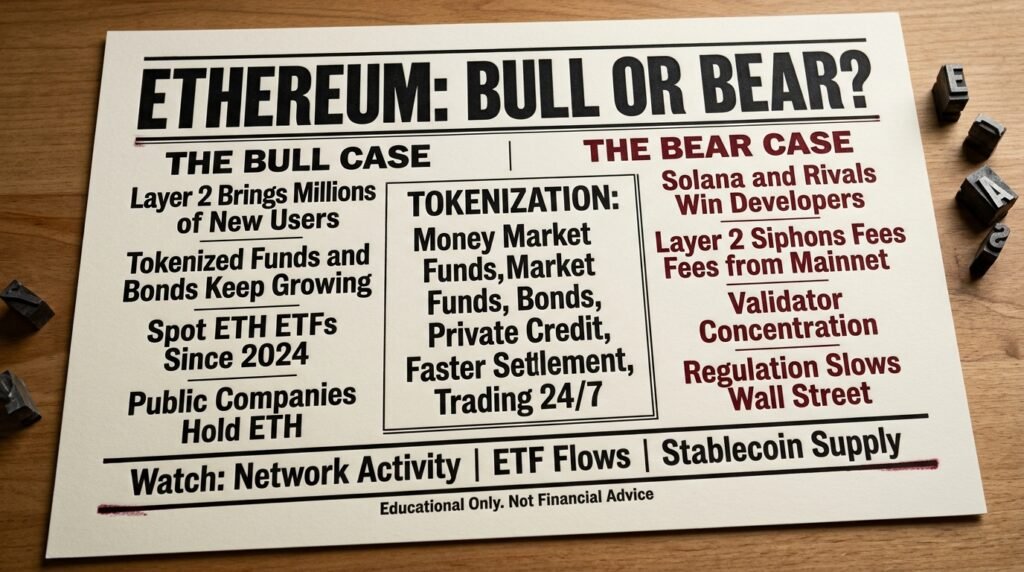
Ethereum Future Scope: Bullish and Bearish Outlook
In the bullish case, Layer 2 networks bring millions of new users, tokenized assets keep growing, and institutions keep buying ETH. Strong demand for blockspace and staking could then push the price higher. In the bearish case, competing chains win developers, Layer 2 networks siphon fees away, and regulators slow Wall Street adoption. A weak market would hit ETH hard because investors often sell altcoins first. The base case sits between the two, with ETH moving alongside Bitcoin and overall market mood. Watch network activity, ETF flows, and stablecoin supply to see which path unfolds. Nobody can predict the winner, so plan for every scenario.
FAQs
What is the Ethereum future scope for the next few years?
Ethereum’s future scope depends on Layer 2 growth, tokenization, and institutional demand. Cheaper transactions can attract mainstream users, and tokenized assets can bring serious capital onchain. Competition and regulation remain real threats, so treat every forecast with caution.
How do Layer 2 networks help Ethereum?
Layer 2 networks process transactions off the main chain and send compressed data back to Ethereum. This design lowers fees and increases speed without weakening security. Users get a smoother experience, and developers reach a bigger audience.
Is Ethereum a good long-term investment?
Ethereum offers strong adoption, a large developer community, and growing institutional interest. Its price still swings sharply, and no outcome is guaranteed. Research the project, spread your risk, and invest only what you can afford to lose.
Final Thoughts
Ethereum’s future scope rests on three pillars: Layer 2 scaling, tokenization, and Wall Street adoption. Each pillar offers real upside, and each carries risk. Steady rollup growth and rising institutional demand would support the bullish case. Tough competition and strict regulation would support the bearish case. Visit Crypto Fy Lab for daily crypto news and analysis. This post shares educational information only, so make your own decisions and set your own risk limits.
