


Tether (USDT) is the largest stablecoin in the crypto market, with roughly $185 billion in circulation as of mid-2026 and a share of well over half of the entire stablecoin sector. Almost every major exchange quotes its trading pairs in USDT, which makes it the quiet backbone of daily crypto activity. Beginners often ask whether it is safe, how it keeps its price steady, and why regulators pay so much attention to it. This guide answers those questions in plain language and explains where Tether stands today.
What Is Tether (USDT)?
How USDT Works
USDT is a stablecoin designed to track the value of one US dollar. Tether issues new tokens when customers deposit dollars and destroys tokens when customers redeem them, which keeps supply linked to real reserves. Authorized partners can profit from tiny price gaps by buying cheap tokens and redeeming them for a full dollar, and this arbitrage pulls the price back toward $1. You can follow the live price and supply on CoinGecko, where market data updates every few minutes.
A Brief History of USDT
Tether launched in 2014 under the name Realcoin, built on top of the Bitcoin network through the Omni Layer. It later rebranded and expanded to many other blockchains as demand for a digital dollar grew. The company has faced criticism over the years, including a 2021 settlement with the New York Attorney General over how it described its reserves. Despite those controversies, USDT kept growing because traders needed deep liquidity, and no competitor matched its reach across exchanges and countries.
How Is Tether (USDT) Backed and Verified?
What Sits Inside the Reserves
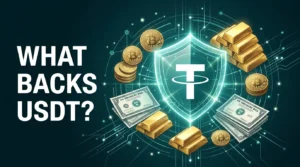
Tether supports each token with reserves that exceed its liabilities. It holds most of those reserves in short-term US Treasury bills and cash equivalents, with smaller portions in assets such as gold, bitcoin, and secured loans. This mix has changed over time, as earlier years relied more heavily on commercial paper. Because Treasury yields have stayed attractive, Tether has reported very large profits, which also adds an extra cushion against potential losses. The latest breakdown is published on the official Tether transparency page.
Attestation Versus Audit
Many readers confuse an attestation with a full audit, but they are not the same thing. An attestation is a report, such as the quarterly reports prepared by BDO. Confirms the reserve figures on a specific date based on management information. A full audit goes deeper by testing internal controls and verifying the underlying financial statements over a whole period. Tether has taken steps toward a bigger audit by working with a large accounting firm, which is a positive signal for institutional users. Even so, careful investors should still read the reports themselves instead of relying on headlines.
Why Do Traders and Users Rely on USDT?
Liquidity Across Exchanges
USDT is the default trading pair on most centralized exchanges. This means buyers and sellers almost always find a market for it. Deep liquidity keeps spreads tight, so traders lose less money when they move in and out of positions. Market makers also hold large USDT balances as working inventory, which supports smooth trading even during volatile hours. When Bitcoin or Ethereum drops sharply, many traders convert into USDT to protect their gains without leaving the crypto ecosystem. You can compare its market role with other coins on CoinMarketCap.
Demand From Emerging Markets
In countries with weak currencies or strict capital controls, USDT works like a digital savings account in dollars. People in places such as Pakistan, Nigeria, Turkey, and Argentina use it to protect their income from inflation and to send money abroad. Transfers settle in minutes, work on weekends, and usually cost far less than traditional wire services. Freelancers and small businesses also accept USDT because it removes many banking delays. This real-world usage explains why the supply of USDT has grown faster than the broader crypto market in recent years.
Availability on Many Blockchains
The company publishes its reserves quarterly, and its profits provide a financial buffer, yet critics still want more frequent audits and clearer legal oversight. This multi-chain strategy lets users pick the network that suits their budget and speed needs. It also reduces reliance on a single blockchain if congestion or high fees appear. Before sending funds, always confirm that the receiving wallet supports the same network, because choosing the wrong one can lead to permanent loss. See the Ethereum stablecoin guide for a helpful overview.
What Are the Risks and Regulations Around Tether (USDT)?
Peg and Counterparty Risk
The company publishes its reserves quarterly, and its profits provide a financial buffer, yet critics still want more frequent audits and clearer legal oversight. The peg recovered, but the episode showed that confidence is as important as reserves. Holders also depend on Tether as a private company, which means they carry counterparty risk if its reserves or banking partners ever fail. Crypto can freeze addresses linked to illegal activity, which helps law enforcement but also shows that USDT is not fully censorship-resistant. Anyone holding large amounts should diversify across wallets and assets.
The GENIUS Act and Global Rules
The US passed the GENIUS Act in 2025, creating the first federal framework for payment stablecoins, with rules on reserves, redemption, and disclosure. Issuers must meet these standards to operate with regulated American platforms, and Tether has faced pressure to adapt its structure. In Europe, the MiCA regulation led several exchanges to restrict USDT trading for local users. This is pushing some traders toward compliant alternatives like USDC. These shifts are creating a two-tier market where regulated and offshore stablecoins follow different paths. Check DefiLlama for current market share trends.

Final Thoughts on Tether (USDT)
Tether remains the most widely used stablecoin. It does so because it combines deep liquidity, multi-chain access, and strong demand from people who need dollars outside the traditional banking system. The company publishes its reserves quarterly. Its profits provide a financial buffer, yet critics still want more frequent audits and clearer legal oversight. Regulation will likely decide how much of its dominance survives over the next few years. For everyday users, the smart approach is simple: use USDT for trading and transfers, and verify reserve reports. This avoids storing everything in one place and helps you stay informed through trusted sources like Investopedia’s stablecoin guide.
