


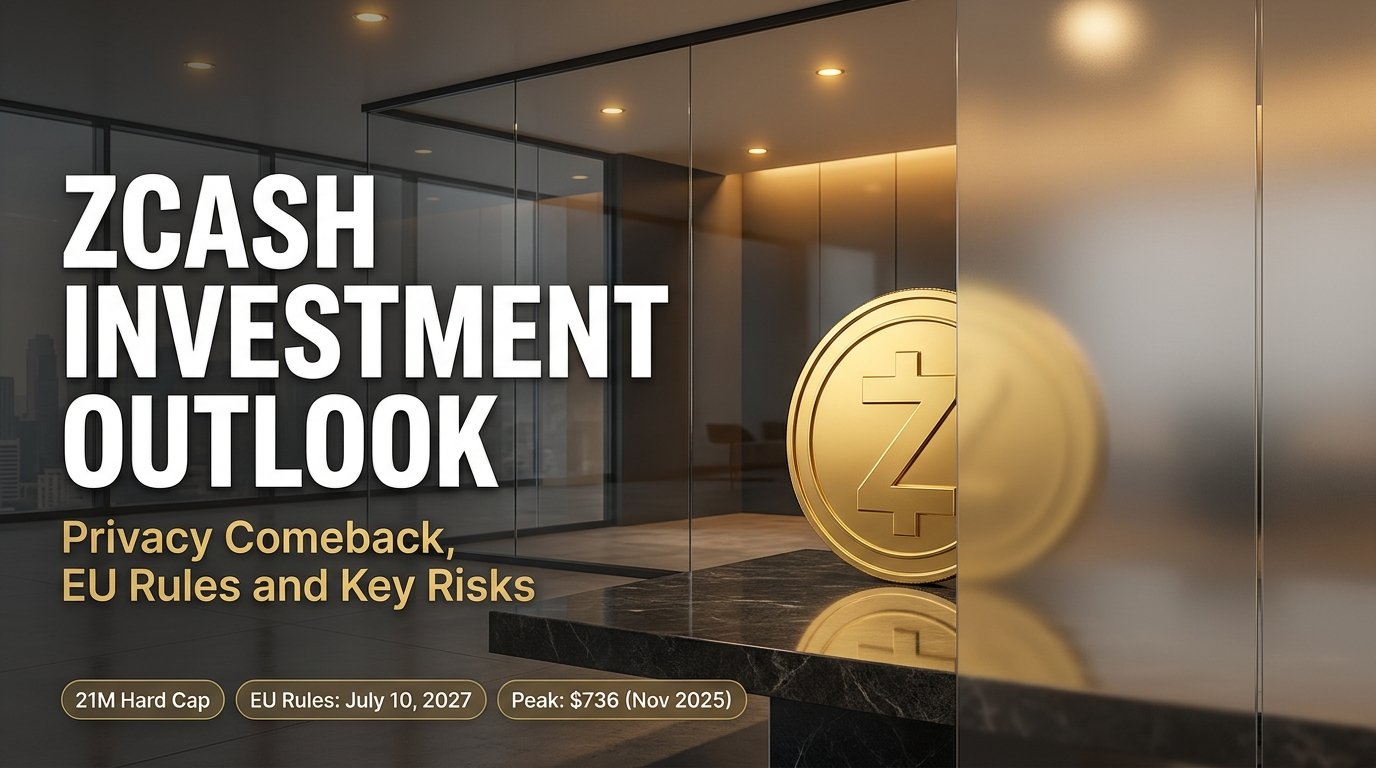
Zcash investment outlook looks bold and fragile at the same time. ZEC climbed from double-digit prices in late summer 2025 to more than $700 by early November, then fell sharply and rallied again in 2026. The comeback revived the whole privacy coin sector, yet regulators keep tightening their grip. EU rules will restrict privacy coins on licensed platforms from July 2027, exchanges still debate delistings, and a security bug rattled holders in mid-2026. This guide explains what drove the comeback, how regulation could hurt or help, and which scenarios investors should weigh. Read on to judge whether the rally can hold.
What Is Zcash and Why Does It Matter Again?
Zcash launched in October 2016 as a privacy-focused cryptocurrency with a hard cap of 21 million coins. Cryptographers built it on zero-knowledge proofs, which let users prove a payment is valid without revealing the details. The network runs on proof of work, and it offers two address types: transparent addresses that work like Bitcoin and shielded addresses that hide the sender, receiver, and amount. A payment stays private only when it uses shielded addresses. For years, ZEC traded far below its early highs and attracted little attention. That changed in 2025, when fears about surveillance and data leaks pushed investors back toward financial privacy. Today, Zcash sits at the center of the privacy debate because it mixes strong cryptography with optional transparency. Visit the official Zcash website to explore the technology and the wallet options.
Zcash Investment Outlook: How the Comeback Started
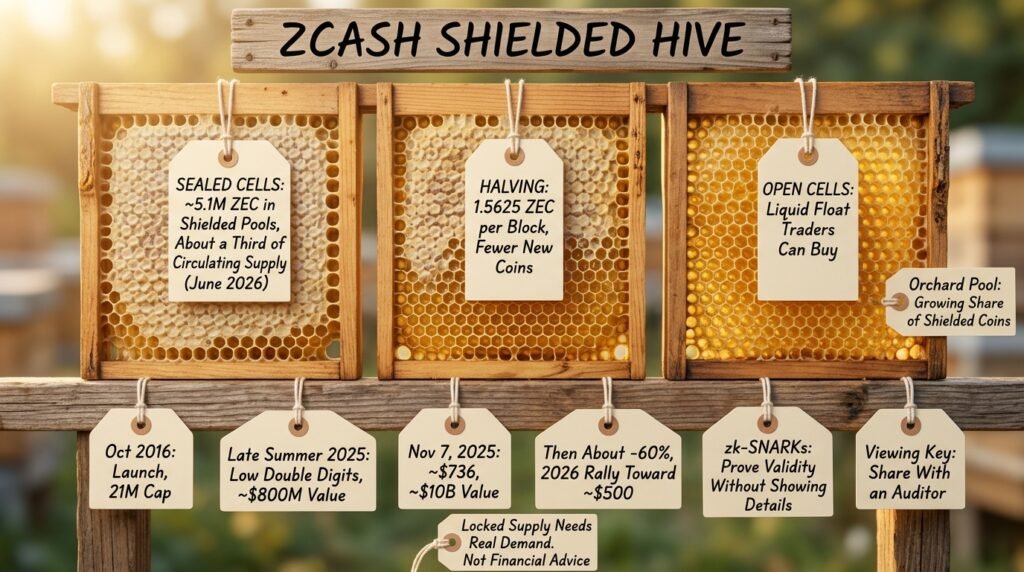
The rally began quietly in late summer 2025, when ZEC traded at low double digits, and its market value stood near $800 million. Prices then surged over 200 percent within a single month and passed $500 for the first time since 2018. ZEC reached about $736 on November 7, 2025, and its market value approached $10 billion, which briefly put it ahead of Monero. A privacy narrative drove the rotation, and well-known investors publicly praised the coin. Critics argued that a coordinated pump fueled part of the move, and the sharp fall that followed supported their fears. ZEC dropped roughly 60 percent from its peak in the months after the top. A second rally in 2026 pushed the price back toward the $500 range by early June, according to market reports. Treat these swings as a warning that momentum cuts both ways.
Zcash Investment Outlook: Shielded Supply and Tokenomics
Supply mechanics give the Zcash story a scarcity angle. The most recent halving cut issuance to 1.5625 ZEC per block, so miners now add far fewer coins to the market. Meanwhile, the shielded pools hold about 5.1 million ZEC, close to a third of circulating supply, according to early June 2026 data. Coins inside shielded pools tend to move less often, so they shrink the liquid float that traders can buy. A smaller float can amplify price moves in both directions. The newer Orchard pool attracts a growing share of shielded coins, and wallet improvements keep nudging users toward private transfers. Still, locked supply does not create demand by itself. Investors need real users and real buyers, not just fewer coins on exchanges, to sustain higher prices.
How Zcash Privacy Technology Works
Zcash relies on zk-SNARKs, a form of zero-knowledge proof. A sender creates a proof that shows the transaction follows every rule, and the network verifies the proof without seeing the private details. Shielded addresses encrypt who sent the coins, who received them, and how much moved. Newer unified addresses start with u1 and bundle several address types into one. Users can also share a viewing key with an auditor, accountant, or regulator, which reveals activity without handing over spending power. This feature gives Zcash a different compliance story from coins that hide everything by default. Wallets like Zashi make shielded transfers easy for everyday users. Remember that transparent transfers still expose every detail, so careless use weakens the whole privacy promise.
Zcash Investment Outlook: Regulatory Pressure in the EU
Regulation poses the biggest threat to the comeback. New EU anti-money-laundering rules take effect on July 10, 2027, and they stop EU crypto platforms from offering accounts that hold or trade coins designed to hide transaction details. Zcash and Monero both fall into that group. The rules cover platforms and not individuals, so self-custody wallets stay outside them. No US federal law bans owning Zcash, though laws differ across countries. FATF guidance also pushes exchanges to trace transactions, which pressures privacy features everywhere. Exchanges may restrict ZEC early, before the deadline arrives, to avoid compliance risk. That scenario could cut liquidity and hit prices quickly. Check your local rules before you trade, and follow policy updates on Crypto Fy Lab.

Exchange Delistings and Liquidity Risk
Liquidity decides how easily you can buy and sell, and delistings attack it directly. Binance put ZEC on a delisting vote in 2025, although it later did not carry out the removal. That episode showed how fast access can change. Several exchanges already restrict privacy coins in certain regions, and more may follow as rules harden. Fewer venues mean wider spreads and sharper price drops during panic. Decentralized options give holders an alternative route, and wallets like ShapeShift now support shielded ZEC swaps without a central custodian. Those tools still offer thinner liquidity than major exchanges. Investors should check which platforms list ZEC in their region before they buy. Never assume that today’s access will last, because listings can disappear within days.
How Selective Disclosure Helps Zcash Under Regulation
Many analysts argue that Zcash holds a regulatory edge over fully private coins. Its optional shielding and viewing keys let businesses prove compliance while they protect customer privacy. An exchange could, in theory, accept shielded deposits and still audit them with the right keys. That design fits the push toward auditable, intentional privacy better than mandatory anonymity does. Supporters also point out that Zcash’s transparent addresses work like Bitcoin and meet standard tracing rules. However, the EU language targets coins built to conceal transactions, and shielded features may still trigger restrictions. No regulator has promised special treatment for Zcash. Treat the compliance argument as a hopeful thesis, not a guarantee, and watch how exchanges interpret the rules in practice.
The Orchard Vulnerability: What It Taught Investors
Security risk hit Zcash hard in mid-2026. Researchers disclosed a vulnerability in the Orchard shielded pool that could have allowed counterfeit ZEC inside the pool. The developers shipped an emergency upgrade within days, and network accounting showed that nobody created fake coins. Still, the news shook confidence. On June 5, ZEC fell by about half from a daily high of $550.30 to a low of $264.80, according to Cointelegraph, and other reports put the broader decline near 38 percent. Developers now discuss a new shielded pool and better supply checks. Read the full report on Cointelegraph. The lesson is simple: privacy cryptography hides data, so verifying supply integrity takes extra care, and every upgrade carries risk.
Zcash vs Monero: Who Holds Up Better Under Pressure?
Zcash and Monero compete for the same investors, yet they face pressure differently. Monero makes privacy mandatory, so every transaction stays hidden, and exchanges see little room for compromise. Zcash lets users choose, which gives exchanges and regulators a possible middle path. Monero has a longer record of stable, uninterrupted privacy, and its community values that purity. Zcash gained momentum in 2025 and briefly passed Monero in market value. Both coins fall under the EU platform rules from July 2027. Both depend on exchange access, so delistings hurt each of them. Compare live prices, volume, and market share on CoinGecko’s privacy coin category. Neither coin escapes regulatory risk, so diversification beats picking a single winner.
Ecosystem Growth and Institutional Interest
Ecosystem growth gives the comeback some substance. Better wallets, such as Zashi, make shielded transfers simple, and shielded usage grew sharply during the rally. Projects like ShapeShift added shielded ZEC support, and the Zcash Community Grants program backed that work with funding. Reports also described institutional interest, including a purchase by a company linked to Tyler Winklevoss in late 2025. Developers keep improving the protocol, and they now plan upgrades after the Orchard incident. Real adoption still lags the price action, because most trading remains speculative. Investors should track shielded transaction counts, wallet downloads, and merchant integrations. Strong usage would back the rally with fundamentals, while weak usage would leave the price exposed to hype cycles.
Price Levels and Volatility Investors Should Expect
Zcash behaves like a high-volatility asset, and history proves it. The coin rose more than tenfold within two months in 2025, then lost about 60 percent after the peak. A single day in June 2026 saw a fall of roughly half from the daily high. Traders at times watched a broad support zone between $350 and $450, but levels shift as the market moves. Round numbers and previous highs often act as resistance, and heavy volume near those zones confirms their strength. Check live charts before you trade, because prices change every hour. Use smaller position sizes than you would with Bitcoin, and place stop losses before you enter. Read our crypto trading guides to learn basic risk control for volatile coins.
Zcash Investment Outlook: Bullish and Bearish Scenarios
In the bullish case, regulators accept compliant privacy, exchanges keep ZEC listed, and shielded usage keeps growing. The halving effect and a shrinking liquid float could then support higher prices, especially if institutions join. Developers would restore confidence after the Orchard fix, and a wider privacy narrative would carry demand. In the bearish case, EU exchanges restrict ZEC early, delistings spread to other regions, and another security flaw surfaces. A weak crypto market would hit ZEC hard, because speculative coins often fall first. The base case sits between the two, with ZEC trading in wide swings while traders watch regulation and security news. Track exchange policy statements, shielded supply, and developer updates to see which path unfolds. Nobody can predict the winner, so plan for every scenario.
Risks Investors Must Weigh Before Buying ZEC
Zcash carries risks beyond normal crypto volatility. Regulatory risk tops the list, since new rules can strip away exchange access within weeks. Liquidity risk follows, because thin markets let large orders move the price. Technical risk matters too, as the Orchard bug showed how a flaw can shake confidence and the price at once. Speculative risk also looms, since much of the 2025 rally came from momentum and hype. Whales hold large positions, so a single sale can push prices lower. Tax authorities may scrutinize privacy coin holders more closely in some countries. Scam tokens and fake wallets also exploit the Zcash name. Never invest money you need for rent, bills, or emergencies. Spread your portfolio across several assets instead of betting on one coin.
How to Approach Zcash Safely
A careful plan protects you from the worst outcomes. Start with a small position that you can afford to lose entirely. Buy only on reputable platforms that still list ZEC in your region, and enable two-factor authentication with an authenticator app. Move long-term holdings into a wallet you control, such as Zashi or a hardware wallet, and write your seed phrase on paper stored offline. Use shielded addresses when you want privacy, and keep in mind that transparent transfers expose your activity. Follow official developer channels for security updates, and install wallet upgrades promptly. Avoid leverage, since ZEC can swing more than ten percent in a day. Review your plan every month as rules and prices change. Visit Crypto Fy Lab for daily updates.
FAQs
What is the Zcash investment outlook for the next few years?
Zcash investment outlook depends on regulation, exchange access, security, and real usage. Optional privacy and viewing keys could help it survive stricter rules. Delistings, new bugs, and fading hype remain real threats, so treat every forecast with caution.
Will the EU ban Zcash?
EU rules from July 10, 2027 stop licensed crypto platforms from offering accounts for privacy coins like ZEC. They do not ban individuals from owning coins or using self-custody wallets. Check the rules in your own country before you trade.
Is Zcash safe after the Orchard bug?
Developers patched the Orchard flaw with an emergency upgrade, and network accounting showed that nobody created fake coins. The incident still exposed supply verification risk, and developers continue to discuss further fixes. Follow official updates and keep your wallet software current.
Is Zcash better than Monero as an investment?
Neither coin wins on every measure. Zcash offers optional privacy and a stronger compliance story, while Monero offers mandatory privacy and a long track record. Both face regulatory risk, so research each one and spread your risk.
Final Thoughts
Zcash investment outlook rests on a tense balance between a powerful privacy narrative and tough regulatory pressure. The comeback brought scarcity, wallet growth, and fresh attention, yet the Orchard bug and EU rules prove how fragile it can be. Optional privacy and viewing keys give ZEC a better chance than fully anonymous rivals, but they offer no guarantee. Size your position with care, use secure wallets, and follow policy news closely. Visit Crypto Fy Lab for daily crypto news and analysis. This post shares educational information only, so make your own decisions and set your own risk limits.
