


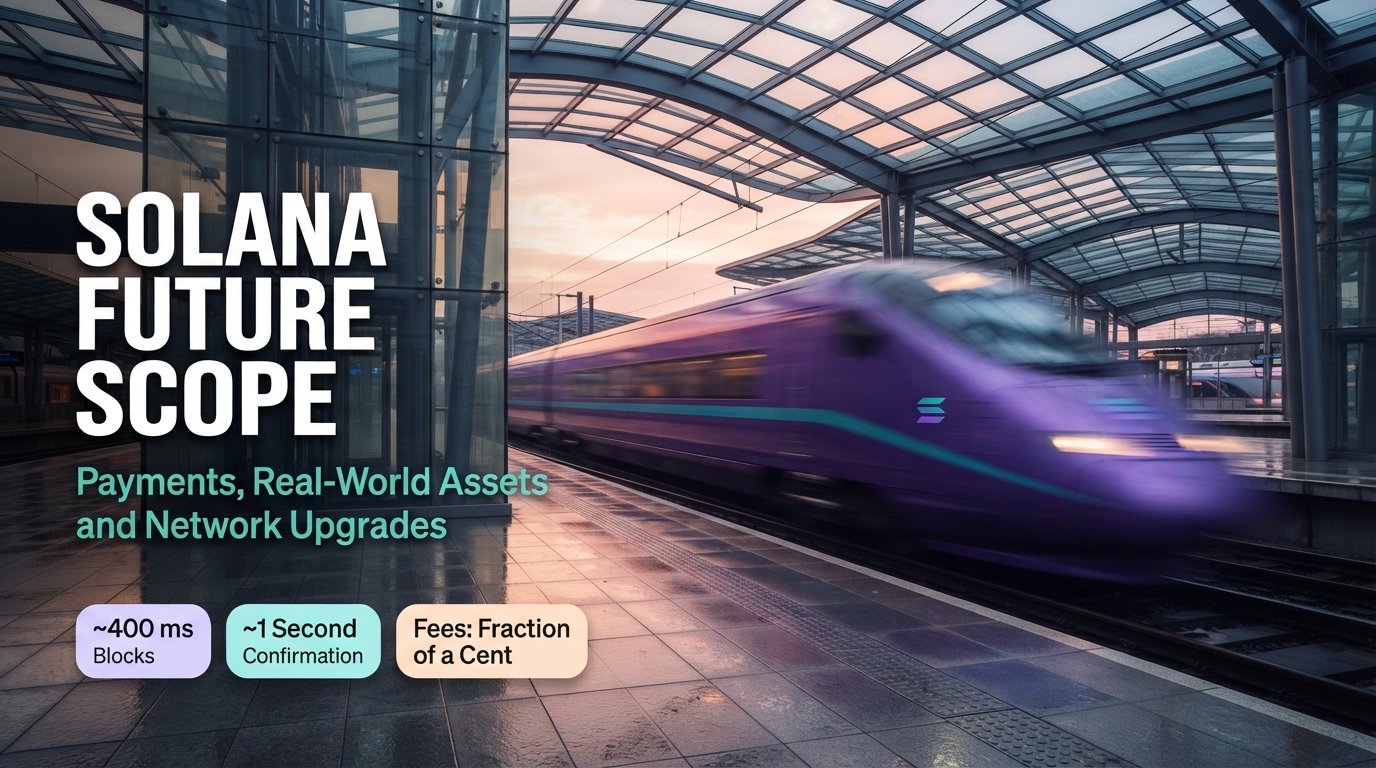
Solana future scope has become one of the hottest topics in crypto. The network processes thousands of transactions per second, charges tiny fees, and attracts developers, payment firms, and large financial institutions. Supporters believe Solana can become the go-to chain for everyday payments and tokenized real-world assets. Critics point to past outages and fierce competition from Ethereum and its Layer 2 networks. This guide explains how Solana works, explores its payment and asset opportunities, and weighs the risks. Read on to judge whether SOL deserves a place on your research list.
What Is Solana and Why Does Its Future Matter?
Solana launched in 2020 after former Qualcomm engineer Anatoly Yakovenko published its whitepaper. The network targets high speed and low cost, aiming to handle global-scale demand on a single chain. Solana combines proof of stake with a timing system called Proof of History. This system gives validators a shared clock, so they can quickly agree on transaction order. SOL, the native token, pays transaction fees and rewards the validators and stakers who secure the network. Developers write Solana programs mainly in Rust, and they deploy apps for trading, payments, gaming, and social media. The ecosystem includes major decentralized exchanges, liquid staking protocols, and thousands of tokens. Solana also hosts a large share of meme coin activity, which drives heavy daily usage. That activity proves the network can handle spikes, though it also attracts speculation. The project’s future depends on whether it can turn raw speed into lasting real-world use. Visit the official Solana website to explore the network directly.
Solana Future Scope: Speed and Low Fees
Speed and cost form the foundation of Solana future scope. The network produces a new block roughly every 400 milliseconds, so transactions confirm in about a second. Fees typically cost a fraction of a cent, even when traffic rises. These traits make microtransactions practical, which most older chains cannot match. Developers can build apps that send thousands of tiny payments without wasting money on fees. Solana also runs transactions in parallel, so unrelated actions do not block each other. This design lets the network use modern hardware efficiently. Ethereum’s base layer processes far fewer transactions, which pushes users toward Layer 2 networks. Solana keeps everything on one chain, which gives users a simpler experience and shared liquidity. However, high performance demands powerful validator hardware, which raises the cost of running a node. The community continues to debate how to balance speed with decentralization.

Solana Future Scope in Payments
Payments offer Solana’s clearest path to mass adoption. Stablecoins like USDC and PYUSD already run on the network, and they move across borders in seconds. Payment firms like Visa and Stripe have explored stablecoin settlement on Solana. Solana Pay lets merchants accept stablecoin payments directly, with no card network fees. Merchants save money because they skip the high percentage fees that card processors charge. Remittance companies also benefit, since workers abroad can send money home quickly for pennies. Mobile projects like the Saga and Seeker phones try to put crypto payments in everyday hands. Still, mainstream adoption needs easy wallets, clear tax rules, and strong consumer protection. Stablecoin regulation will also shape how fast banks and fintech firms move. If these pieces fall into place, Solana could process a meaningful share of global digital dollar transfers.
Solana Future Scope in Real-World Assets
Real-world asset tokenization gives Solana another major growth path. Tokenization turns assets like Treasury bills, money market funds, and private credit into on-chain tokens. Investors gain faster settlement, round-the-clock trading, and transparent ownership records. Several asset managers have launched tokenized funds on Solana, and the category keeps growing. Solana’s low fees suit this market because frequent transfers and payouts cost almost nothing. Its speed also helps trading platforms that want near-instant settlement. Ethereum still leads in total tokenized value, so Solana must keep winning new issuers. Institutions care about compliance, and Solana’s token extensions add features like permissioned transfers. Track the growth of tokenized assets on RWA.xyz. If more banks and funds choose Solana, demand for SOL could rise as the base asset for fees and staking. Success here depends on trust, legal clarity, and steady uptime.
How Solana Compares With Ethereum and Other Chains
Solana competes directly with Ethereum, and it also faces rivals such as Sui, Aptos, and Base. Ethereum holds the biggest developer base, the deepest DeFi liquidity, and the strongest institutional brand. Solana counters with better speed, lower fees, and a single unified chain. Ethereum scales through Layer 2 networks, which fragment liquidity and add complexity. Solana scales on the base layer, which keeps liquidity in one place. Developers weigh these trade-offs when they choose where to build. Solana’s Rust-based programming model has a steeper learning curve than Ethereum’s Solidity tools. Ethereum’s decentralization and long track record attract risk-averse institutions. Solana’s momentum attracts startups and consumer apps that need speed. Compare chain activity, fees, and total value locked on DeFiLlama. Neither chain needs to win everything, and both may grow together.
Network Upgrades Shaping Solana’s Roadmap
Upgrades will decide whether Solana can scale further and stay reliable. Firedancer, a validator client built by Jump Crypto, aims to push performance higher. A second independent client also reduces the risk that one software bug halts the whole network. The Alpenglow proposal targets far faster finality, which could cut confirmation times to a fraction of a second. Developers also work on larger block capacity and better fee markets. Network reliability has improved since the outages of 2022 and early 2023. Solana has strengthened its uptime record, which rebuilds institutional confidence. Core developers also improve tools that help apps handle congestion. Each upgrade carries execution risk, because complex changes can bring bugs or delays. Watch official roadmap updates and validator adoption to judge progress. Steady, reliable upgrades would strengthen the long-term case for SOL.
(Image 3 yahan lagayen. Alt text: Solana future scope network upgrades Firedancer and Alpenglow)
Solana’s Ecosystem: DeFi, DePIN, and Consumer Apps
Solana’s ecosystem stretches far beyond payments and tokenization. Decentralized exchanges like Jupiter and Raydium handle huge trading volume every day. Liquid staking tokens let users earn staking rewards while they keep using their funds in DeFi. DePIN projects like Helium and Render use Solana to coordinate real-world hardware networks. Consumer apps like the Phantom wallet and many mobile games bring everyday users onchain. Meme coins and launchpads generate heavy activity, which boosts fees and visibility. Critics argue that speculation dominates, and they want more lasting utility. Supporters reply that activity today builds users and developers for tomorrow. A diverse ecosystem protects Solana if one sector cools. Developer grants, hackathons, and venture funding keep new projects arriving. Read our crypto market analysis for the latest ecosystem trends.
Institutional Interest and Solana ETFs
Wall Street now treats Solana as a serious asset. Asset managers have launched Solana-based ETFs in the United States. Some of these funds include staking, which lets investors earn rewards through a brokerage account. ETFs make SOL easy to buy for advisors and funds that cannot use crypto exchanges. Some public companies have also built SOL treasury positions. These purchases add demand, but they also add concentration and sentiment risk. Institutions still want clear regulation before they commit large sums. Court rulings and agency guidance continue to shape the rules for staking and token classification. Strong ETF inflows would validate Solana’s place beside Bitcoin and Ether. Weak inflows would show that investor interest stays limited. Track fund flows, trading volume, and policy news before you conclude.
Solana Future Scope: Risks Investors Must Weigh
Solana carries clear risks that every investor should weigh. Past outages hurt trust, and another major halt could damage its payment ambitions. Validator hardware costs push toward concentration, so critics question how decentralized the network truly is. Inflationary token issuance dilutes holders unless staking rewards offset it. Meme coin hype can fade, and falling activity would reduce fee revenue. Competition from Ethereum Layer 2 networks, Sui, and other chains keeps growing. Regulators may classify SOL or its staking services in ways that limit access. The collapse of FTX also hit Solana hard, because the exchange and its sister firm held a large share of SOL. Hacks on apps and bridges can drain user funds, and no support team can reverse them. Protect your capital with small positions and clear stop losses. Read our crypto trading guides before you use leverage.

Solana Future Scope: Bullish and Bearish Outlook
In the bullish case, stablecoin payments and tokenized assets flow onto Solana at scale. Strong ETF inflows, steady upgrades, and a clean uptime record would strengthen that story. Rising fee revenue and growing staking demand could then support SOL’s price. In the bearish case, outages return, meme coin activity fades, and rivals win key institutional deals. A weak crypto market would hit SOL hard because investors often sell altcoins first. The base case sits between the two, with Solana growing steadily while its price follows Bitcoin and overall market mood. Track stablecoin supply on Solana, active addresses, and developer activity to see which path unfolds. Compare each metric over months, not days, because short-term noise hides the real trend. Nobody can predict the winner, so plan for every scenario. Size your positions so that a bad outcome does not wreck your portfolio.
FAQs
What is the Solana future scope for the next few years?
Solana’s future scope depends on payment adoption, tokenized assets, and institutional demand. Fast, cheap transactions give it a real edge, and new upgrades could widen that lead. Outages, competition, and regulation remain real threats, so treat every forecast with caution.
Can Solana replace Ethereum?
Solana competes with Ethereum, but replacement looks unlikely in the near term. Ethereum leads in developers, liquidity, and institutional trust, while Solana leads in speed and cost. Both networks can grow side by side and serve different needs.
Is Solana good for payments?
Solana suits payments because it confirms transactions in about a second and charges tiny fees. Stablecoins already move across it at scale. Wider merchant adoption, clear regulation, and simple wallets will decide how far it goes.
Is SOL a good long-term investment?
SOL offers strong adoption, an active developer community, and growing institutional interest. Its price still swings sharply, and no outcome is guaranteed. Research the project, spread your risk, and invest only what you can afford to lose.
Final Thoughts
Solana’s future scope rests on three pillars: payments, real-world assets, and steady network upgrades. Each pillar offers real upside, and each carries risk. Strong stablecoin growth and rising institutional demand would support the bullish case. Fresh outages and tough competition would support the bearish case. Visit Crypto Fy Lab for daily crypto news and analysis. This post shares educational information only, so make your own decisions and set your own risk limits.
