


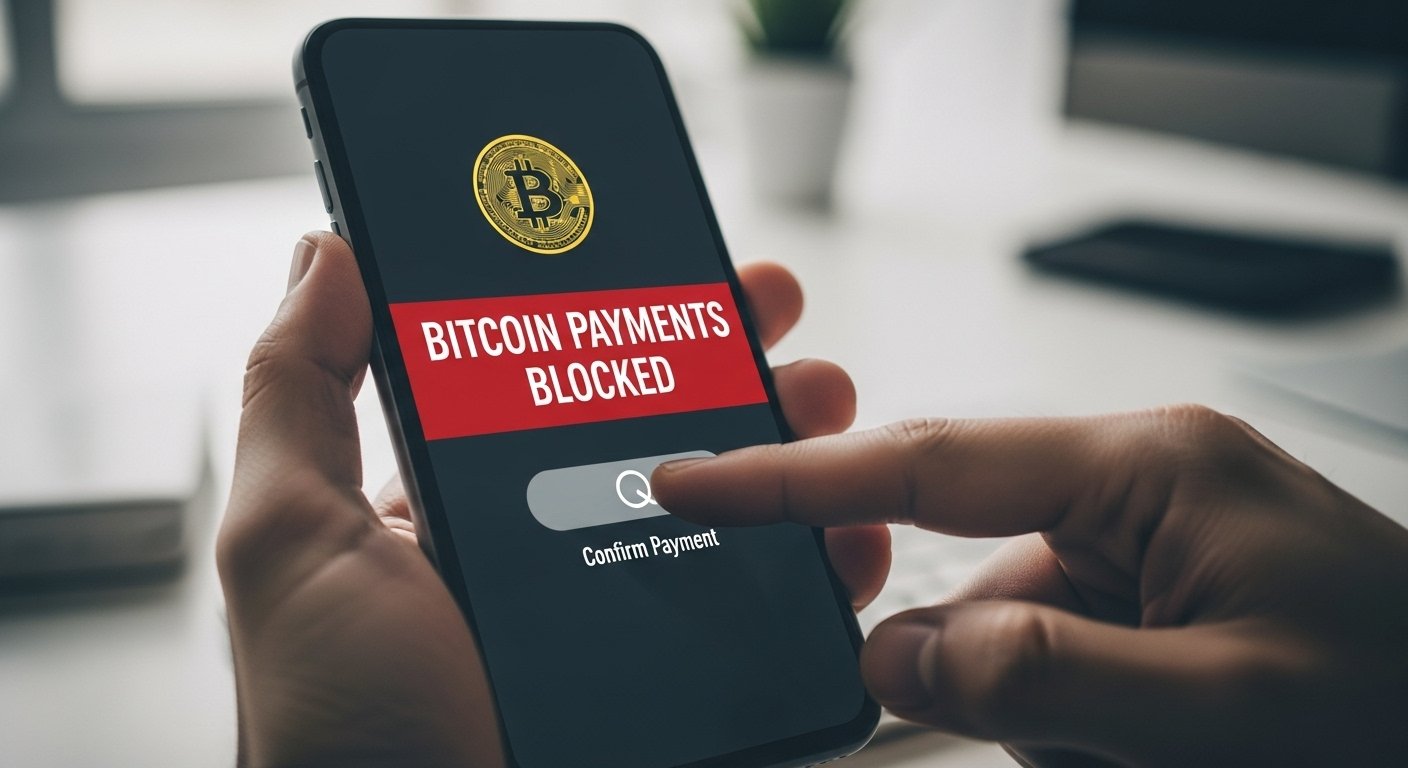
Bitcoin has existed for more than a decade, and during that time it has evolved from a niche experiment into a globally recognized digital asset. Despite this growth, Bitcoin payments remain rare in everyday commerce. You can walk into thousands of stores, tap a card, scan a phone, or use an online wallet—but paying directly with Bitcoin still feels like an exception rather than the norm.
For years, critics blamed this slow adoption on technology. They argued Bitcoin was too slow, too expensive, and incapable of handling mass usage. That narrative dominated headlines and online debates. However, many industry leaders now say that explanation is outdated. According to a growing number of crypto executives, Bitcoin payments are not being held back by scaling limitations—but by tax policy that discourages spending.
This shift in perspective matters. Bitcoin’s underlying infrastructure has improved significantly, and payment-focused layers have made transactions faster and cheaper. Yet people still hesitate to use Bitcoin as money. The reason is simple: in many countries, every Bitcoin payment is treated as a taxable event. Buying a coffee can mean calculating capital gains, tracking cost basis, and storing records for future reporting.
When using Bitcoin feels like filing paperwork, adoption stalls. This article explores why Bitcoin payments are technologically ready, how tax rules suppress real-world usage, and what policy changes could finally unlock Bitcoin’s payment potential.
Bitcoin payments are no longer limited by scaling technology
The idea that Bitcoin cannot scale is rooted in its early history. When block space was limited and transaction fees spiked during periods of high demand, critics concluded that Bitcoin could never support everyday payments. While those concerns were once valid, they no longer tell the full story.

Bitcoin’s base layer prioritizes security and decentralization, not raw transaction volume. That design choice led to the development of secondary layers optimized for speed and efficiency. As a result, Bitcoin payments today operate within a broader ecosystem that separates settlement from spending.
Layered infrastructure has changed how Bitcoin payments work
Bitcoin now functions more like the foundation of a financial system rather than a single payment rail. The base layer provides final settlement and immutability, while additional layers handle frequent, low-value transactions. This layered approach allows Bitcoin payments to be fast, low-cost, and scalable without compromising security.
This evolution means Bitcoin no longer needs to process every coffee purchase directly on the blockchain. Instead, payments can be aggregated, routed efficiently, and settled later. From a technical perspective, this makes everyday Bitcoin payments entirely feasible.
User experience improvements removed major friction
Beyond protocol-level changes, wallets and merchant tools have become easier to use. Modern interfaces allow users to scan a QR code, confirm a payment, and receive instant confirmation. For merchants, point-of-sale solutions now integrate Bitcoin payments alongside traditional options with minimal disruption.
These improvements significantly weaken the argument that technology is the primary barrier. If Bitcoin payments still struggle to gain traction, the problem lies elsewhere.
Tax policy turns Bitcoin payments into a compliance burden
While the technology has matured, tax rules have not kept pace. In many jurisdictions, Bitcoin is classified as property rather than currency. This classification has profound consequences for how Bitcoin payments are treated.
When Bitcoin is used to pay for goods or services, it is considered a disposal of property. That means the user must calculate whether the Bitcoin increased or decreased in value since it was acquired. Even the smallest purchase can trigger capital gains reporting requirements.
Everyday Bitcoin payments create disproportionate complexity
Imagine using Bitcoin to buy lunch. If the price of Bitcoin has changed since you acquired it, you may owe taxes—or be able to claim a loss. To comply, you must know the original purchase price, the value at the time of spending, and the resulting gain or loss.
Now multiply that process by dozens or hundreds of transactions per year. Suddenly, Bitcoin payments become impractical for daily use. Most consumers do not want to maintain detailed financial records just to buy groceries or pay for a subscription.
This reality discourages spending, regardless of how efficient the payment technology is.
Capital gains rules discourage Bitcoin from functioning as money
Money is meant to circulate. When tax policy penalizes spending, it transforms Bitcoin into a “hold-only” asset. Users are incentivized to treat Bitcoin as a long-term investment rather than a medium of exchange.
As a result, Bitcoin payments remain underutilized—not because people don’t believe in them, but because the cost of compliance outweighs the convenience.
Merchants face tax and accounting obstacles as well
Consumers are not the only ones affected. Merchants that accept Bitcoin payments must also navigate tax and accounting complexities. Revenue recognition, valuation timing, and reporting obligations add layers of operational risk.
Even when businesses use payment processors to manage conversions, they remain responsible for accurate financial reporting. This uncertainty makes Bitcoin payments less attractive compared to traditional payment methods that are already well understood by accountants and auditors.
Operational uncertainty limits merchant adoption
Businesses prioritize simplicity and predictability. If accepting Bitcoin payments introduces uncertainty around taxation, audits, or regulatory interpretation, many merchants will avoid it—even if customer demand exists.
This hesitation slows adoption across the entire ecosystem. Without widespread merchant support, consumers have fewer opportunities to use Bitcoin for payments, reinforcing the perception that it is impractical.
Scaling technology isn’t perfect—but it’s no longer the bottleneck
Acknowledging tax policy as the main barrier does not mean Bitcoin’s technology is flawless. Payment layers still face challenges related to liquidity management, network reliability, and education. However, these are incremental issues—not existential blockers.
The critical distinction is that technical challenges are being actively addressed, while tax policy remains largely static. As a result, improvements in Bitcoin payments technology fail to translate into real-world usage.
Tax incentives shape behavior more than technology does
Tax systems are powerful behavioral tools. They influence how people save, spend, and invest. In the case of Bitcoin, tax treatment strongly signals that it should be held, not spent.
As long as spending Bitcoin triggers reporting obligations, most users will choose easier alternatives. This dynamic explains why many Bitcoin holders rely on intermediary services that convert Bitcoin to fiat at the point of sale rather than using Bitcoin payments directly.
Policy design determines whether Bitcoin functions as money
If policymakers want Bitcoin to function as a payment system, tax rules must reflect that goal. Simplifying the treatment of small transactions would remove a major psychological and administrative barrier.
Without such changes, even perfect scaling technology will fail to drive mass adoption.
What policy changes could unlock Bitcoin payments
Several reforms are frequently discussed within the crypto industry and policy circles. These changes would not eliminate taxation altogether, but they would align tax policy with practical usage.
De minimis exemptions for small Bitcoin payments
A de minimis exemption would allow small Bitcoin transactions to occur without triggering capital gains reporting. This approach recognizes that taxing microtransactions is inefficient and counterproductive.
Such an exemption would immediately make everyday Bitcoin payments more realistic for consumers.
Clearer guidance and simplified reporting
Clear, consistent tax guidance would reduce uncertainty for users and businesses alike. Standardized reporting frameworks could make compliance manageable rather than intimidating.
Clarity encourages innovation. When rules are understandable, developers are more willing to build user-friendly Bitcoin payments tools.
Bitcoin payments versus stablecoins: policy still matters
Stablecoins are often presented as the solution to crypto payments due to their price stability. While they offer advantages, they do not eliminate the importance of fair tax treatment.
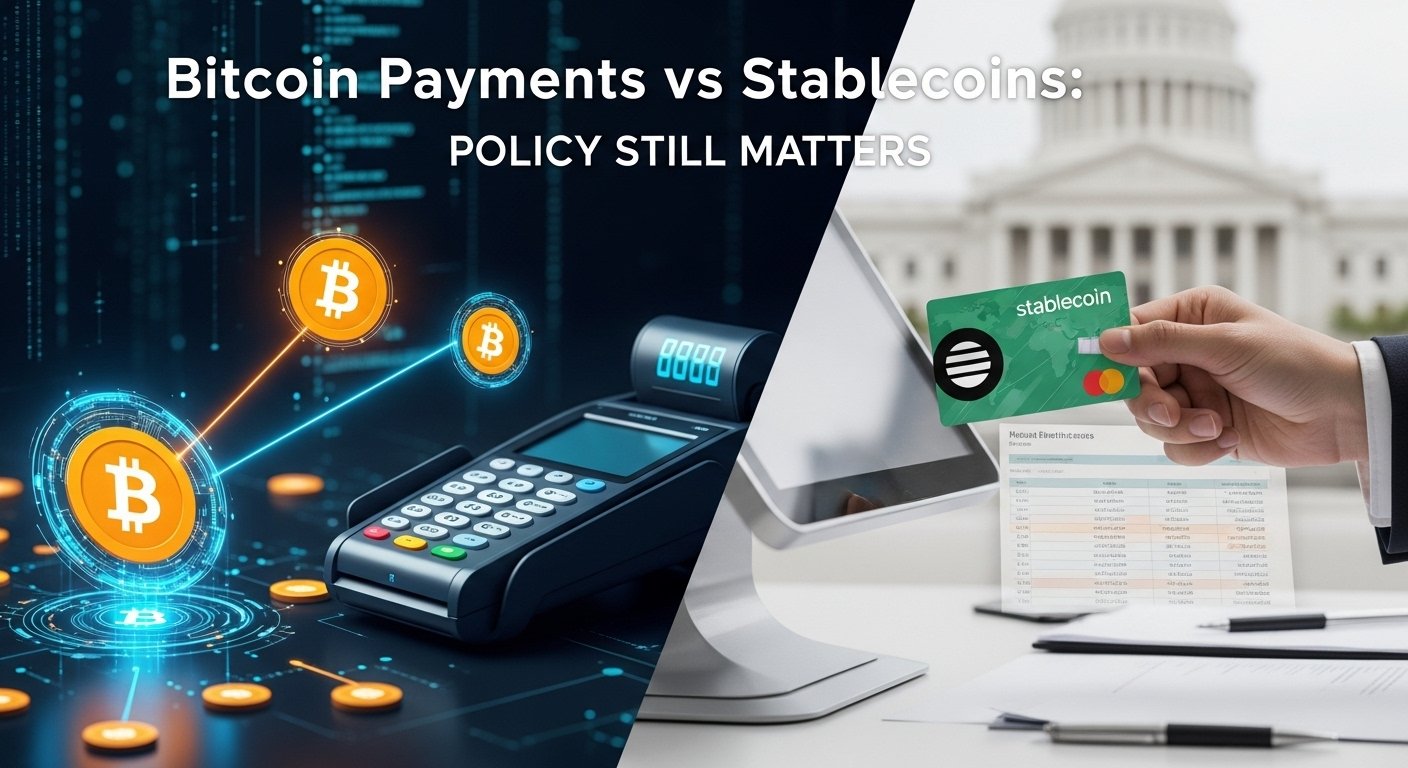
If policy favors one type of digital asset over another, adoption will reflect regulatory incentives rather than user preference. Bitcoin payments deserve equal consideration, especially given Bitcoin’s unique properties as an open and decentralized network.
The global implications of Bitcoin payments
Bitcoin’s borderless nature makes it especially valuable for international commerce and remittances. However, cross-border usage amplifies tax complexity, as users may be subject to multiple regulatory regimes.
Without international coordination or simplified frameworks, Bitcoin payments will struggle to reach their full global potential.
Conclusion
The idea that Bitcoin payments are failing because of technology is outdated. The infrastructure exists, the tools are improving, and the user experience is better than ever. What remains broken is the policy layer.
Tax rules that treat every Bitcoin payment as a taxable investment event discourage spending, suppress merchant adoption, and distort Bitcoin’s role in the economy. Until these rules are modernized, Bitcoin payments will remain underused—not because they don’t work, but because they are penalized.
If policymakers want innovation, competition, and financial inclusion, the solution is clear. Fix the tax policy, and Bitcoin payments can finally function as intended.
FAQs
Q: Why aren’t Bitcoin payments widely used today?
The main reason is tax policy. In many regions, Bitcoin payments trigger capital gains reporting, making everyday spending inconvenient and risky.
Q: Is Bitcoin technology capable of handling mass payments?
Yes. Layered infrastructure and payment-focused solutions allow Bitcoin payments to be fast and low-cost for many use cases.
Q: What is a de minimis exemption for Bitcoin payments?
It is a proposed rule that would exempt small Bitcoin transactions from capital gains reporting, making everyday payments practical.
Q: Do merchants avoid Bitcoin payments because of volatility?
Volatility matters, but tax and accounting uncertainty are often bigger deterrents for businesses considering Bitcoin payments.
Q: Will Bitcoin ever become a mainstream payment method?
Yes—if tax policy evolves to reflect real-world usage. With fair rules, Bitcoin payments could compete with traditional payment systems.
See More: Bitcoin ETF Inflows Hit $844M in One Day
