



USDS future scope matters to new investors who want a stablecoin with built-in yield options and a long DeFi track record. Sky Protocol issues USDS, and the project grew out of MakerDAO, one of the oldest names in decentralized finance. Stablecoins now sit at the center of crypto trading, payments, and savings. USDS competes with giants like USDC and USDT, yet it takes a very different path. This guide explains how USDS works, how it earns and pays yield, and where the risks hide. Read on to judge whether this stablecoin deserves a place on your research list.
What Is USDS and Sky Protocol?
USDS is a dollar-pegged stablecoin that Sky Protocol issues. Sky Protocol is the new name of MakerDAO, which launched in 2017 and pioneered decentralized stablecoins. The team rebranded in 2024 and introduced USDS as an upgraded version of the DAI stablecoin. One USDS aims to hold the value of one US dollar. Users create USDS by locking collateral in the protocol, or they convert existing DAI at a one-to-one rate. Smart contracts run most of the process, so code replaces much of the work that a bank would handle. Holders of the SKY token govern the protocol and vote on risk settings and upgrades. USDS runs mainly on Ethereum and also reaches other networks through bridges. Developers and traders use it for lending, payments, and saving. New investors should remember that USDS aims for stability, not price growth. Visit the official Sky website to see the live app and documentation.
USDS Future Scope: Why It Matters for New Investors
USDS future scope matters because stablecoins now power most crypto activity. New investors need a safe place to park funds between trades, and USDS offers one inside DeFi. The coin also connects to a savings feature that can pay yield. Sky Protocol has operated since 2017 under the Maker name, so the project carries a long track record. Few DeFi protocols have survived several market cycles, and Sky has. Its design relies on overcollateralization, which means the protocol holds more collateral value than the USDS it issues. Growing demand for onchain dollars could expand its use. Clearer stablecoin regulation could also shape that demand in the coming years. New investors should treat USDS as a financial tool, not a get-rich bet. Learn how it works before you deposit meaningful money. Read our crypto market analysis for updates on stablecoin trends.
How USDS Holds Its Dollar Peg
Sky Protocol uses several tools to keep USDS near one dollar. Borrowers lock collateral such as Ether in vaults, and they must keep the collateral value above a required ratio. If that value drops too far, the protocol liquidates the vault and sells the assets to cover the debt. This process protects the system from bad debt. The Peg Stability Module lets users swap USDS and other stablecoins, such as USDC, at a fixed rate. That swap path pulls the price back toward one dollar whenever it drifts. Arbitrage traders profit from small peg gaps, so they restore the price quickly. Sky also holds real-world assets that add to its reserves. Governance can adjust fees and limits as markets change. Peg tools still strain in extreme stress, so no investor should assume perfect stability. Check live peg data on CoinGecko’s USDS page.
USDS vs DAI: What Changed?
DAI launched in 2017 and became one of the most trusted decentralized stablecoins. USDS arrived as its upgrade, and it keeps a one-to-one conversion with DAI. Holders can swap DAI for USDS and swap back whenever they choose. The upgrade opens access to new rewards and features that Sky builds around USDS. DAI continues to exist, so older integrations keep working. USDS also adds a compliance-oriented design, including a function that can freeze tokens at specific addresses, and the project documents this openly. Critics say this feature weakens censorship resistance, while supporters say it helps institutions adopt the coin. Governance rules decide how the protocol may use such tools. New investors should read the documentation and decide which tradeoff they accept. Choose DAI if you prefer the older design, and choose USDS if you want the newer features.
USDS Future Scope: Savings Rate and Yield Options
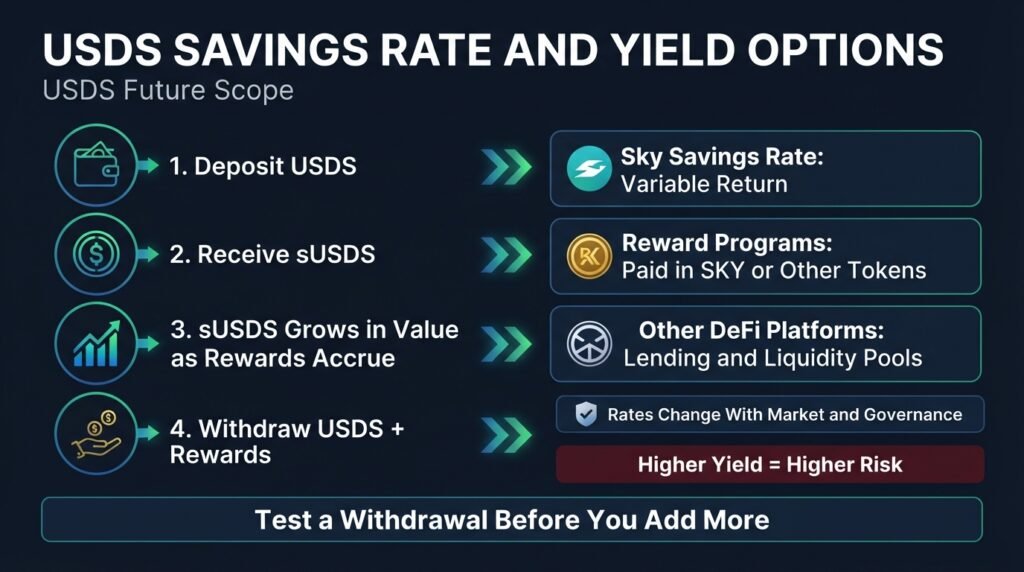
USDS future scope depends heavily on its yield features. The Sky Savings Rate lets holders deposit USDS and earn a variable return through the protocol. Depositors receive sUSDS, a token that grows in value as rewards accrue. Sky also runs reward programs that pay in SKY or other tokens, and those programs change over time. Rates move with market conditions and governance decisions, so no figure stays fixed. Compare live rates on DefiLlama’s stablecoin dashboard before you deposit. Other DeFi platforms also accept USDS for lending and liquidity pools. Each extra layer adds smart contract risk. Higher yield almost always signals higher risk, so treat unusually generous rates with suspicion. Start with small deposits and test a withdrawal before you add more. Spread your funds across several tools instead of trusting one.
The SKY Token and Protocol Governance
SKY is the governance token of Sky Protocol, and it replaced the older MKR token. MKR holders can convert to SKY at a fixed rate that the protocol set during the upgrade. SKY holders vote on risk settings, collateral types, and long-term strategy. They can also stake SKY to earn rewards, which links the token to protocol activity. The protocol uses part of its surplus revenue to buy back SKY, which can reduce supply over time. Governance runs through an onchain voting process and a written rulebook called the Sky Atlas. Voting power can concentrate among large holders, and critics raise this concern often. Delegates vote on behalf of smaller holders who prefer not to follow every proposal. SKY carries far more price risk than USDS because it does not aim for stability. Do not confuse the two tokens, and learn each token’s role before you buy.
Real-World Assets and the Star Ecosystem
Sky Protocol invests part of its reserves in real-world assets, such as short-term Treasury products and private credit. These assets generate income that supports the protocol and its savings features. The project also builds a network of semi-independent teams, which it names Stars. Each Star grows its own products using Sky’s funding and USDS. Spark, a lending protocol, stands out as one prominent Star, and it lets users borrow and lend stablecoins. Other Stars focus on tokenized assets and new markets. This structure spreads growth across several brands and also spreads risk, because each Star manages its own strategy. Real-world assets add yield, but they bring counterparty and legal risk. Issuers and custodians must perform, and regulators can change the rules overnight. Investors should watch how much of the reserve sits in these assets.
USDS vs USDC and USDT
USDC and USDT dominate stablecoin supply, and both come from centralized companies. Circle issues USDC, and Tether issues USDT, and both hold reserves in bank accounts and Treasuries. USDS works differently because smart contracts and onchain collateral back much of its supply. That design lets anyone inspect the vaults onchain and verify the collateral. However, USDS holds a smaller market share, so it offers less liquidity on many exchanges. Centralized issuers can freeze funds and face direct regulatory oversight, while Sky relies on governance votes. USDS still depends on some centralized assets, such as USDC in its stability module, so it does not escape centralized risk entirely. DAI dipped below one dollar in March 2023 when USDC lost its peg, and that event proved the link. Each stablecoin trades one risk for another. Many experienced users hold more than one, which limits the damage if one coin fails.
USDS Future Scope: Risks New Investors Must Weigh
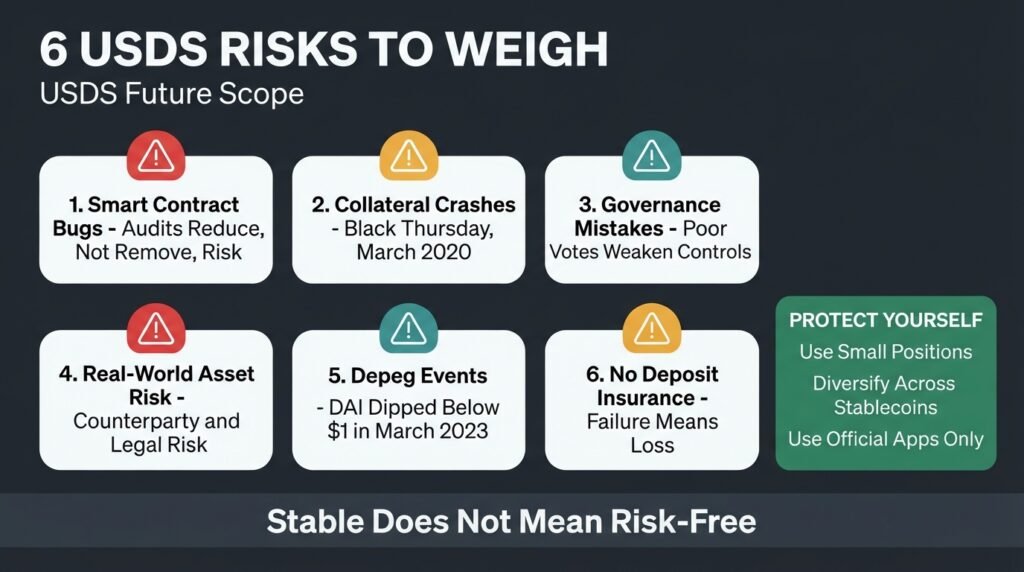
USDS carries real risks that every beginner should weigh. Smart contract bugs can drain funds, and audits cannot remove that danger completely. Collateral crashes can also stress the system, as Black Thursday in March 2020 showed when liquidations failed and the protocol took losses. Governance attacks or poor votes could weaken risk controls. Real-world assets add counterparty and legal risk. The freeze function reduces censorship resistance, which some users dislike. USDS has a smaller market share than USDC, so liquidity can thin out during panic. Savings rates fluctuate and can drop quickly. No government deposit insurance protects USDS holders, so a failure means a loss. Protect your capital with small positions and diversified holdings. Read our crypto trading guides to learn basic risk control before you move large amounts.
How to Get and Store USDS Safely
Most new investors get USDS through the Sky app or through a decentralized exchange. You can also swap another stablecoin, such as USDC, for USDS in a few clicks. Some centralized exchanges list USDS, but availability depends on your region. Connect a wallet like MetaMask or a hardware wallet, and double-check the official website address before you sign anything. Phishing sites copy popular DeFi apps, so bookmark the real link. Start with a small test transaction and confirm that the funds arrive. Approve only the token amounts you need, and revoke old permissions regularly. Write your seed phrase on paper and keep it offline, and never share it with anyone. Hardware wallets protect large balances better than browser wallets. Keep a small amount of ETH for network fees. Always confirm the network before you send funds, because transfers cannot reverse.
USDS Future Scope: Bullish and Bearish Outlook
In the bullish case, stablecoin demand keeps rising and USDS captures a larger share of onchain dollars. Strong adoption of the savings rate, growth in the Star ecosystem, and clearer regulation would all support that path. Institutions might also embrace USDS because of its compliance features and transparent collateral. In the bearish case, a major hack, a governance mistake, or a collateral crash damages trust. Competition from USDC, USDT, and newer stablecoins could also squeeze its share. Regulators might impose strict rules on decentralized issuers. The base case sits between the two, with USDS growing steadily while it serves mainly DeFi users. Track total supply, savings rate deposits, and reserve quality to see which path unfolds. Compare these numbers over months, not days. Nobody can predict the winner, so plan for every scenario.
FAQs
What is the USDS future scope for the next few years?
USDS future scope depends on stablecoin demand, savings rate adoption, and the growth of the Sky ecosystem. Clear regulation and strong risk management could widen its use. Hacks, competition, and weak governance remain real threats, so treat every forecast with caution.
Is USDS the same as DAI?
USDS is the upgraded version of DAI, and holders can convert between them at a one-to-one rate. USDS adds new features and rewards, while DAI keeps its older design. Choose the one that fits your needs and read the documentation first.
Does USDS pay interest?
USDS does not pay interest while it sits in a wallet. You can earn yield through the Sky Savings Rate or through other DeFi platforms. Rates change often, and higher rates usually signal higher risk.
Is USDS safe for beginners?
USDS carries lower price risk than most crypto assets, but it still carries smart contract, governance, and depeg risks. Start with a small amount and use official apps only. Keep your seed phrase offline and spread your funds across several assets.
Final Thoughts
USDS future scope rests on three pillars: reliable peg tools, attractive yield options, and a growing ecosystem built around Sky Protocol. Each pillar offers real upside, and each carries risk. New investors should learn how collateral, governance, and savings features work before they deposit funds. Start small, use official links, and spread your holdings across wallets and stablecoins. Review your plan often as rates and rules change. Visit Crypto Fy Lab for daily crypto news and analysis. This post shares educational information only, so make your own decisions and set your own risk limits.
