



Jupiter assists Polymarket launch on Solana blockchain marks a significant milestone in the evolution of decentralized finance and on-chain prediction markets. As blockchain ecosystems mature, platforms are no longer competing solely on innovation but on speed, cost efficiency, user experience, and network effects. The collaboration between Jupiter and Polymarket reflects this shift, bringing together one of Solana’s most powerful liquidity engines with one of the most recognized prediction market platforms in the crypto space.
Prediction markets have long been seen as one of blockchain’s most promising real-world applications. They transform opinions, expectations, and forecasts into tradable financial instruments, offering insights into everything from political outcomes to economic indicators and technological trends. However, many prediction markets have struggled with scalability, high transaction fees, and onboarding friction. These challenges have limited mainstream adoption despite strong interest.
Solana, known for its high throughput and low transaction costs, offers an environment where prediction markets can operate at scale. Jupiter, as a leading liquidity aggregator and trading interface on Solana, plays a crucial role in making that environment accessible. When Jupiter assists Polymarket launch on Solana blockchain, the result is not just a technical integration but a strategic alignment that benefits users, developers, and the broader DeFi ecosystem. This article explores what this collaboration means, why it matters, how it impacts users, and what it signals for the future of prediction markets on Solana and beyond.
Role of Jupiter in the Solana Ecosystem
Jupiter has become one of the most important pillars of the Solana DeFi ecosystem. Initially known for optimizing token swaps across decentralized exchanges, Jupiter has grown into a comprehensive liquidity and execution layer. It connects multiple trading venues, routes transactions efficiently, and minimizes slippage for users operating within Solana’s fast-paced environment.
The importance of Jupiter lies in its ability to abstract complexity. Solana’s ecosystem is rich with protocols, pools, and trading venues, but navigating them manually can be overwhelming. Jupiter simplifies this process by serving as a unified gateway. This makes it an ideal partner when new platforms, such as Polymarket, expand into the Solana blockchain.
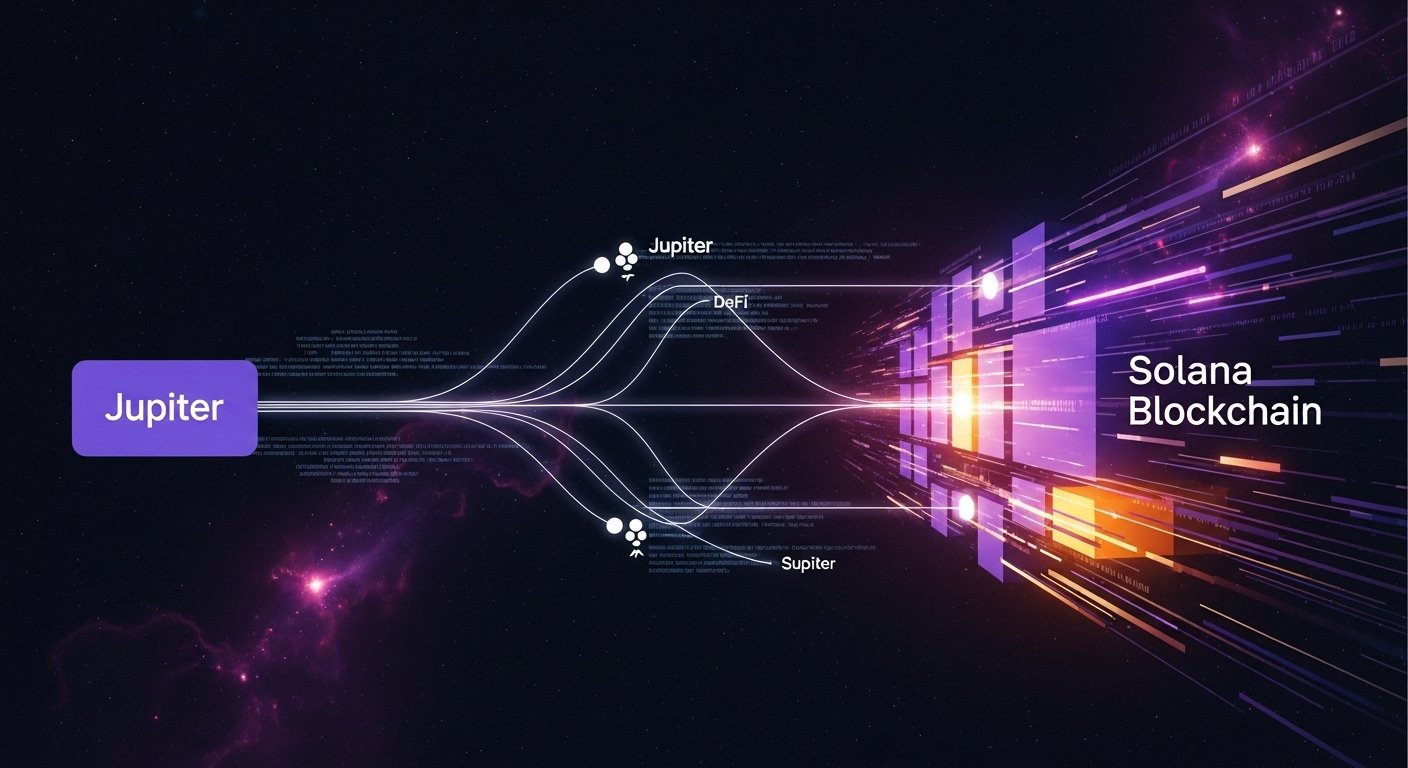
When discussing Jupiter assists Polymarket launch on Solana blockchain, Jupiter’s role is not merely supportive but foundational. It provides the liquidity pathways and execution efficiency that allow prediction markets to function smoothly within Solana’s high-frequency trading environment.
What Polymarket Brings to the Solana Blockchain
Polymarket is widely recognized for pioneering accessible, on-chain prediction markets. Its core value proposition is simple yet powerful: users can trade on the probability of future events using transparent, decentralized mechanisms. These markets convert collective belief into quantifiable prices, often serving as real-time indicators of sentiment and expectations.
Bringing Polymarket to Solana introduces these markets to a blockchain optimized for speed and affordability. The Polymarket launch on Solana blockchain enables faster position entry and exit, near-instant settlement, and significantly reduced transaction costs. These factors are critical for prediction markets, where timing and responsiveness can determine profitability.
Polymarket’s presence also adds a new dimension to Solana’s DeFi landscape. While Solana already supports spot trading, derivatives, NFTs, and gaming applications, prediction markets add a social and informational layer that complements existing financial tools.
Why “Jupiter Assists Polymarket Launch on Solana Blockchain” Is Strategically Important
The collaboration is strategically important because it aligns infrastructure with product vision. Prediction markets thrive when liquidity is deep, transactions are cheap, and user onboarding is seamless. Jupiter addresses all three of these requirements.
By assisting Polymarket’s Solana launch, Jupiter ensures that users can move capital efficiently, access markets without friction, and trade with confidence. This integration lowers the barrier to entry for both experienced traders and newcomers, increasing participation and improving market quality.
From a broader perspective, Jupiter assists Polymarket launch on Solana blockchain represents a convergence of infrastructure and application layers. This convergence is essential for scaling decentralized finance beyond niche use cases and into everyday financial activity.
How the Integration Improves User Experience
One of the most immediate benefits of the Polymarket Solana launch is the improved user experience. Solana’s fast confirmation times allow traders to respond quickly to breaking news and shifting sentiment. Jupiter’s routing capabilities ensure that capital movement within the ecosystem remains efficient.
Users benefit from a more intuitive trading flow. Instead of managing multiple platforms, wallets, and conversion steps, they can interact with prediction markets using familiar Solana-native tools. This simplicity encourages experimentation and repeat engagement. The result is a smoother, more engaging experience that feels closer to traditional trading platforms while retaining the transparency and decentralization of blockchain technology.
Lower Costs and Higher Participation
Transaction fees have historically been a major obstacle for prediction markets. High costs discourage small trades, limit experimentation, and reduce overall market participation. Solana’s low fees fundamentally change this dynamic.
When Jupiter assists Polymarket launch on Solana blockchain, users can enter markets with smaller amounts, adjust positions frequently, and exit without worrying about excessive costs. This increased flexibility leads to higher participation rates and more accurate price discovery. Higher participation also means deeper liquidity. As more users engage with markets, spreads tighten, volatility becomes more informative, and probabilities better reflect collective belief.
Impact on Liquidity and Market Efficiency
Liquidity is the lifeblood of any trading platform, and prediction markets are no exception. Without sufficient liquidity, markets become inefficient, prices become unreliable, and user trust erodes. Jupiter’s aggregation model strengthens liquidity by connecting multiple sources within the Solana ecosystem.
While prediction market liquidity itself may be distinct, the surrounding asset liquidity plays a crucial role. Users need efficient access to collateral, stable assets, and conversion routes, all of which Jupiter facilitates. This liquidity adjacency enhances market efficiency and creates a more resilient trading environment for Polymarket users on Solana.
Solana’s Growing Role in On-Chain Finance
The Polymarket launch on Solana blockchain highlights Solana’s ambition to become a full-stack financial ecosystem. Beyond speed and scalability, Solana offers composability—allowing applications to interact seamlessly with one another.
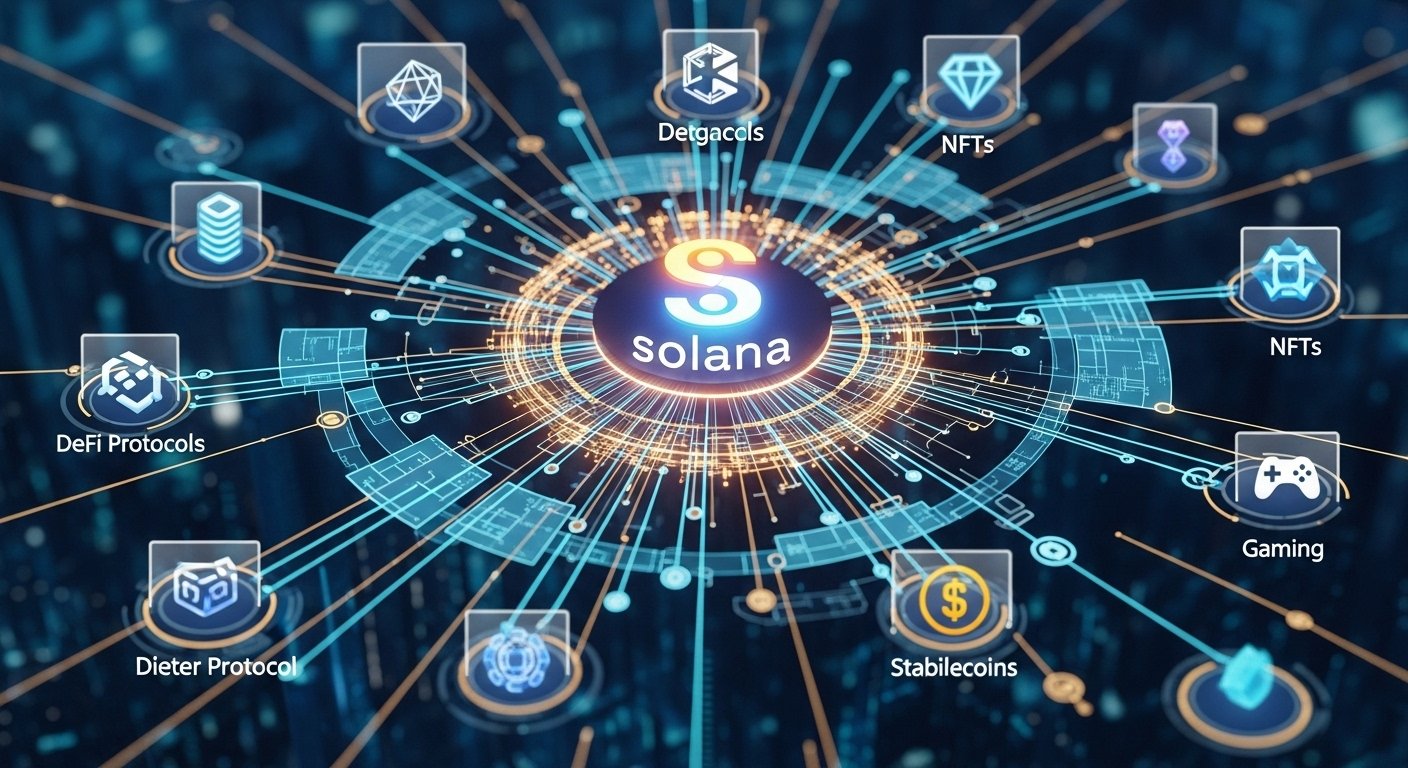
Prediction markets benefit from this composability. They can integrate with analytics tools, yield strategies, and social applications, creating richer experiences for users. Jupiter’s position within this ecosystem makes it easier for Polymarket to tap into these opportunities. As Solana continues to attract developers and users, the addition of high-profile platforms like Polymarket strengthens its reputation as a hub for innovative financial products.
Competitive Dynamics in the Prediction Market Space
The prediction market sector is becoming increasingly competitive. Multiple platforms are experimenting with different models, chains, and user experiences. In this context, infrastructure partnerships matter.
By supporting Polymarket’s Solana expansion, Jupiter helps solidify Solana’s position as a viable home for large-scale prediction markets. At the same time, Jupiter’s own exploration of event-based trading reflects a broader trend: prediction markets are no longer niche but are becoming a core DeFi primitive. This competitive environment benefits users, as platforms are incentivized to improve features, transparency, and reliability.
Challenges and Considerations
Despite the optimism surrounding the collaboration, challenges remain. Prediction markets often operate in a complex regulatory landscape. Depending on jurisdiction, they may be subject to scrutiny related to gambling, derivatives, or financial compliance.
Additionally, market resolution mechanisms must be robust and transparent. Disputes over outcomes can damage trust if not handled carefully. As participation grows, ensuring fair and timely resolution becomes even more critical. Liquidity fragmentation is another consideration. Multi-chain expansions can spread liquidity across networks. Managing this fragmentation effectively will be essential for maintaining efficient markets.
Long-Term Implications for DeFi and Web3
The significance of Jupiter assists Polymarket launch on Solana blockchain extends beyond prediction markets. It demonstrates how mature DeFi ecosystems evolve: infrastructure platforms enable application growth, which in turn drives network adoption.
Prediction markets offer a unique bridge between information, finance, and social interaction. When integrated into fast, user-friendly ecosystems like Solana, they have the potential to reach far beyond crypto-native audiences. This collaboration suggests a future where on-chain finance is not just about trading assets, but about trading expectations, narratives, and collective intelligence.
Conclusion
The collaboration captured by the phrase Jupiter assists Polymarket launch on Solana blockchain represents a meaningful step forward for decentralized prediction markets. By combining Jupiter’s liquidity infrastructure with Polymarket’s event-based trading model and Solana’s high-performance blockchain, the partnership addresses many of the challenges that have historically limited adoption.
Users gain faster transactions, lower fees, and a more intuitive experience. Developers gain a scalable environment for innovation. The Solana ecosystem gains a powerful new financial primitive that enhances its depth and diversity. As prediction markets continue to evolve, integrations like this will likely define the next phase of DeFi—one where infrastructure and applications work together to deliver real value at scale.
FAQs
Q: What does it mean that Jupiter assists Polymarket launch on Solana blockchain?
It means Jupiter provides infrastructure support, liquidity access, and execution efficiency that help Polymarket operate smoothly within the Solana ecosystem.
Q: Why is Solana important for prediction markets like Polymarket?
Solana offers high transaction speeds and low fees, which are ideal for prediction markets that rely on frequent trading and rapid price updates.
Q: How does Jupiter improve the Polymarket user experience?
Jupiter simplifies capital movement, optimizes execution, and provides a familiar Solana-native trading environment that reduces friction for users.
Q: Does this collaboration reduce trading costs?
Yes, operating on Solana significantly lowers transaction fees, allowing users to trade smaller positions and manage risk more effectively.
Q: What does this mean for the future of prediction markets?
It signals broader adoption, better scalability, and deeper integration with DeFi ecosystems, making prediction markets more accessible and impactful.
See More: Crypto Price Prediction Today Bitcoin Ethereum & XRP
