


The world of blockchain technology has evolved dramatically since Bitcoin first introduced the concept of decentralized digital currency. While Bitcoin paved the way for cryptocurrency adoption, another revolutionary platform emerged that would expand the possibilities of blockchain far beyond simple monetary transactions. Understanding what is Ethereum blockchain is becomes essential for anyone looking to grasp the future of decentralized technology, smart contracts, and the broader cryptocurrency ecosystem.
Ethereum represents a paradigm shift in how we think about blockchain applications. Unlike its predecessor, Bitcoin, which primarily focuses on peer-to-peer digital currency, Ethereum was designed as a programmable blockchain platform that enables developers to build and deploy decentralized applications. This fundamental difference has positioned Ethereum as the backbone of numerous innovative projects, from decentralized finance platforms to non-fungible tokens and beyond.
The significance of the Ethereum blockchain extends far beyond the cryptocurrency market. It has become the foundation for an entirely new internet infrastructure where users maintain control over their data, financial transactions occur without intermediaries, and digital agreements execute automatically through code. As traditional industries continue exploring blockchain integration, Ethereum stands at the forefront of this technological revolution, offering solutions that challenge conventional business models and create new possibilities for digital interaction.
Understanding the Fundamentals of Ethereum Blockchain

To truly comprehend what is Ethereum blockchain is, we must first understand its foundational architecture and purpose. Ethereum is an open-source, blockchain-based distributed computing platform that enables the creation and execution of smart contracts and decentralized applications without downtime, fraud, control, or interference from third parties. Launched in July 2015 by programmer Vitalik Buterin and a team of co-founders, Ethereum was conceptualized to address the limitations of Bitcoin’s scripting language and create a more flexible blockchain platform.
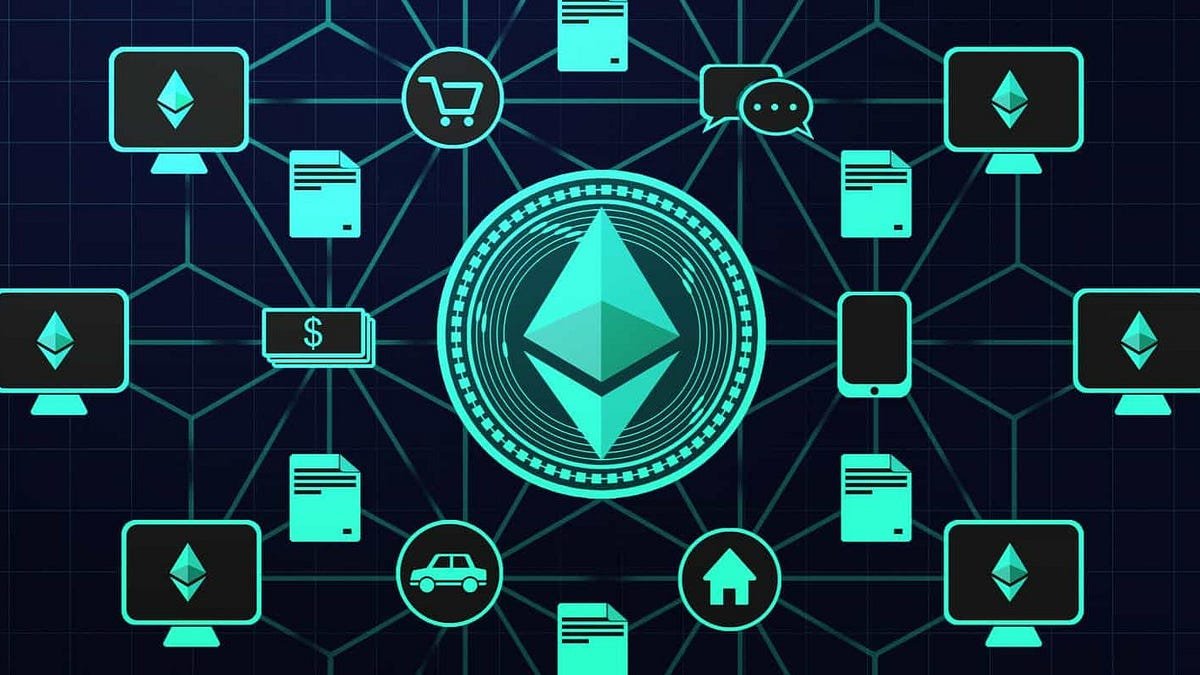
The Ethereum network operates on a global network of computers that maintain a shared ledger of transactions and computational states. This distributed nature ensures that no single entity controls the network, making it resistant to censorship and single points of failure. Every transaction and smart contract execution on Ethereum is recorded on this public ledger, creating an immutable history that anyone can verify and audit.
At its core, the Ethereum blockchain functions as a state machine that transitions from one state to another based on transactions and smart contract executions. Each block in the chain contains a collection of transactions, and when miners or validators process these blocks, the network’s state updates accordingly. This mechanism allows Ethereum to maintain consensus across thousands of nodes worldwide while enabling complex programmable functionality that extends far beyond simple value transfers.
The Revolutionary Concept of Smart Contracts
One of the most groundbreaking features that defines what is Ethereum blockchain is its native support for smart contracts. These self-executing contracts with the terms of the agreement directly written into code represent a fundamental innovation in how agreements and transactions can be automated and enforced without intermediaries. Smart contracts run exactly as programmed without any possibility of downtime, censorship, fraud, or third-party interference.
When developers deploy a smart contract to the Ethereum blockchain, it becomes an immutable piece of code that anyone can interact with according to its predefined rules. These contracts can hold funds, manage complex business logic, and interact with other contracts to create sophisticated decentralized applications. The trustless nature of smart contracts eliminates the need for intermediaries like lawyers, banks, or escrow services in many scenarios, reducing costs and increasing efficiency.
The practical applications of smart contracts span virtually every industry imaginable. In finance, they enable automated lending and borrowing protocols. In supply chain management, they provide transparent tracking of goods from manufacturer to consumer. In real estate, they can automate property transfers and rental agreements. The versatility of smart contracts has made Ethereum the preferred platform for developers building the next generation of decentralized applications, contributing significantly to the platform’s widespread adoption and network effects.
How Ethereum Differs from Traditional Bitcoin
While both Bitcoin and Ethereum utilize blockchain technology, understanding what is Ethereum blockchain is requires recognizing the fundamental differences between these two pioneering platforms. Bitcoin was designed primarily as a digital currency and store of value, with a scripting language intentionally limited to simple transactions. Ethereum, conversely, was built as a comprehensive platform for decentralized computing, offering a Turing-complete programming language that enables developers to create virtually any type of application.
The cryptocurrency native to the Ethereum blockchain, called Ether or ETH, serves a different purpose than Bitcoin. While Bitcoin functions primarily as digital money, Ether operates as the fuel that powers the Ethereum network. Users pay transaction fees and computational services in Ether, creating economic incentives for validators to maintain network security and process transactions. This dual role of Ether as both a cryptocurrency and a utility token distinguishes it from Bitcoin’s singular focus on monetary value.
Another critical distinction lies in block time and consensus mechanisms. Bitcoin produces a new block approximately every ten minutes, while Ethereum traditionally aimed for blocks every twelve to fifteen seconds, enabling faster transaction confirmation. Furthermore, Ethereum successfully transitioned from a proof-of-work consensus mechanism to proof-of-stake through The Merge in September 2022, dramatically reducing energy consumption while maintaining network security. This evolution demonstrates Ethereum’s commitment to scalability and sustainability in ways that differentiate it from Bitcoin’s more conservative approach to protocol changes.
The Ethereum Virtual Machine and Its Significance
Central to understanding what is Ethereum blockchain is grasping the role of the Ethereum Virtual Machine, commonly known as the EVM. This runtime environment serves as the computation engine that executes smart contracts on the Ethereum network. The EVM functions as a decentralized computer that processes code in a sandboxed environment, ensuring that smart contracts run identically across all nodes in the network regardless of the underlying hardware or operating system.
The Ethereum Virtual Machine operates using a stack-based architecture and executes bytecode compiled from high-level programming languages like Solidity, Vyper, or others designed specifically for Ethereum development. When a user initiates a transaction that involves smart contract execution, the EVM processes the code instruction by instruction, charging gas fees for each computational operation. This gas mechanism prevents infinite loops and spam attacks while ensuring efficient resource allocation across the network.
The significance of the EVM extends beyond Ethereum itself, as its design has become a standard that other blockchain platforms have adopted or adapted. This EVM compatibility allows developers to deploy applications across multiple blockchain networks with minimal modifications, creating a broader ecosystem of interconnected platforms. The widespread adoption of EVM-compatible chains demonstrates how Ethereum’s technical innovations have influenced the entire blockchain industry, establishing standards that continue shaping decentralized technology development.
Ethereum’s Killer Application

Perhaps the most transformative application built on top of Ethereum has been decentralized finance, commonly abbreviated as DeFi. This movement aims to recreate traditional financial services like lending, borrowing, trading, and asset management using smart contracts instead of centralized intermediaries. Understanding what is Ethereum blockchain is becomes incomplete without recognizing its role as the primary infrastructure for the DeFi revolution that has unlocked billions of dollars in value and created entirely new financial primitives.
DeFi protocols leverage Ethereum’s smart contract capabilities to create trustless financial services accessible to anyone with an internet connection and a digital wallet. Users can lend their cryptocurrency to earn interest, borrow against their holdings without credit checks, exchange tokens instantly through automated market makers, and participate in complex financial strategies that were previously only available to institutional investors. This democratization of finance represents one of the most compelling use cases for blockchain technology.
The DeFi ecosystem on Ethereum includes hundreds of protocols offering various services, from stablecoins pegged to traditional currencies to synthetic assets that track real-world commodities. The composability of smart contracts allows these protocols to integrate seamlessly, creating a financial system where different applications can interact and build upon each other. This interconnected nature, often called “money legos,” enables innovations that continuously push the boundaries of what’s possible in decentralized finance while demonstrating the practical value of Ethereum’s programmable blockchain.
NFTs and Digital Ownership on Ethereum
Non-fungible tokens, or NFTs, represent another revolutionary application that helps explain what is Ethereum blockchain can achieve beyond financial transactions. NFTs are unique digital assets verified on the blockchain that represent ownership of specific items, whether digital art, collectibles, virtual real estate, or even real-world assets. The Ethereum blockchain provides the infrastructure for creating, buying, selling, and trading these one-of-a-kind tokens through standardized protocols like ERC-721 and ERC-1155.
The explosion of NFT popularity has demonstrated how blockchain technology can establish verifiable digital scarcity and provenance. Artists can now sell their digital creations directly to collectors without intermediaries, automatically receiving royalties on secondary sales through smart contracts. Game developers create virtual economies where players truly own their in-game assets and can trade them freely. Content creators tokenize their work to engage with fans in novel ways, building communities around exclusive digital experiences.
Beyond the hype and speculation that often surrounds NFTs, the underlying technology represents a fundamental shift in how we think about digital ownership and intellectual property. Ethereum’s blockchain provides an immutable record of ownership transfers, solving the long-standing problem of proving authenticity and ownership in the digital realm. As industries from entertainment to real estate explore tokenization, NFTs built on Ethereum continue pioneering new models for creating, distributing, and monetizing digital and physical assets.
Ethereum’s Transition to Proof-of-Stake
A pivotal moment in Ethereum’s history that significantly changed what is Ethereum blockchain is was The Merge, which occurred in September 2022. This monumental upgrade transitioned Ethereum from an energy-intensive proof-of-work consensus mechanism to a more sustainable proof-of-stake model. The change reduced Ethereum’s energy consumption by approximately 99.95%, addressing one of the most significant criticisms of blockchain technology while maintaining network security and decentralization.
In the proof-of-stake system, validators replace miners as the parties responsible for processing transactions and creating new blocks. These validators stake their Ether as collateral, and the network randomly selects them to propose and validate blocks based on their stake size and other factors. This mechanism eliminates the need for energy-intensive computational mining while creating economic incentives that discourage malicious behavior, as validators risk losing their staked funds if they attempt to attack the network.
The transition to proof-of-stake represents more than just an environmental improvement. It also laid the groundwork for future scalability enhancements, including sharding, which will eventually allow the Ethereum network to process many more transactions per second. The successful execution of The Merge demonstrated Ethereum’s ability to implement complex upgrades to a live network worth hundreds of billions of dollars, showcasing the project’s technical sophistication and community coordination. This achievement further solidified Ethereum’s position as the leading platform for decentralized applications and smart contracts.
Scalability Solutions and Layer 2 Technologies
As Ethereum gained popularity, network congestion and high transaction fees became significant challenges. Understanding what is Ethereum blockchain is includes recognizing both its limitations and the innovative solutions being developed to address them. Layer 2 scaling solutions have emerged as crucial technologies that process transactions off the main Ethereum chain while inheriting its security guarantees, dramatically increasing throughput and reducing costs for users.
Several types of Layer 2 solutions have gained traction in the Ethereum ecosystem. Optimistic rollups bundle multiple transactions together and submit them to the main chain with a fraud-proof mechanism that allows anyone to challenge invalid transactions. Zero-knowledge rollups use cryptographic proofs to verify transaction validity without revealing transaction details, offering both scalability and privacy. Sidechains operate as separate blockchains that periodically anchor to Ethereum, while state channels allow parties to transact directly off-chain before settling final results on the main network.
These scaling solutions have enabled applications to offer user experiences comparable to traditional centralized services while maintaining the security and decentralization benefits of the Ethereum blockchain. Popular Layer 2 networks like Arbitrum, Optimism, and Polygon have onboarded millions of users and billions of dollars in value, demonstrating that scalability challenges can be addressed without compromising Ethereum’s fundamental principles. As these technologies mature and Ethereum implements planned upgrades like danksharding, the network’s capacity will continue expanding to support global-scale adoption.
The Role of Ether in the Ethereum Ecosystem
Central to understanding what is Ethereum blockchain is is recognizing the multifaceted role of Ether, the native cryptocurrency that powers the network. Unlike Bitcoin, which serves primarily as a store of value and medium of exchange, Ether functions as the lifeblood of the Ethereum ecosystem, enabling every transaction, smart contract execution, and decentralized application interaction. This utility gives Ether intrinsic value beyond speculative investment, as demand for Ethereum network services directly drives demand for the token.
Every operation on the Ethereum network requires computational resources, measured in units called gas. Users pay gas fees in Ether to compensate validators for processing their transactions and executing smart contracts. This fee mechanism serves multiple purposes: it prevents spam attacks by making them economically unfeasible, allocates network resources efficiently based on user willingness to pay, and provides economic incentives for validators to maintain network security and process transactions promptly.
Following the Merge and subsequent protocol upgrades, Ethereum implemented a fee-burning mechanism that permanently removes a portion of transaction fees from circulation. This deflationary pressure, combined with staking rewards, creates complex tokenomics that can make Ether either inflationary or deflationary depending on network activity. Many analysts view Ether as a productive asset that generates yield through staking while potentially appreciating due to deflationary mechanics, creating a compelling value proposition that distinguishes it from purely speculative cryptocurrencies.
Security and Decentralization Principles
The security model of Ethereum represents a fundamental aspect of what the Ethereum blockchain offers to developers and users. The network’s decentralized architecture distributes control across thousands of independent validators worldwide, making it extremely difficult for any single entity to manipulate transaction history or censor specific users. This censorship resistance and immutability provide the trust foundation upon which all Ethereum applications are built.
Ethereum’s security comes from both its consensus mechanism and the economic incentives built into the protocol. Validators who propose invalid blocks or attempt to attack the network face severe penalties, including the loss of their staked Ether through a process called slashing. This economic security model ensures that acting honestly remains more profitable than attempting malicious behavior, creating a game-theoretic equilibrium that protects the network without requiring users to trust any central authority.
The blockchain’s open-source nature also contributes significantly to its security. Thousands of developers, researchers, and security experts continuously audit Ethereum’s code, identify potential vulnerabilities, and propose improvements. This transparent development process, combined with extensive testing on public testnets before mainnet deployment, helps ensure that protocol upgrades maintain security while adding new features. The track record of Ethereum’s security over nearly a decade of operation, securing hundreds of billions of dollars in value, demonstrates the robustness of its design principles.
Real-World Applications and Enterprise Adoption
Exploring what is Ethereum blockchain is reveals numerous practical applications already transforming industries beyond cryptocurrency speculation. Major corporations and institutions have recognized Ethereum’s potential to streamline operations, reduce costs, and create new business models. Supply chain management companies use Ethereum to track products from manufacturing to delivery, providing transparent proof of authenticity and ethical sourcing that consumers increasingly demand.
Financial institutions have begun experimenting with Ethereum-based solutions for securities settlement, cross-border payments, and trade finance. The ability to tokenize traditional assets like stocks, bonds, and real estate on the blockchain promises to increase liquidity, reduce settlement times, and democratize access to investment opportunities previously limited to wealthy individuals or institutions. Central banks worldwide are researching central bank digital currencies that could potentially leverage Ethereum or compatible technologies.
Beyond finance and supply chain, Ethereum applications span healthcare, where patient records can be securely managed while maintaining privacy; gaming, where true digital ownership creates new economic models; identity management, where self-sovereign identity solutions give individuals control over their personal data; and governance, where decentralized autonomous organizations experiment with new forms of collective decision-making. These diverse use cases demonstrate that Ethereum’s programmable blockchain offers value far beyond cryptocurrency trading, positioning it as infrastructure for the next generation of internet applications.
Challenges and Future Development
While Ethereum has achieved remarkable success, understanding what is Ethereum blockchain is requires acknowledging the ongoing challenges the platform faces. Scalability remains a primary concern, as the base layer can still only process fifteen to thirty transactions per second, far below what’s needed for global adoption. Although Layer 2 solutions address this limitation, achieving seamless user experiences across different scaling solutions requires continued development and standardization.
Regulatory uncertainty poses another challenge for Ethereum and cryptocurrency adoption more broadly. Governments worldwide are still developing frameworks for blockchain technology, digital assets, and decentralized finance. How regulators ultimately classify Ether, whether as a commodity, security, or something entirely new, could significantly impact its usage and development. The decentralized nature of Ethereum makes regulatory compliance complex, as there’s no central authority responsible for the platform’s operation.
Looking forward, Ethereum’s development roadmap includes ambitious upgrades aimed at improving scalability, security, and sustainability. Planned enhancements like proto-danksharding will significantly increase data availability for Layer 2 solutions, while future sharding implementations could allow the base layer itself to process thousands of transactions per second. Account abstraction aims to improve user experience by making wallets more flexible and user-friendly. These ongoing developments demonstrate that Ethereum remains a dynamic, evolving platform committed to addressing its limitations while maintaining its core principles of decentralization and security.
Conclusion
Understanding what is Ethereum blockchain is reveals a technology platform that has fundamentally transformed how we think about digital applications, financial systems, and internet infrastructure. From its inception as a programmable blockchain supporting smart contracts to its current status as the foundation for decentralized finance, NFTs, and countless other innovations, Ethereum has consistently pushed the boundaries of what’s possible with distributed ledger technology.
The Ethereum blockchain represents more than just a cryptocurrency network; it embodies a vision of a more open, transparent, and equitable digital future where individuals maintain control over their data and assets without relying on centralized intermediaries. Through continuous innovation, including the successful transition to proof-of-stake and the development of Layer 2 scaling solutions, Ethereum has demonstrated both technical sophistication and community resilience in addressing challenges while staying true to its core principles.
As blockchain technology continues to mature and find practical applications across industries, Ethereum’s role as the leading platform for decentralized applications positions it at the forefront of this digital revolution. Whether you’re a developer building the next groundbreaking application, an investor seeking to understand cryptocurrency markets, or simply someone curious about emerging technologies, grasping what the Ethereum blockchain offers provides essential insight into the future of our increasingly digital world. The journey of Ethereum is far from complete, and the coming years will likely bring even more transformative developments that further solidify its place in technological history.
FAQs
Q: What makes Ethereum different from Bitcoin?
Ethereum differs from Bitcoin primarily in its purpose and capabilities. While Bitcoin functions mainly as a digital currency and store of value, Ethereum is a programmable blockchain platform that enables developers to create smart contracts and decentralized applications. Ethereum’s Turing-complete programming language allows for complex functionality beyond simple transactions, making it a foundation for DeFi, NFTs, and various other applications. Additionally, Ethereum transitioned to a proof-of-stake consensus mechanism, whereas Bitcoin continues to use proof-of-work.
Q: How do smart contracts work on the Ethereum blockchain?
Smart contracts on Ethereum are self-executing programs stored on the blockchain that automatically enforce agreements when predefined conditions are met. Written in languages like Solidity, these contracts run on the Ethereum Virtual Machine across all network nodes. When users interact with a smart contract by sending a transaction, the network executes the code exactly as programmed, with results recorded permanently on the blockchain. This automation eliminates intermediaries and ensures transparency and trustless execution.
Q: Is Ethereum a good investment for beginners?
Whether Ethereum is suitable for beginners depends on individual circumstances, risk tolerance, and financial goals. Ethereum and cryptocurrencies generally are highly volatile assets that can experience significant price fluctuations. Beginners should thoroughly research blockchain technology, understand the risks involved, only invest amounts they can afford to lose, and consider consulting with financial advisors. Ethereum’s utility beyond speculation, including its role in DeFi and NFTs, gives it fundamental value, but this doesn’t guarantee investment returns.
Q: How secure is the Ethereum blockchain?
The Ethereum blockchain is highly secure due to its decentralized architecture and consensus mechanism. Thousands of validators worldwide maintain the network, making attacks extremely difficult and economically unfeasible. The proof-of-stake system penalizes malicious behavior through slashing, while the network’s open-source code undergoes continuous security audits. However, individual smart contracts and applications built on Ethereum may have vulnerabilities, so users should exercise caution and conduct due diligence before interacting with decentralized applications.
Q: What are gas fees, and why does Ethereum have them?
Gas fees are payments users make to compensate validators for processing transactions and executing smart contracts on the Ethereum network. Every operation requires computational resources, measured in gas units, with fees calculated based on network demand and transaction complexity. This mechanism prevents spam attacks, efficiently allocates network resources, and provides economic incentives for validators. While base-layer gas fees can be high during congestion, Layer 2 solutions significantly reduce costs while maintaining Ethereum’s security benefits.
Read More: Bitcoin vs Ethereum What Makes Bitcoin Popular Then Ethereum 2025
