


Asia Market Open often serves as the world’s first real-time reaction to major U.S. political and economic developments, and this session was no exception. As trading began across Asian financial centers, markets were met with sharp volatility driven by a sudden 7% plunge in Bitcoin, erratic equity movements, and renewed uncertainty stemming from U.S. political signals. Investors waking up to the Asia Market Open were forced to digest a complex mix of macroeconomic risk, monetary policy speculation, and fiscal uncertainty.
At the heart of the market reaction was Bitcoin’s steep decline, which immediately set a risk-off tone. The cryptocurrency’s fall was not an isolated event but part of a broader market response to comments from former U.S. President Donald Trump regarding a future Federal Reserve chair pick, alongside developments surrounding a potential U.S. government shutdown deal. These intertwined factors created a perfect storm for volatility at the Asia Market Open, rippling across stocks, currencies, and digital assets.
In recent years, Bitcoin has become increasingly sensitive to macroeconomic conditions, behaving more like a high-beta risk asset than a standalone alternative currency. As a result, when uncertainty rises around interest rates, central bank independence, or government stability, Bitcoin often reacts swiftly. This dynamic was clearly visible during the Asia Market Open, where crypto weakness coincided with swinging equity markets and cautious investor positioning.
This article explores what happened at the Asia Market Open, why Bitcoin tumbled 7%, how stocks reacted to Trump’s Fed signals and shutdown negotiations, and what it all means for global investors navigating an increasingly fragile macro environment.
Asia Market Open Overview: Markets React to Policy Uncertainty
The Asia Market Open unfolded with clear signs of investor unease. Equity markets across the Asia-Pacific region opened mixed, briefly attempted stabilization, and then swung sharply as traders reacted to overnight developments from the United States. Futures linked to U.S. equities also showed weakness, reinforcing the cautious tone set during Asian trading hours.
The defining characteristic of this Asia Market Open was uncertainty rather than panic. Markets were not collapsing across the board, but they were highly reactive to headlines. Investors appeared reluctant to commit capital aggressively in either direction, instead adjusting exposure in response to shifting political and monetary signals.
The dual narrative driving the session involved speculation around the future leadership of the Federal Reserve and the immediate risk of a U.S. government shutdown. Together, these themes introduced both short-term and long-term uncertainty, making the Asia Market Open a critical inflection point for global sentiment.
Why Bitcoin Tumbled 7% at the Asia Market Open
Bitcoin’s roughly 7% drop was the most eye-catching development at the Asia Market Open, and it did not occur in a vacuum. Several interconnected forces contributed to the sharp decline, highlighting Bitcoin’s evolving role in the global financial system.
Bitcoin as a Liquidity-Sensitive Asset
Bitcoin has increasingly traded in line with broader risk assets, particularly technology stocks. When expectations shift toward tighter financial conditions or higher interest rates, Bitcoin often comes under pressure. At this Asia Market Open, concerns about future Federal Reserve leadership raised questions about the direction of U.S. monetary policy, prompting traders to reduce exposure to speculative assets.
Higher interest rates or a more hawkish policy stance increase the opportunity cost of holding non-yielding assets like Bitcoin. As a result, even the suggestion of policy uncertainty can trigger selling, especially in a market where leverage remains significant.
Thin Liquidity and Forced Liquidations
Another key factor behind Bitcoin’s tumble at the Asia Market Open was market structure. Liquidity in crypto markets tends to be thinner during Asian trading hours compared to U.S. sessions. When prices start to fall rapidly, leveraged positions can be forcibly liquidated, accelerating losses.
This cascading effect often turns a modest decline into a sharp drop. At the Asia Market Open, once Bitcoin broke through key technical levels, selling intensified, reinforcing the broader risk-off mood across markets.
Macro Headlines as Catalysts
The combination of Trump signaling a Fed chair pick and ongoing shutdown negotiations created a macro backdrop ripe for volatility. Bitcoin traders, highly attuned to shifts in policy expectations, reacted swiftly. The Asia Market Open became the moment when these macro concerns were first fully priced into crypto markets.
Stocks Swing at the Asia Market Open as Investors Reassess Risk
While Bitcoin fell decisively, equity markets displayed more nuanced behavior. At the Asia Market Open, stocks swung between gains and losses as investors attempted to balance optimism around a potential shutdown deal with caution over future monetary policy changes.
Asia-Pacific Equities Reflect Global Uncertainty
Major Asian equity indices opened mixed, with early gains fading as the session progressed. Export-oriented markets were particularly sensitive to the stronger U.S. dollar and rising bond yields, both of which weighed on sentiment. The Asia Market Open highlighted how interconnected global markets have become, with U.S. political developments immediately influencing Asian stocks.
U.S. Futures Signal Caution
U.S. equity futures pointed lower during the Asia Market Open, reinforcing the idea that investors were preparing for near-term volatility. Futures markets often act as a bridge between regions, and their weakness suggested that the cautious tone seen in Asia could carry over into Western markets.
Rotation Instead of Panic
Importantly, the Asia Market Open did not resemble a full-blown selloff. Instead, it reflected a rotation away from higher-risk segments of the market. Defensive sectors and assets perceived as more resilient showed relative stability, while growth-oriented and technology-linked stocks faced pressure.
Trump Signals Fed Pick: Why Markets Reacted Immediately
One of the most significant drivers of volatility at the Asia Market Open was Donald Trump’s indication that he would announce a choice for Federal Reserve chair. Even without a formal announcement, the signal alone was enough to move markets.
The Importance of the Federal Reserve Chair
The Fed chair plays a central role in shaping U.S. monetary policy, influencing interest rates, inflation expectations, and financial stability. Markets care deeply about who holds this position because it affects not just policy decisions but also communication and credibility.
At the Asia Market Open, investors began reassessing the possible implications of a leadership change at the Fed. Would the next chair prioritize growth over inflation control? Would political pressure influence decision-making? These unanswered questions added to market uncertainty.
Independence and Credibility Concerns
Central bank independence is a cornerstone of market confidence. Any perception that monetary policy could become more politicized tends to increase volatility. During the Asia Market Open, concerns about how a new Fed chair might interact with political leadership contributed to higher risk premiums across assets.
Interest Rate Expectations Shift
Speculation around the Fed chair pick also influenced expectations for future interest rates. Even small changes in perceived policy direction can have outsized effects on asset prices, particularly for Bitcoin, equities, and bonds. The Asia Market Open served as the first real test of how markets might react to this evolving narrative.
Shutdown Deal Uncertainty Adds Another Layer of Risk
Alongside Fed speculation, the possibility of a U.S. government shutdown loomed large during the Asia Market Open. While lawmakers signaled progress toward a deal, the situation remained unresolved as markets opened in Asia.
Why Shutdown Risk Matters to Markets
Government shutdowns can disrupt economic data releases, delay policy implementation, and dent business and consumer confidence. Even the threat of a shutdown introduces uncertainty, which markets tend to dislike.
At the Asia Market Open, investors weighed the likelihood of a deal against the potential consequences of failure. This balancing act contributed to the choppy trading environment observed across asset classes.
Short-Term Relief vs. Long-Term Questions
A shutdown deal may provide temporary relief, but it does not resolve deeper fiscal challenges. As a result, markets often remain cautious even when an agreement appears imminent. The Asia Market Open reflected this dynamic, with investors reluctant to fully embrace risk despite signs of progress.
Cross-Asset Signals at the Asia Market Open
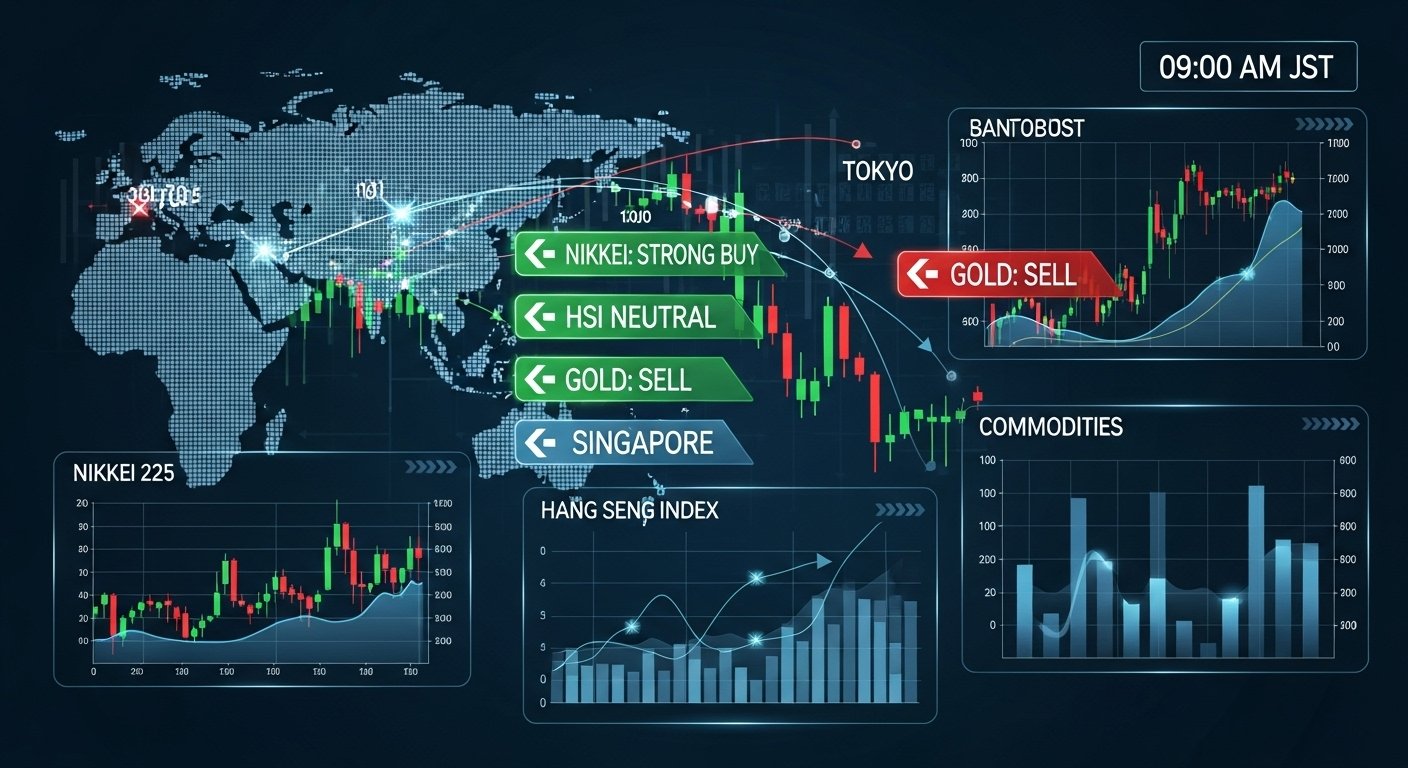
To fully understand the Asia Market Open, it is essential to examine how different asset classes behaved together.
U.S. Dollar and Bond Yields
The U.S. dollar strengthened during the session, while Treasury yields edged higher. This combination typically signals tighter financial conditions, which can weigh on equities and cryptocurrencies alike. At the Asia Market Open, these movements reinforced the risk-off tone already evident in Bitcoin’s decline.
Commodities Show Mixed Signals
Commodities presented a more mixed picture. Gold found some support from uncertainty but faced pressure from rising yields, while oil prices were influenced by broader geopolitical and supply considerations. The overall message from the Asia Market Open was one of caution rather than outright fear.
What the Asia Market Open Means for Investors
The events of this Asia Market Open offer several important lessons for investors across different time horizons.
For Crypto Investors
Bitcoin’s sharp decline underscores its sensitivity to macroeconomic headlines. While long-term adoption narratives remain intact, short-term price action can be dominated by liquidity conditions and policy expectations. Risk management is critical in such environments.
For Equity Investors
Stock market swings at the Asia Market Open highlight the importance of staying attuned to political and monetary developments. Diversification and sector rotation can help manage volatility when uncertainty rises.
For Long-Term Allocators
For long-term investors, this Asia Market Open serves as a reminder that uncertainty premiums fluctuate. Periods of heightened volatility often create opportunities, but patience and discipline are essential to navigate them effectively.
Conclusion
This Asia Market Open captured a moment when global markets were forced to confront overlapping sources of uncertainty. Bitcoin’s 7% tumble, swinging equity markets, and cautious cross-asset signals all pointed to the same conclusion: investors are reassessing risk in light of political and monetary ambiguity.
With questions surrounding the future leadership of the Federal Reserve and the stability of U.S. government funding, markets are likely to remain sensitive to headlines in the near term. The Asia Market Open will continue to play a crucial role in setting the tone for global trading, acting as an early warning system for shifts in sentiment.
While volatility can be unsettling, it also reflects a market actively processing new information. For investors willing to look beyond the noise, the lessons from this Asia Market Open may prove valuable in navigating the evolving financial landscape.
FAQs
Q: Why is the Asia Market Open so important for global markets?
The Asia Market Open is the first major trading session to react to overnight U.S. news, often setting the tone for global markets throughout the day.
Q: Why did Bitcoin drop 7% during the Asia Market Open?
Bitcoin fell due to a combination of policy uncertainty, leverage-driven selling, and thin liquidity conditions that amplified the downside move.
Q: How did stocks react at the Asia Market Open?
Stocks swung between gains and losses as investors balanced optimism over a shutdown deal with caution surrounding future monetary policy.
Q: Why does a potential Fed chair pick affect markets?
A Fed chair pick influences expectations around interest rates, inflation control, and central bank independence, all of which are critical to asset pricing.
Q: What should investors watch after this Asia Market Open?
Investors should monitor developments related to U.S. fiscal negotiations, Federal Reserve leadership, bond yields, and Bitcoin’s ability to stabilize after heightened volatility.
See More: Bitcoin price today slips near 1-month low on Fed caution
